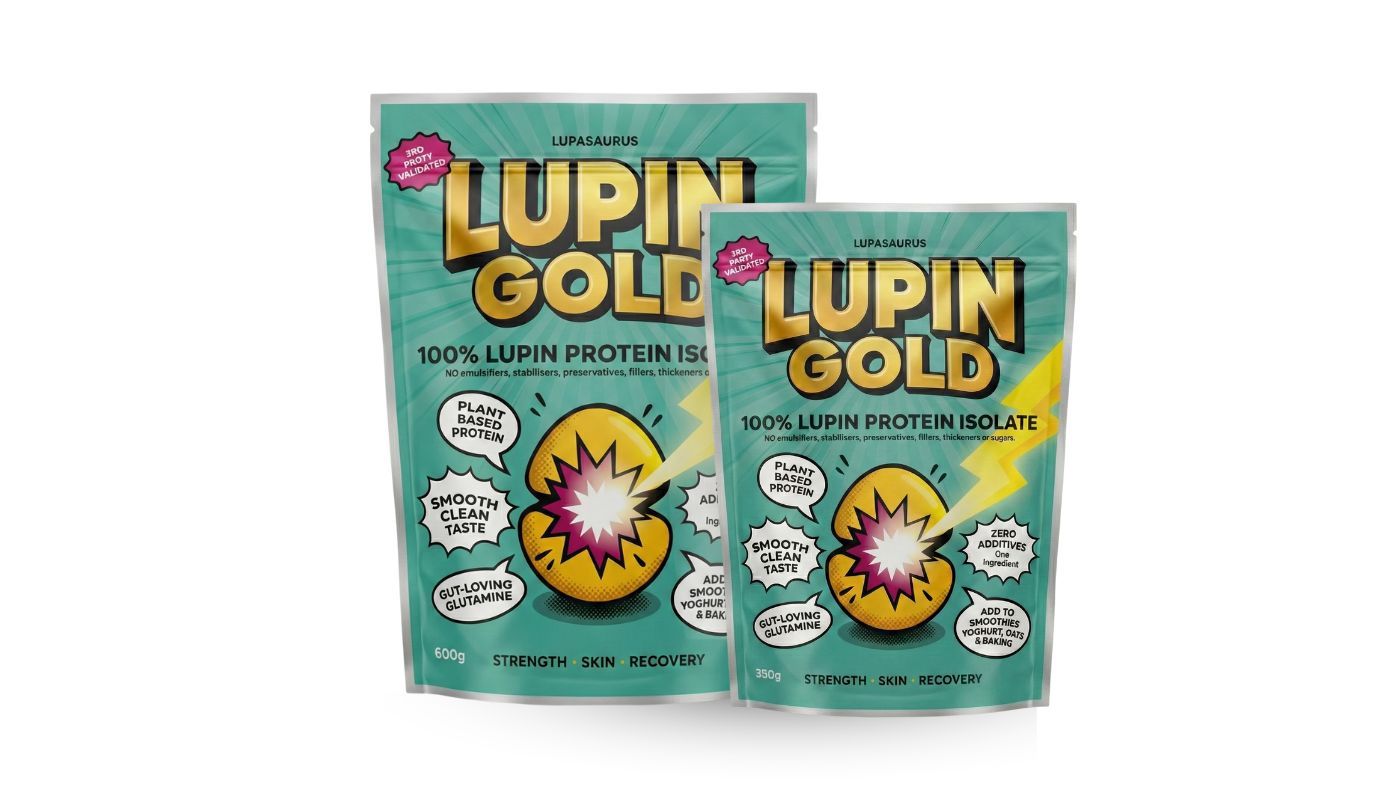

The word "allergen" can send anyone into a spin — and we're not here to gloss over it. You wouldn't bin peanuts, soy or dairy just because they're allergens; you'd stay informed. Same energy here. We're Harvie & Kobi, the founders of Lupin Gold, and yes, we deliberately chose an ingredient with a few strings attached. Because the benefits — protein quality, digestibility, versatility, sustainability — far outweigh the risks when you understand them.

Is Lupin an Allergen? (Short Answer: Yes.)
In Australia and New Zealand, lupin is a priority allergen that must be declared on food labels under FSANZ. The European Union and the UK also list lupin among the 14 major allergens requiring clear emphasis on packaging — putting it in the same labelling tier as peanuts, soy, milk and eggs.
Being a declared allergen doesn't make a food universally bad. It means a minority of people can react, so honest labelling is required. Lupin allergy is considered uncommon — estimated well under 1% of the general population — but if you have a history of legume allergy, it's worth knowing the facts before you try it.
Plain-English Allergen Labelling (PEAL) — Australia
- From 25 February 2024, food made or packaged in Australia must use plain English allergen statements, bolded and standardised — e.g., Contains: Lupin.
- This is why you'll see Contains: Lupin clearly on every Lupin Gold pack.
What Is Lupin, Exactly?
Lupin (also called lupin bean or lupine) is a legume in the same family as peanuts, soybeans, chickpeas and lentils. There are several species grown worldwide, and the variety matters — particularly for allergen and food safety purposes.
| Species | Common name | Where it's grown | Food use |
|---|---|---|---|
| Lupinus angustifolius | Australian Sweet Lupin / Narrow-leafed lupin | Western Australia (~85% of world supply), Germany, Poland | Protein isolate, flour, food ingredients |
| Lupinus albus | White lupin | Mediterranean Europe, North Africa | Snack foods, pasta, some protein products |
| Lupinus mutabilis | Andean lupin / Tarwi | South America (Ecuador, Peru, Bolivia) | Traditional food, cevichochos |
Lupin Gold uses Lupinus angustifolius — the Australian Sweet Lupin. Western Australia is responsible for approximately 85% of the world's supply of this variety , and the same species is also grown in Germany and Poland using varieties originally bred from Australian genetics. It's naturally low in starch, high in protein and fibre, and gluten-free as a legume.
Peanut & Soy Cross-Reactivity: The Real Risk
Lupin is a legume, like peanuts and soy. Some people with peanut or soy allergy show cross-sensitisation to lupin because certain proteins are structurally similar. Importantly, a positive test does not guarantee a clinical reaction. Published studies report:
| Study / Cohort | Cross-sensitisation | Clinical reaction |
|---|---|---|
| Peanut-allergic adults/children (France) | ~14–17% positive tests | ~5% reported reactions |
| Peanut-allergic paediatric cohort (UK) | ~34% sensitised | ~4% reacted on challenge |
| Oral challenge series (France) | ~44% sensitised | ~28% reacted on challenge |
Numbers vary by study, test method and population. A positive allergy test ≠ guaranteed symptoms.
Practical take: If you have a known peanut, soy or other legume allergy, speak to your GP or allergist before trying lupin. Skin prick tests, specific IgE testing, and a supervised food challenge (if appropriate) can clarify your personal risk.

Lupin Allergy Symptoms to Know
Allergic reactions can appear within minutes of consuming lupin. Mild to moderate symptoms may include:
- Itching or tingling of the mouth, lips or tongue
- Hives, flushing or skin rash
- Swelling of the lips, face, eyes or throat
- Abdominal cramps, nausea, vomiting or diarrhoea
Severe reactions (anaphylaxis) are medical emergencies: difficulty breathing, throat tightness, sudden drop in blood pressure, dizziness or collapse. If any of these occur — stop consumption immediately and seek urgent medical care. People at known risk should carry an adrenaline autoinjector and follow their doctor's action plan.
Where Lupin Shows Up in Food
Lupin is increasingly used as a high-protein, gluten-free ingredient in food manufacturing. It can appear in:
- Bakery: breads, pastries, cakes, biscuits, pizza bases, high-protein or gluten-free mixes
- Pasta & plant-based products: some pastas, meat alternatives, veggie burgers, protein bars
- Protein formats: lupin flour, lupin protein isolates, functional food blends
Label tip: In Australia, New Zealand, the EU and UK, lupin must be clearly declared. Look for Contains: Lupin in bold near the ingredient list.
Allergen Declaration by Region
| Region | Mandatory declaration? | Notes |
|---|---|---|
| Australia / New Zealand | Yes | Priority allergen; PEAL plain-English format required from 25 Feb 2024. |
| European Union / United Kingdom | Yes | One of 14 major allergens; must be emphasised on labels. |
| United States | No | Not currently a declared major allergen under FDA rules. |
| Other regions | Varies | Check local regulations. |
Why We Chose Lupin Anyway
We didn't stumble into lupin. We wanted a clean, high-performance plant protein: ~90% protein, 96% digestibility, mild taste, zero gums or sweeteners. Sweet lupins — specifically Lupinus angustifolius — tick every box, and they support sustainable farming through natural nitrogen fixation.
We knew the allergen status from day one. So we lead with radical transparency: clear pack labelling, open sourcing information, and copy like this that treats you like an adult.
"Risk doesn't mean avoidance — it means staying one step ahead."
The Safe Playbook
- Known lupin allergy → avoid lupin ingredients entirely.
- Peanut or legume allergy → speak to your GP or allergist before trying lupin; testing or a supervised challenge may be advised.
- No known legume allergies → treat lupin like any new food: start small, read the label, and listen to your body.

FAQs
Is lupin an allergen in Australia?
Yes. Lupin is a priority allergen under FSANZ and must be declared on food labels. From 25 February 2024, PEAL rules require clear, bold statements such as Contains: Lupin.
Is lupin on the EU allergen list?
Yes. Lupin is one of the 14 major allergens that must be highlighted on packaging in the EU and UK.
Can people with peanut allergy eat lupin?
Some can and some can't. Cross-reactivity exists for a subset of people with peanut or legume allergies. Seek medical advice before trying lupin if you have a known peanut or legume allergy.
Is lupin gluten-free?
Yes. Lupin is a legume, not a cereal grain, so it contains no gluten by nature. Note: our current batch contains trace gluten due to shared processing. Our incoming batch has returned no detectable gluten readings and will be independently tested. Sign up to be notified when it's available.
What's the difference between Australian Sweet Lupin and other varieties?
Lupinus angustifolius — the Australian Sweet Lupin — is the variety used in Lupin Gold and in most food-grade lupin protein products. It's grown primarily in Western Australia (around 85% of world supply) and also in Germany and Poland. It's low in alkaloids, high in protein, and bred specifically for food use. The Andean lupin (L. mutabilis) grown in South America is a different species and requires a debittering process before it's edible.
What if I get symptoms after consuming lupin?
Stop consuming the product immediately and seek medical care. Severe symptoms — difficulty breathing, throat tightness, faintness — require urgent attention. Call 000 in Australia.
Informed > Afraid
Many everyday foods — peanuts, soy, milk — are allergens, yet millions enjoy them safely every day. Lupin is no different: a powerful, sustainable protein for those who tolerate it.
Questions? Email team@lupingold.com.au
Try Lupin Gold — clean plant protein isolateDisclaimer: This page is for general information only and is not individual medical advice. Please speak with your healthcare professional for personalised guidance.