
Choosing a vegan protein powder in Australia comes down to more than hitting a protein target. Ingredient quality, digestibility, amino acid completeness and how it actually tastes in real food all matter. Here's what to look for and how the main options compare.
Just want to compare products? See our range of vegan protein powder in Australia. This guide is the criteria behind that shortlist.
Quick navigation

What Actually Matters in a Vegan Protein Powder
Most comparisons focus on protein per serve. That matters, but it's not the whole picture. These are the factors worth paying attention to:
Protein concentration
Look at protein per 100g, not just per serve. Serve sizes vary wildly between brands. Higher protein per 100g generally means fewer fillers. Isolates (85-90%+) will almost always outperform concentrates (60-80%) here.
Amino acid completeness
Not all plant proteins contain all nine essential amino acids in meaningful amounts. Look for products that specifically state "complete protein" or list all nine EAAs on the label. Blended plant proteins often mix sources to compensate for individual limitations.
Digestibility
A digestibility score (PDCAAS) above 0.9 means your body can actually absorb and use most of the protein you're consuming. Lower digestibility means less value per gram, more undigested protein in the gut, and potentially more bloating.
Ingredient list length
A shorter ingredient list is almost always better. Gums, sweeteners, flavours, emulsifiers and anti-caking agents are often added to improve texture or taste rather than nutrition. For sensitive digestion, each additive is another potential irritant.
Types of Vegan Protein Powder Compared
Here's how the main plant protein sources stack up for Australians looking for a clean, effective option:
| Protein source | Protein per 100g | Complete protein? | Digestibility | Taste and texture | Common concerns |
|---|---|---|---|---|---|
| Lupin isolate | ~90% | Yes | ~0.96 | Neutral, smooth | Declared legume allergen in AU |
| Pea isolate | ~82-85% | Low in methionine | ~0.92 | Earthy, can be gritty | Bloating for some; often heavily flavoured |
| Brown rice protein | ~75-80% | Low in lysine | ~0.70-0.80 | Chalky, mild | Lower digestibility; usually blended |
| Hemp protein | ~50-60% | Near-complete | ~0.60-0.70 | Nutty, coarser texture | Lower protein density; stronger taste |
| Soy isolate | ~90% | Yes | ~0.95 | Bean-like; often masked | Declared allergen in AU; contains isoflavones |
These are typical ranges for isolates and concentrates. Values vary by brand and batch. Always check the label for exact macros, allergens and ingredient lists.
Flavoured vs Unflavoured Vegan Protein Powder
This is one of the most practical decisions to make when choosing a vegan protein powder - and it often gets overlooked.
Unflavoured
- Works in both sweet and savoury applications without changing flavour
- No sweeteners, flavour systems or gums needed
- Easier to troubleshoot if digestion is sensitive
- More versatile for cooking and baking
- Usually a shorter, cleaner ingredient list
Flavoured
- More convenient for shakes and smoothies on their own
- Usually includes sweeteners, gums or flavour systems to improve taste
- Less flexible across different foods and recipes
- Can cause digestive issues for people sensitive to sweeteners or additives
- Taste can become monotonous with daily use
For people who cook regularly with protein, or who find sweeteners hard on digestion, an unflavoured protein powder is almost always the more practical choice.
How to Read a Vegan Protein Powder Label in Australia
Australian food labelling law under FSANZ requires declared allergens to be clearly listed. Here's what to check:
- Protein per 100g - this is your benchmark, not per serve
- Ingredient list order - ingredients are listed by weight; if protein isn't first, the product is more filler than protein
- Allergen declaration - look for "Contains: [allergen]" in bold near the ingredient list
- Sweeteners - stevia (960), erythritol (968), sorbitol (420) and monk fruit extract are common in flavoured plant proteins
- Gums and thickeners - xanthan gum (415), guar gum (412), carrageenan (407) - these affect texture and can irritate sensitive guts
- PDCAAS or digestibility score - not always on the label but worth looking up for the protein source
Why Lupin Protein Is Worth Knowing About
Lupin protein isolate is still relatively new in the Australian supplement market, but it's worth understanding why it's gaining traction as a vegan protein option.
Lupin is a legume grown widely in Western Australia and parts of Europe. The protein is extracted and refined into an isolate that delivers ~90% protein with a digestibility score of ~0.96 - one of the highest of any plant protein. It's naturally complete, meaning it contains all nine essential amino acids without needing to be blended with other sources.
- ~90% protein content per 100g
- Complete amino acid profile including all nine EAAs and BCAAs
- Digestibility score ~0.96
- Naturally occurring prebiotic fibre - no added gums
- Free from soy, dairy, gluten, stevia and artificial sweeteners
- Neutral taste - works across smoothies, oats, yoghurt, baking and cooking
Allergen note: lupin is a declared allergen in Australia. People with peanut or other legume allergies should review the allergen information page before use.
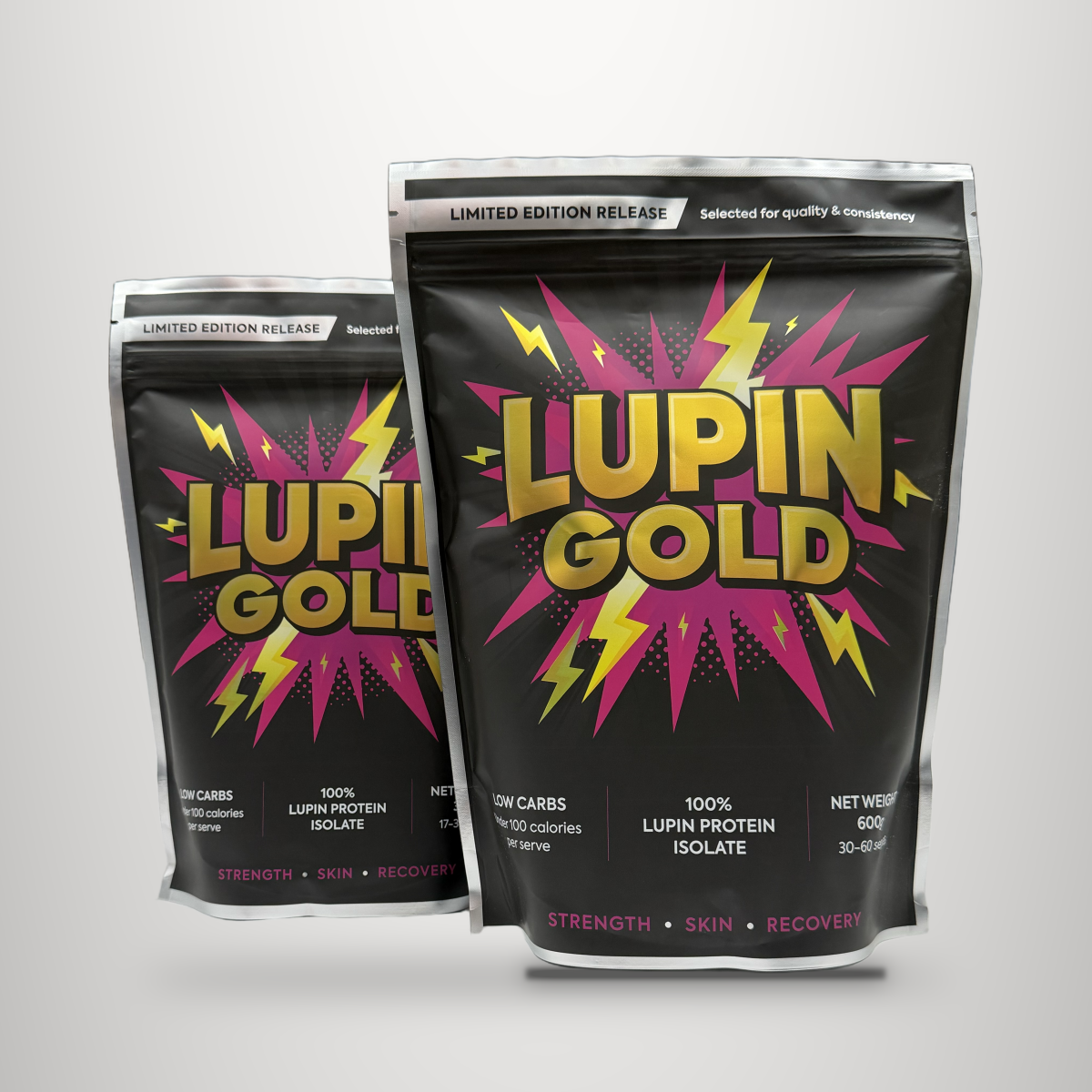
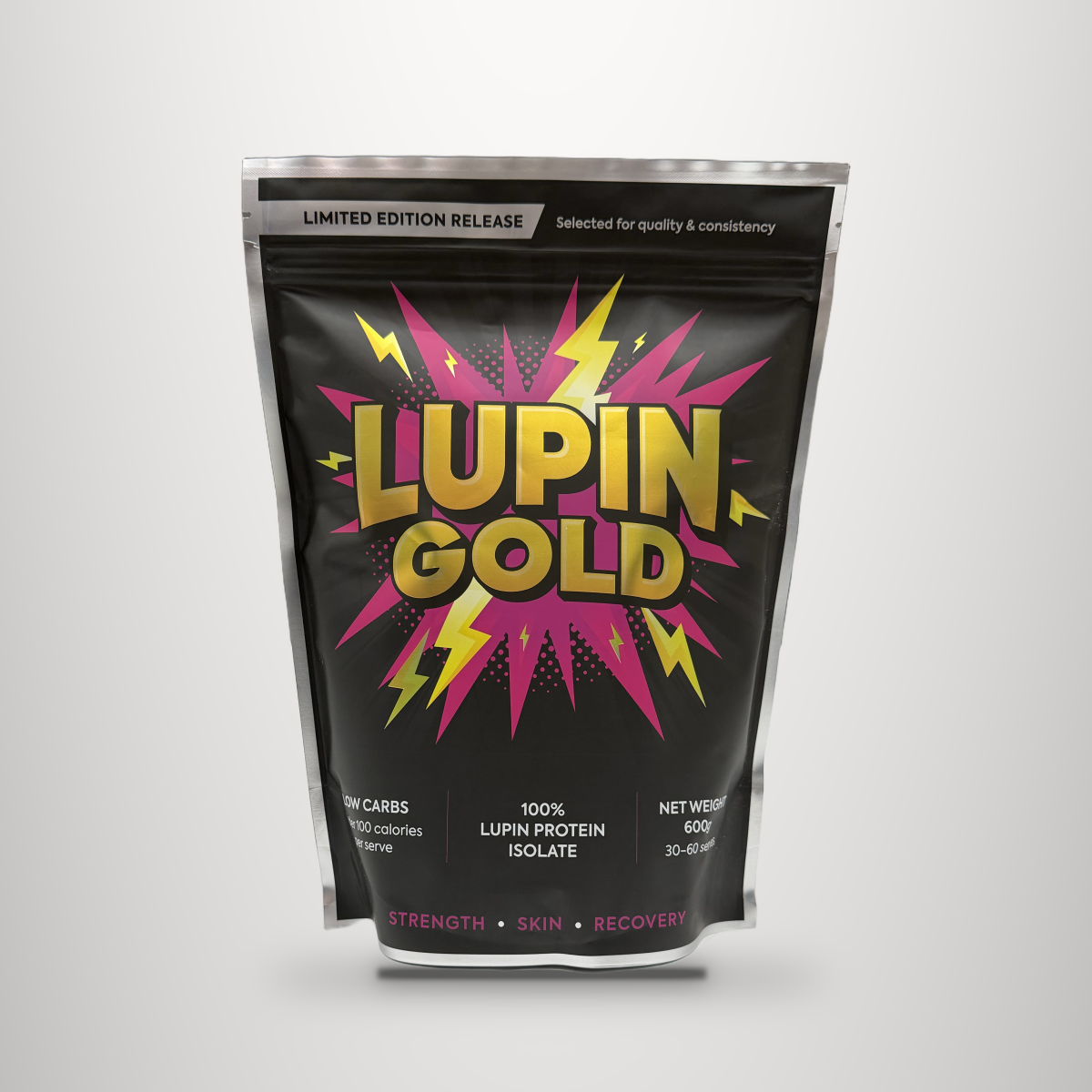
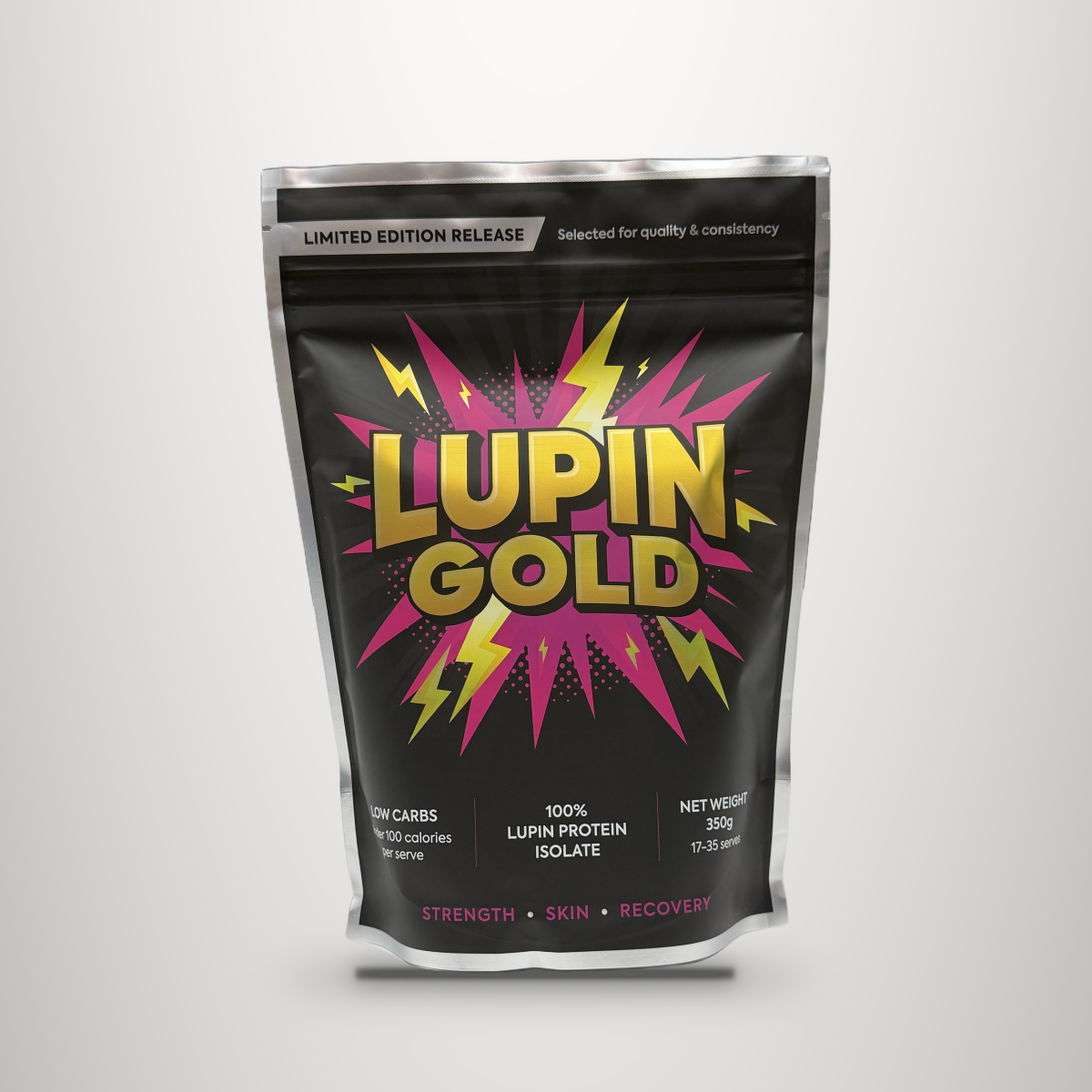
Lupin Gold - single ingredient vegan protein
Lupin Gold is a pure lupin protein isolate - one ingredient, nothing else. No gums, no sweeteners, no fillers. It's designed for people who want a clean vegan protein that works in real food, not just a flavoured shake.
See the best vegan protein powder options in AustraliaFAQs
How do I choose the right vegan protein powder?
It depends on your priorities. For highest protein content and digestibility, lupin protein isolate (~90% protein, ~0.96 digestibility) is one of the strongest options available in Australia - it's complete, soy-free, dairy-free and unflavoured. For people who prefer flavoured options, look for products with short ingredient lists and minimal sweeteners. Avoid heavily blended powders with gums and filler fibres if digestive sensitivity is a concern.
Is vegan protein powder complete?
Some vegan proteins are naturally complete - meaning they contain all nine essential amino acids. Lupin and soy are examples of complete plant proteins. Others, like pea and rice, are lower in certain amino acids (methionine and lysine respectively) and are often blended to improve their profile. Always check whether the product states "complete protein" or lists all nine EAAs on the label.
Why do some vegan protein powders cause bloating?
Bloating from vegan protein powder is almost always caused by additives rather than the protein source itself. The most common culprits are sweeteners like stevia and erythritol, gums like xanthan gum, added fermentable fibres, and low-purity plant protein concentrates that contain more carbohydrate and anti-nutrients. Switching to a single-ingredient, unflavoured protein isolate often resolves the issue.
How much vegan protein powder should I have per day?
This depends on your total daily protein target, not a fixed amount for the powder itself. Most adults benefit from 1.2-2.0g of protein per kg of body weight per day depending on activity level. Protein powder is a convenient way to supplement what you're getting from whole food - not a replacement for it. One to two serves per day is common, but total dietary protein intake matters more than timing or dose.
Is vegan protein powder suitable for everyday use?
Yes, for most people. The key is the ingredient list - a clean, single-ingredient protein isolate with no gums, sweeteners or fillers is generally well-tolerated daily. Heavily formulated products with multiple additives are more likely to cause issues with consistent daily use, particularly for people with sensitive digestion.
What should Australians look for on labels?
Check protein per 100g (not just per serve), the ingredient list order, allergen declarations, and whether the product contains sweeteners or gums. FSANZ requires declared allergens to be clearly bolded near the ingredient list. If the protein source appears low on the ingredient list, the product has significant filler content. Simpler is almost always better.
Is lupin protein a good vegan protein powder?
Lupin protein isolate is one of the stronger vegan protein options available in Australia. It delivers ~90% protein, is naturally complete with all nine essential amino acids, has a digestibility score of ~0.96, and is free from soy, dairy, gluten, gums and sweeteners. The main consideration is that lupin is a declared allergen in Australia - people with legume or peanut allergies should check suitability before use.
Related reading: Lupin vs soy vs pea vs whey - full comparison - soy-free protein powder guide - lupin allergen information
Disclaimer: This article is for general information only and reflects our own research and understanding at the time of writing. We are not scientists, and information may evolve. It is not individual medical advice - please speak with your healthcare professional for personalised guidance.