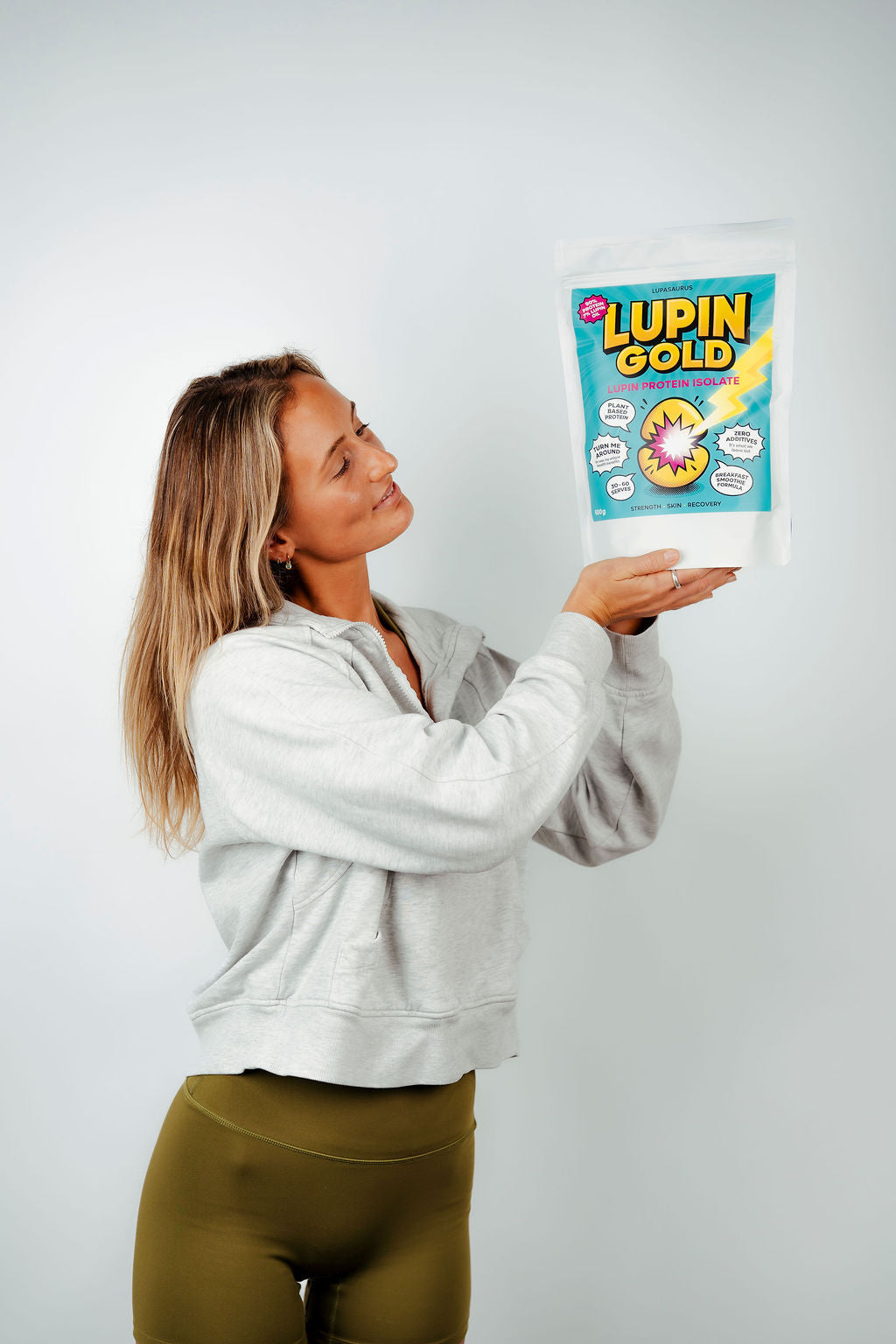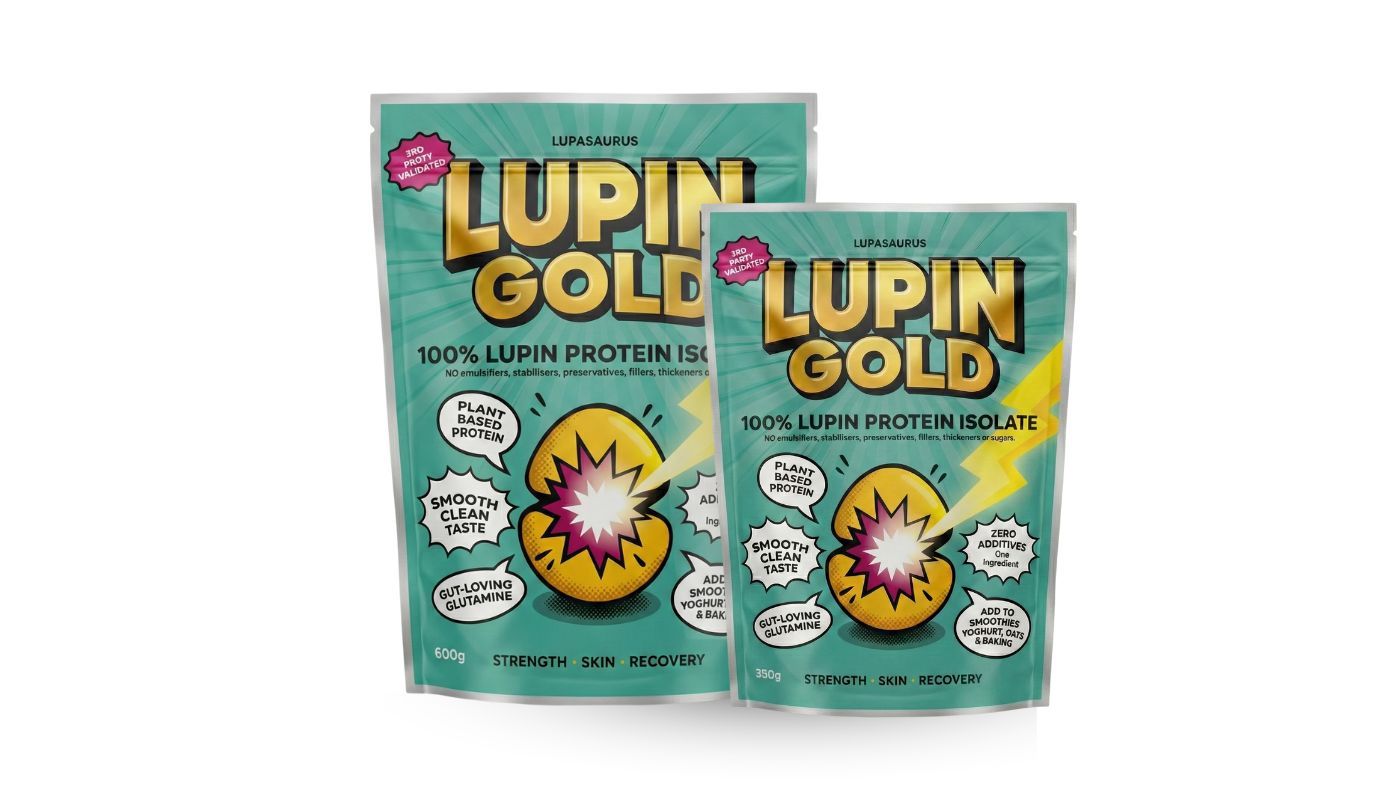


Not all proteins are created equal — and some are better for your muscles, gut, and the planet than others. Here we compare lupin, soy, pea and whey protein isolates across protein content, digestibility, taste, and sustainability. No hype, just data.
We're looking specifically at isolates and high-quality protein powders available in Australia, including clean plant protein isolates designed for everyday use rather than flavour masking.
The Contenders — A Quick Rundown
- Lupin Protein — ~90% protein as an isolate, naturally mild taste, easy on digestion and versatile in real food. Strong essential and conditionally essential amino acid profile.
- Soy Protein — High protein %, complete amino acids, but a major allergen and often imported; taste can be bean-like. Some avoid soy for personal or dietary reasons.
- Pea Protein — Solid plant option; slightly low in methionine; can be earthy or gritty and may cause bloating for some.
- Whey Protein — Fast-absorbing, complete amino acids, popular for muscle recovery — but dairy-based and can trigger digestion issues for sensitive users.
Quick Comparison
| Protein | Protein / 100 g | Leucine (muscle trigger) | Digestibility | Common Allergens | Sustainability Snapshot |
|---|---|---|---|---|---|
| Lupin isolate | ~90% | Leucine ~6.8% of protein | High (~96% for Lupin Gold) | Legume; generally allergen-friendly vs soy/dairy | 🌱🌱🌱🌱 — nitrogen-fixing; grows in low-fertility soils; supports sustainable crop rotation |
| Soy isolate | ~90% | Leucine ~6.6% of protein | High | Soy (declared allergen) | 🌱🌱🌱 — efficient crop; sourcing concerns vary by region |
| Pea isolate | ~82–85% | Leucine ~8.2% of protein | Good | Legume; generally low allergen risk | 🌱🌱🌱🌱 — typically lower impact but requires a lot of water; widely grown |
| Whey isolate | ~90% | Leucine ~10.6% of protein | Very high | Dairy (milk proteins/lactose traces) | 🌱🌱 — dairy-linked methane & water intensity |
Percentages are typical ranges for isolates; exact values vary by brand and batch. Always check labels.
Amino Acids & Muscle Building
Muscle protein synthesis (MPS) is sensitive to leucine. A practical target per meal is roughly 2–3 g leucine (context-dependent). The table below shows indicative leucine delivered by a 30 g serve of each powder, adjusted for both protein content and leucine digestibility.
| Protein | Typical protein in powder | Leucine (% of protein) | Digestibility | Leucine per 30 g serve (g) | Effective leucine (g) |
|---|---|---|---|---|---|
| Lupin isolate | ~90% | 6.8% | 0.96 | 1.98 | 1.9 |
| Soy isolate | ~90% | 6.6% | 0.95 | 1.98 | 1.88 |
| Pea isolate | ~82% | 8.2% | 0.92* | 2.27 | 2.0 |
| Whey isolate | ~90% | 10.6% | 0.99 | 2.86 | 3.15 |
Assumes 30 g powder; protein % reflects typical isolates. *Pea digestibility uses pea concentrate leucine SID as a conservative proxy; isolates are similar but can vary by process. "Effective leucine" = leucine per serve × leucine SID × Protein %. Based on our own research of isolate values from reliable sources.
EAA & DIAAS Snapshot (6y+ adults)
| Protein | PDCAAS | First-limiting AA | Note |
|---|---|---|---|
| Whey isolate | ~1.0 | Histidine | High quality; dairy-based |
| Soy isolate | ~1.0 | Sulfur AAs | Complete; declared allergen |
| Pea (conc.) | ~0.82–0.89 | Sulfur AAs | Often blended for balance |
| Lupin isolate | ~0.96 | Sulfur AAs | High digestibility; strong EAA coverage |
Published PDCAAS values shown for whey, soy isolate and pea concentrate; limited published PDCAAS for lupin isolate. PDCAAS = Protein Digestibility Corrected Amino Acid Score.

Quick refresher: what is leucine and why does it matter?
Leucine is a branched-chain amino acid that directly stimulates mTORC1 — a key switch for muscle protein synthesis. Hitting ~2–3 g leucine with your protein feeding helps maximise the post-meal MPS response (the exact target varies by age, training status, and total protein dose).
- Lupin isolate: a strong choice for recovery, naturally robust in EAAs with notable arginine and glutamine; practical serving sizes can support leucine targets alongside real food.
- Soy: complete amino acid profile; performance-worthy but allergenic for some.
- Pea: good BCAAs; pair with methionine-richer foods (e.g., oats, sesame) for completeness.
- Whey: the benchmark for muscle growth — if you tolerate dairy.
Gut Friendliness & Digestibility
Your gut will tell you the truth faster than any label. Many users report bloating with pea blends and some whey concentrates. Soy and dairy are also listed allergens in Australia.
Lupin isolate (like Lupin Gold) undergoes specialised refinement processing to remove unwanted compounds and improve digestibility — landing at around 96% digestibility. That means more of what you pay for actually gets used.
Lupin is also a declared allergen in Australia. Read our full allergen information here.
Check this out: soy-free, vegan & easy on digestion protein powder
Taste & Mixability
- Lupin isolate: naturally mild, smooth; disappears into smoothies, oats, yoghurt, and bakes without grit or aftertaste.
- Pea: can taste earthy and feel chalky unless heavily flavoured (often with gums/sweeteners).
- Soy: bean-like notes; often masked with flavours.
- Whey: creamy but dairy-forward; not ideal if you're avoiding lactose or milk proteins.
Looking for an unflavoured option that works in cooking and baking? See our unflavoured protein powder range.


Sustainability Matters
- Lupin: nitrogen-fixing crop; thrives in low-fertility soils; supports healthier soil composition and efficient crop rotations.
- Soy: efficient protein crop overall, but sourcing matters — some regions face land-use concerns; check provenance.
- Pea: generally low input requirements; needs a lot of water; widely grown in cooler climates.
- Whey: dairy-linked methane and water intensity; a by-product of cheese making but still part of the broader dairy footprint.
The Verdict
Lupin isolate is a strong all-rounder for most people: solid muscle support when dosed well, easy on digestion, neutral taste, excellent sustainability story, and versatile in both shakes and real food. Whey still edges it for muscle growth if you tolerate dairy — but many do not. Soy and pea have clear merits, yet also the trade-offs we've covered.
Ready to switch?
- ✓ Soy-free, dairy-free, no artificial sweeteners
- ✓ ~90% protein isolate
- ✓ ~96% digestibility; smooth & neutral taste
- ✓ Works in smoothies, oats, yoghurt, and baking
More reading: lupin protein benefits • plant protein without bloating • allergen information
FAQs
Is lupin protein better than pea protein?
Lupin and pea are both legume-based plant proteins but differ in a few key areas. Lupin isolate typically achieves ~90% protein content vs ~82–85% for pea isolate. Lupin has a digestibility score of ~0.96 compared to ~0.92 for pea. Lupin is also naturally mild in taste and mixes smoothly without the earthy or gritty texture some people find with pea protein. Both are soy-free and dairy-free. The choice often comes down to taste preference and how your gut responds to each.
Is lupin protein better than whey?
Whey has a higher leucine content per serve (~10.6% vs ~6.8% of protein) which gives it an edge for maximising muscle protein synthesis per dose — if you tolerate dairy. Lupin protein is the stronger choice for people avoiding dairy, soy or artificial additives. At equivalent protein doses, lupin provides a complete amino acid profile with high digestibility (~0.96) and is commonly associated with easier digestion. For overall daily protein intake, both are effective.
What is the best plant protein powder in Australia?
The best plant protein depends on your priorities. For highest protein content and digestibility, lupin protein isolate (~90% protein, ~0.96 digestibility) and soy protein isolate (~90%, ~0.95) are the strongest options. For people avoiding soy and dairy, lupin is one of the few complete plant proteins available at high purity in Australia. For taste and versatility in cooking, lupin's neutral flavour makes it the most practical everyday option.
Is lupin protein good for muscle building?
Yes, lupin protein supports muscle protein synthesis as part of adequate daily protein intake. It provides a complete amino acid profile including leucine, which plays a role in signalling muscle protein synthesis. At a 30g serve, lupin isolate delivers approximately 1.9g of effective leucine — within range for supporting a muscle protein synthesis response when combined with adequate total daily protein intake. Total daily protein and training stimulus matter more than any single protein source.
Is soy protein safe to eat every day?
For most people, soy protein is considered safe for daily consumption. However, soy is a declared allergen in Australia, and some people with thyroid conditions, hormone sensitivities or soy intolerance choose to avoid it. For those avoiding soy, lupin protein isolate is a complete plant protein alternative that's free from soy, dairy and gluten.
What is the difference between an isolate and a concentrate?
Isolates are filtered further to remove more non-protein components, yielding a higher protein percentage (often ~85–90%+) and typically a smoother mix. Concentrates retain more carbs and fats and can vary in digestibility and mouthfeel. For people focused on protein content and digestive comfort, isolates are generally the cleaner choice.
Disclaimer: This article is for general information only and reflects our own research and understanding at the time of writing. We are not scientists, and information may evolve. It is not individual medical advice — please speak with your healthcare professional for personalised guidance.