

Most protein powder aftertaste has nothing to do with protein. It comes from sweeteners, gums, and flavour systems added to mask poor formulation. Here's what causes it, and what a genuinely unflavoured protein powder looks and tastes like.
Quick navigation
Why Protein Powder Leaves an Aftertaste
Protein powder aftertaste is almost always caused by additives rather than the protein source itself. Pure protein — whether whey, pea, or lupin isolate — is largely neutral in taste. The lingering flavours that put people off are typically introduced during formulation.
Understanding what causes the aftertaste makes it easier to read a label and choose an option that actually works for daily use.
The Common Culprits Behind Bad-Tasting Protein Powder
Stevia and monk fruit
Stevia (960) and monk fruit extract are the most common sources of that sharp, metallic or liquorice-like aftertaste. The bitterness lingers because these sweeteners bind to taste receptors differently to sugar — and the effect doesn't wash away quickly. No amount of added banana fully masks it.
Artificial and "natural" flavours
Flavour systems — even those labelled "natural" — are often concentrated and perfume-like. They can coat the mouth and throat, leaving an artificial finish that many people find more unpleasant than the original protein taste.
Gums and thickeners
Xanthan gum, guar gum and similar thickeners are added for texture. In some people they cause a chalky mouthfeel and digestive discomfort — both of which register as "bad taste" even when the flavour profile is otherwise fine.
Low-quality protein sources
Some plant protein concentrates retain more of the raw material's natural compounds — including bitter-tasting anti-nutrients. High-purity isolates remove most of these, which is one reason protein content percentage matters beyond just the macros.
What to Look for in a Protein Powder Without Aftertaste
If aftertaste is your primary concern, here is what to check on the label before buying:
- No stevia (960), erythritol (968) or monk fruit extract — these are the most common aftertaste culprits in "clean" protein products
- No gums — xanthan gum (415) and guar gum (412) both affect mouthfeel and can cause digestive discomfort
- No flavour systems — "natural flavours" on a label still means a concentrated flavour compound has been added
- High protein content per 100g — higher protein percentage generally means less filler and fewer adulterants
- Isolate over concentrate — isolates are more refined and typically have a cleaner, more neutral taste profile
- Short ingredient list — ideally one or two ingredients maximum
Unflavoured vs Flavoured Protein Powder
The simplest solution to protein powder aftertaste is choosing an unflavoured product. Without sweeteners, flavour systems or gums, there is nothing to cause a lingering taste.
| Feature | Unflavoured protein | Flavoured protein |
|---|---|---|
| Aftertaste risk | Minimal — no sweeteners or flavours | Higher — stevia, monk fruit or flavour systems commonly used |
| Digestive comfort | Generally easier — no gums or sweeteners | Varies — gums and sweeteners can cause bloating |
| Versatility | Works in sweet and savoury applications | Limited to sweet applications |
| Ingredient list | Short — one or two ingredients | Longer — sweeteners, flavours, gums typically added |
| Daily use | Easy — no flavour fatigue | Can become monotonous over time |
The trade-off is that unflavoured protein does not taste great on its own in water — but that is rarely how you would want to use it. Stirred into oats, blended into a smoothie, or mixed into yoghurt, a quality unflavoured isolate disappears completely.
How Lupin Gold Approaches This
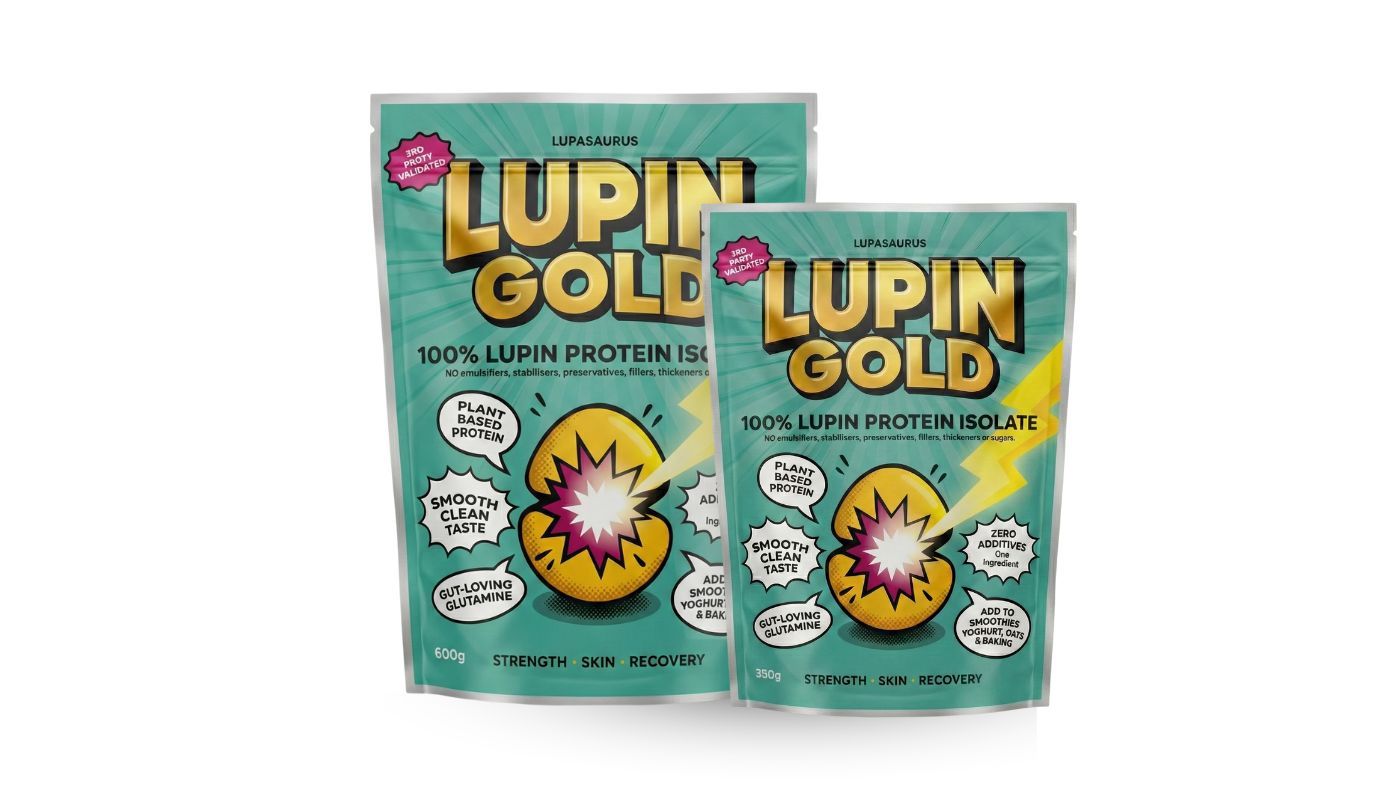
Lupin Gold is a single-ingredient lupin protein isolate. No sweeteners, no flavour systems, no gums, no fillers. The result is a powder that has no meaningful aftertaste because there is nothing in it to cause one.
- ~90% protein content per 100g — one of the highest of any plant protein
- Digestibility score ~0.96 — high purity means cleaner taste profile
- No stevia, gums, flavours or fillers — single ingredient
- Neutral taste — works in smoothies, oats, yoghurt, baking and savoury cooking
- Complete amino acid profile — all nine essential amino acids without blending sources
Ready to try protein without aftertaste?
Shop unflavoured protein powderRelated: lupin vs soy vs pea vs whey comparison - plant-based protein powder - protein and gut health
FAQs
Why does protein powder leave an aftertaste?
Protein powder aftertaste almost always comes from sweeteners, flavour systems or gums added to the formulation rather than from the protein itself. Stevia and monk fruit are the most common culprits — they bind to taste receptors differently to sugar and leave a bitter, metallic or liquorice-like finish that lingers. Switching to an unflavoured, single-ingredient protein isolate eliminates the source of the aftertaste.
What protein powder has no aftertaste?
Single-ingredient, unflavoured protein isolates are the least likely to leave an aftertaste because they contain no sweeteners, flavour systems or gums. Look for products with one or two ingredients maximum, no stevia (960), erythritol (968) or monk fruit extract listed, and no gums like xanthan (415) or guar (412). Lupin protein isolate, pea protein isolate and whey isolate are all available unflavoured — the key is checking the ingredient list, not the front-of-pack claims.
Is there a protein powder with no taste at all?
A truly tasteless protein powder is rare, but a good unflavoured isolate will have a very mild, neutral flavour that disappears into food. High-purity isolates like lupin protein isolate (~90% protein) tend to have the cleanest taste profile because the refining process removes most of the raw material's natural compounds. In oats, yoghurt, smoothies or baking, a quality unflavoured isolate is functionally invisible to the palate.
Does stevia cause protein powder aftertaste?
Yes — stevia is one of the most common causes of protein powder aftertaste. Stevia (listed as 960 on Australian labels) produces a sharp, bitter or metallic finish that many people find lingers significantly longer than sugar sweetness. Even small amounts in a protein powder can be noticeable, particularly when the product is mixed with water or milk alone. Adding fruit, vanilla or other strong flavours can help but rarely eliminates it entirely.
Why does unflavoured protein powder taste better for daily use?
Unflavoured protein powder avoids flavour fatigue — the effect where a strong artificial or natural flavour becomes increasingly unpleasant with repeated daily exposure. It also works across a broader range of food applications, both sweet and savoury, which makes it easier to vary how you use it. Most people who switch from flavoured to unflavoured protein find they are more consistent because the protein stops being something to tolerate and becomes something that genuinely disappears into food.
Can I use unflavoured protein powder in cooking and baking?
Yes — unflavoured protein powder is significantly more versatile in cooking and baking than flavoured options because it does not impose a flavour on the dish. It works in savoury applications like soups, sauces and savoury muffins as well as sweet ones like oats, pancakes and protein balls. Flavoured protein powders are generally limited to sweet applications and can taste artificial when baked.
Disclaimer: This article is for general information only and reflects our own research and understanding at the time of writing. We are not scientists, and information may evolve. It is not individual medical advice - please speak with your healthcare professional for personalised guidance.