
Most protein powder labels lead with one number: protein percentage. The rest of the panel is where you find out what's actually going in. For lupin protein isolate, that remainder is more interesting than most.
What is lupin protein isolate?
Lupin protein isolate is the protein from sweet lupin seeds, concentrated and spray dried into a fine powder, with most of the fibre removed along the way. Lupin Gold is around 90% protein, roughly 6% lupin oil, 3% lupin fibre and 1% naturally occurring lupin salts. That works out to around 90g of protein per 100g, or about 27g in a 30g serve.

It is a single ingredient: unflavoured, soy-free, with no emulsifiers or gums. Lupin Gold is made from European-grown lupins, refined in Germany and packed in WA, and has a PDCAAS of 0.96. Because there are no gums, it suits smoothies, baking, oats, yoghurt and savoury dishes better than a shake with water.
Where to buy lupin protein isolate in Australia
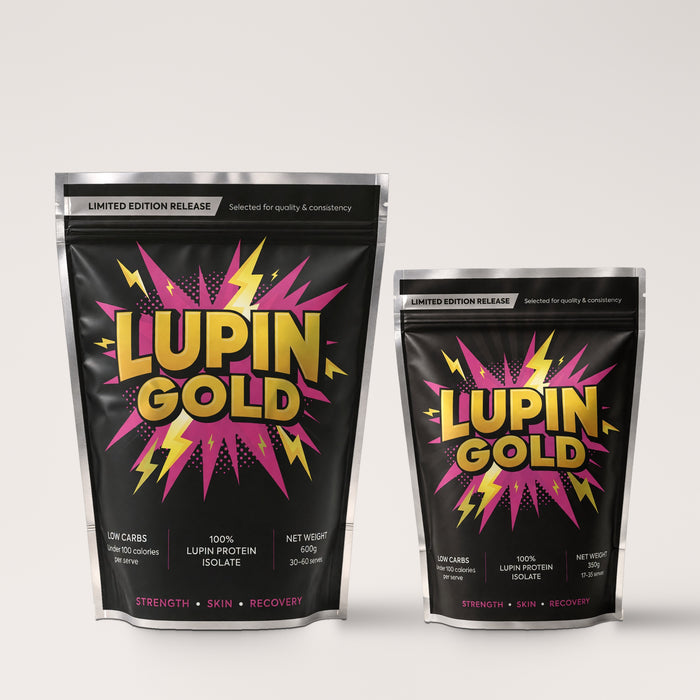
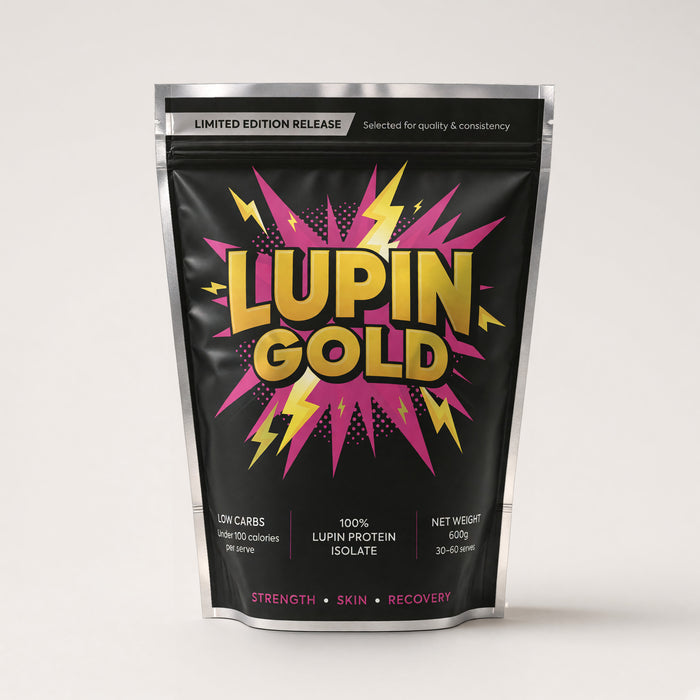
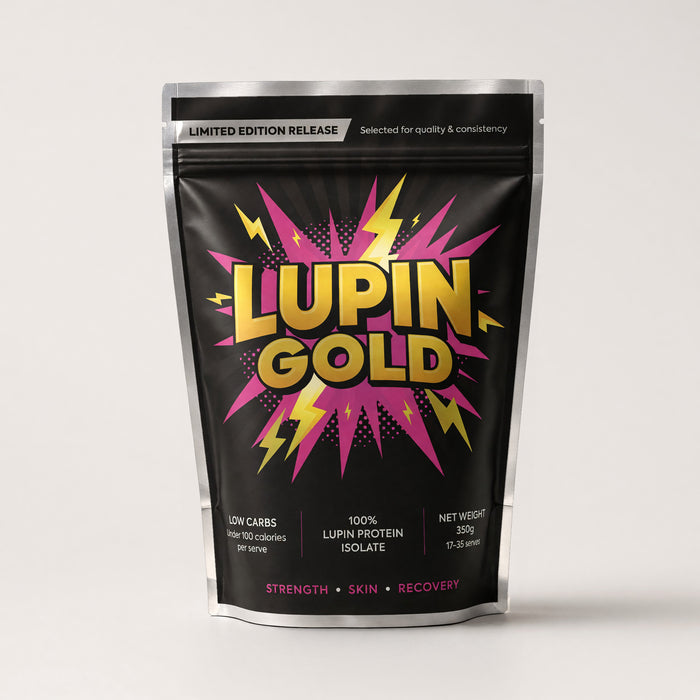
Lupin Gold sells its isolate online in 600g and 350g packs. See the full lupin protein powder range.
Why the full nutritional panel matters
No protein powder is 100% protein. The remaining percentage is always something: residual fibre, fat, moisture, minerals, or compounds carried over from the source ingredient. For a lot of plant protein powders, that remainder is either filler, added gums for texture, or anti-nutritional compounds that survived processing.
For lupin protein isolate, the non-protein fraction reflects the natural composition of the lupin seed. It wasn't added. It wasn't engineered in. It's what remains after the protein has been concentrated through an alkaline extraction and isoelectric precipitation process that removes the bulk of the alkaloids and most of the fibre, while retaining a clean, useful nutrient profile.
Here's what that looks like in practice, per 100g.
The fibre: around 3g of naturally occurring prebiotic fibre per 100g
Lupin protein isolate contains around 3g of naturally occurring lupin fibre per 100g. This is the figure that tends to surprise people who associate isolates with stripped-back nutrition.
Lupin fibre is a prebiotic fibre, which means it passes through the upper digestive tract without being broken down and reaches the colon, where it is fermented by gut bacteria. Whey protein has no fibre at all, so this is one practical difference between the two.
If gut health is a specific concern for you, talk to your GP or dietitian.

The important distinction here is that this fibre is naturally occurring, not added. Many protein powders include isolated gums (guar, xanthan, acacia) or inulin added for texture or label appeal. The fibre in lupin protein isolate is a native component of the lupin seed that survives the refinement process in small, useful amounts.
For context: lupin flour and lupin concentrate contain significantly more fibre, around 20 to 30g per 100g depending on the product. They also retain more of the anti-nutritional compounds present in the raw seed. The isolate form removes most of those compounds while retaining a small, practically useful amount of the prebiotic fraction.

The fat: around 6g of naturally occurring lupin oil per 100g
Lupin protein isolate contains around 6g of fat per 100g, in the form of naturally occurring lupin oil. This is within the normal range for a plant protein isolate and is not a quality issue.
Lupin oil has a predominantly unsaturated fatty acid profile. Published data on Lupinus angustifolius (sweet lupin, the species used in Lupin Gold) shows the oil is around 80% unsaturated fatty acids, with linoleic acid (an omega-6 polyunsaturated fat) and oleic acid (an omega-9 monounsaturated fat) as the main components. A small fraction of omega-3 linolenic acid is also present.
This fat fraction also carries the naturally occurring vitamin E present in lupin, which is a fat-soluble compound and concentrates in the oil portion of the seed.
A small amount of naturally occurring fat in a concentrated plant protein is normal and expected. Powders that market themselves as virtually fat-free have often been over-processed to achieve that figure, removing naturally beneficial compounds in the process.
The minerals: iron, manganese, zinc and calcium
Lupin protein isolate is a source of four minerals confirmed on the Lupin Gold label: iron, manganese, zinc and calcium. Each is worth a brief note.
Iron. Lupin contains non-haem iron, which is the form found in plant foods. Non-haem iron is less bioavailable than haem iron from animal sources. That means a smaller proportion of what you consume is absorbed. Pairing iron-containing plant foods with a source of vitamin C at the same meal is commonly associated with improved non-haem iron absorption. Worth knowing if iron intake is a specific concern for you.
Manganese. Lupin is a meaningful source of manganese, a trace mineral that plays a role in normal metabolism and is involved in enzyme function throughout the body. Most people eating a varied diet get adequate manganese, but it's worth noting it's present in useful amounts here.
Zinc. Present in the isolate in meaningful amounts. Zinc plays a role in immune function and protein metabolism. As with iron, absorption of plant-sourced zinc can be lower than from animal sources, though the gap is smaller than for iron.
Calcium. Lupin is a source of calcium, which is useful context for people using a dairy-free protein. The amounts aren't comparable to a glass of milk, but they contribute to daily intake alongside other food sources.
The framing that applies throughout this section: lupin protein isolate is a source of these minerals. It is not a replacement for a varied diet, and making specific claims about meeting daily needs from a protein powder alone would be misleading.

The vitamins: vitamin B and vitamin E
The Lupin Gold label confirms the presence of vitamin B and vitamin E.
Vitamin E. This one is straightforward. Vitamin E is a fat-soluble compound found naturally in many plant seed oils, and lupin oil is no exception. It's present because the oil fraction of the seed is retained in the isolate. Vitamin E is commonly associated with antioxidant activity in the body, though the amounts in a serving of protein powder should be understood as a contribution rather than a primary source.
Related: collagen vs protein powder: why a complete protein covers more ground than collagen alone.
Vitamin B. Lupin protein isolate is confirmed rich in vitamin B, as stated on the Lupin Gold label. The lupin seed contains B vitamins including thiamine (B1) and riboflavin (B2), and is a meaningful source of folate in whole form. The refinement process does reduce B vitamin levels compared to whole lupin flour, but enough is retained for the pack claim to hold. A useful contribution to daily intake as part of a varied diet.
The sodium: around 1,400mg per 100g
This is worth addressing directly. Lupin protein isolate contains around 1,400mg of sodium per 100g, which means a 20 to 30g serve contributes around 280 to 420mg of sodium.
To put that in context: the Australian Health Survey suggests a daily sodium target of around 2,000mg for most adults (equivalent to around 5g of salt). At 280 to 420mg per serve, a single scoop of Lupin Gold represents around 14 to 21% of that daily figure.
This sodium is naturally occurring, not added salt. It's a characteristic of lupin protein isolate across the category, not specific to this product. For most people, this is unremarkable in the context of a normal day's eating. For anyone actively managing sodium intake for medical reasons, it's worth knowing and factoring in.
Around 280 to 420mg of sodium per 20 to 30g serve. Naturally occurring, not added. Worth knowing. Not a reason to avoid it, but worth counting if sodium is something you monitor.
How this compares to other plant proteins
Most plant protein isolates, pea and rice being the most common, are formulated primarily to maximise the protein percentage and minimise everything else. That produces a cleaner macro profile on paper but doesn't necessarily mean a better nutritional picture overall.
Pea protein isolate is often blended with rice protein to round out the amino acid profile, because rice protein is low in lysine. Lupin Gold is used on its own as a single ingredient.
Lupin's fibre and mineral content is a function of the seed's composition, not something that was engineered in. The fibre in particular is unusual for a protein isolate, where fibre is typically absent or present only as an additive.
How this shows up on the Lupin Gold label
The full nutritional panel per 100g, based on confirmed product facts:
| Nutrient | Per 100g | Per 30g serve |
|---|---|---|
| Protein | ~90g | ~27g |
| Total fat (lupin oil) | ~6g | ~1.8g |
| Dietary fibre (lupin fibre) | ~3g | ~0.9g |
| Sodium | ~1,400mg | ~420mg |
| BCAAs | 13.31g | ~4g |
| EAAs | 29.51g | ~8.9g |
| Arginine | 10.36g | ~3.1g |
| Glutamic acid | 24.22g | ~7.3g |
Single ingredient. No gums, no stevia, no added flavours, no fillers. What you see on that panel is the natural composition of the lupin seed after protein concentration.
One ingredient. Nothing hidden. Shop plant-based protein powder
Frequently asked questions
What is in lupin protein isolate besides protein?
Around 6g of naturally occurring lupin oil (fat), around 3g of naturally occurring prebiotic lupin fibre, around 1,400mg of sodium, and a mineral profile including iron, manganese, zinc and calcium. Vitamins B and E are also confirmed present on the label. None of these are added ingredients. They reflect the natural composition of the lupin seed after protein concentration.
Does lupin protein contain fibre?
Yes. Lupin protein isolate contains around 3g of naturally occurring prebiotic lupin fibre per 100g. This is unusual for a protein isolate, where fibre is typically removed during processing or added back in as an isolated gum. In lupin isolate, the fibre is a native component of the seed that survives the refinement process in small amounts. It is not a high fibre food, though: a 30g serve has under 1g of fibre.
Is the fat in lupin protein isolate a concern?
No. Around 6g of naturally occurring lupin oil per 100g is well within the normal range for a plant protein isolate and is not a quality issue. The fatty acid profile is predominantly unsaturated, with oleic and linoleic acid as the main components. This fat fraction also carries the naturally occurring vitamin E present in the product. Very low-fat plant proteins have typically been over-processed to achieve that figure, which often removes other beneficial natural compounds.
How much sodium is in lupin protein powder?
Around 1,400mg per 100g, or around 280 to 420mg per 20 to 30g serve. This is naturally occurring sodium, not added salt. For most people, that is unremarkable in the context of a day's eating. For anyone managing sodium intake for medical reasons, it's worth factoring in. The Australian daily sodium target for most adults is around 2,000mg, so a single serve represents around 15% of that figure.
Is lupin protein a good source of iron?
It's a source of iron, but with important context. The iron in lupin is non-haem iron, the form found in plant foods. Non-haem iron is less bioavailable than haem iron from meat and fish, meaning a smaller proportion of what you consume is absorbed. Eating it alongside a source of vitamin C is commonly associated with improving non-haem iron absorption. If iron intake is a specific concern, speak with a dietitian or healthcare professional.
Does lupin protein contain vitamins and minerals?
Yes. The Lupin Gold label confirms the presence of vitamin B, vitamin E, iron, manganese, zinc and calcium. Vitamin E is a fat-soluble compound that concentrates in the lupin oil fraction. B vitamins are present from the seed. The minerals are naturally occurring. These should be understood as contributions to daily intake rather than primary sources, and none of these claims should be read as meaning a serve of lupin protein replaces a varied diet.
The short version: Lupin protein isolate is not just protein. The non-protein fraction includes naturally occurring prebiotic fibre, a predominantly unsaturated fat carrying vitamin E, a meaningful mineral profile, and around 280 to 420mg of naturally occurring sodium per serve. None of it was added. All of it is worth knowing about.
Related reading: gut health and protein - leaky gut, diet and gut barrier support - the importance of protein in your diet
This article is for general information only and reflects our own research and understanding at the time of writing. We are not scientists, and information may evolve. It is not individual medical advice. Please speak with your healthcare professional for personalised guidance.