
Protein shakes are not just for people who train. After 50 the body becomes gradually less efficient at using protein, so you need more of it and the quality of what you eat starts to matter more than it used to. For women there is a second thing happening at the same time, because menopause changes the picture on its own. Here is what changes, how much protein you actually need, and what to look for in a powder.
What happens to muscle after 50
From around your mid-30s, muscle mass begins to decline slowly. After 60, that decline tends to accelerate. The clinical term is sarcopenia, and it's one of the most significant and least talked-about aspects of getting older.
It's not just about how you look. Muscle plays a central role in strength, balance, mobility, and how well your body recovers from illness or injury. Maintaining as much lean mass as possible as you age is commonly associated with staying active and independent for longer.
Part of what drives this decline is something called anabolic resistance. In younger adults, a moderate amount of protein at a meal is usually enough to trigger muscle protein synthesis, the process your body uses to repair and build muscle tissue. In older adults, that trigger becomes less sensitive. You need more protein per meal to get a similar response, and the body is less forgiving when intake is low or spread unevenly across the day.
This doesn't mean the situation is fixed. Protein intake plays a role in muscle maintenance across every decade of life. The point is that what was adequate at 35 may not be adequate at 55 or 65, and most people aren't aware of that shift until it starts to show up as weakness, slower recovery, or difficulty with everyday tasks.
What menopause changes for women over 50
Women lose lean mass across the menopause transition on top of ordinary ageing. A 2026 review in the Journal of Cachexia, Sarcopenia and Muscle reports lean mass around 2.5% lower in perimenopausal women and 5.7% lower in postmenopausal women compared with premenopausal women.
The proposed mechanism is the loss of oestrogen's anabolic effect: less muscle protein synthesis, more breakdown, and a blunted response to both feeding and resistance training. That is the theory, and it is worth being straight about how settled it is. The same review concludes that the human evidence linking menopause, sex hormones and sarcopenia through muscle protein balance is "limited and insufficient to make any robust conclusions". Studies of whether older women respond normally to protein and to training are genuinely mixed.
What that means in practice
The association is real even if the mechanism is not nailed down, and the two things that respond are the two things you can control: eating enough protein, spread across the day, and resistance training. Neither is a treatment for menopause. Both are what the research keeps pointing at, and the case for not leaving protein to chance in your fifties is stronger than it was in your thirties.
This is general information, not medical advice. Menopause symptoms and management are worth discussing with your GP, particularly if you are considering hormone therapy.
How much protein do people over 50 actually need
The standard dietary protein recommendation you may have heard, around 0.8g per kilogram of body weight per day, was set primarily for younger sedentary adults. For people over 50, particularly those who are moderately active, most current evidence points to a higher target: around 1.2 to 1.6g per kg of body weight per day.
In practical terms:
- A 65kg adult needs around 78 to 104g of protein per day
- A 75kg adult needs around 90 to 120g of protein per day
- An 85kg adult needs around 102 to 136g of protein per day
If you're recovering from illness, surgery, or a period of reduced activity, the higher end of that range is more relevant. The same applies if you're doing any regular strength or resistance work.
Spreading that intake across meals matters too, and it matters more for older adults than for younger ones. Eating most of your protein at dinner is a common pattern, but it's less effective for muscle maintenance than distributing it reasonably evenly across breakfast, lunch and dinner. Older adults seem to benefit more from spreading protein across the day than younger people do.
For a broader breakdown of protein targets and how to hit them through food, see our guide to the importance of protein in your diet.

Why protein quality matters more after 50
Not all protein sources are equal, and the differences matter more as you get older.
Digestibility. As the body ages, digestive efficiency can change. A protein source with a high digestibility score means more of what you consume is actually available for your body to use. This is one reason why digestibility, often rated using a PDCAAS score, is worth paying attention to in this age group specifically, and not just looking at raw protein content on a label.
Related: full nutritional profile of lupin protein isolate: fibre, minerals, vitamins and more.
Leucine content. Leucine is the amino acid most directly involved in triggering muscle protein synthesis. Older adults need a higher leucine content per meal to achieve the same anabolic response that a younger adult would get from a smaller amount. A protein source that contains a complete amino acid profile, with meaningful leucine levels, is better suited to this than one that's incomplete or low in that specific amino acid.
Gut tolerance. Older adults are more likely to have digestive sensitivities, whether to dairy-based proteins, artificial sweeteners, or gums and thickeners that are common in flavoured powders. A protein source that's clean and unflavoured removes that variable entirely.
At this life stage, a protein source that's highly digestible, complete, and easy on the gut is doing more work than one that simply hits a macro number on a label.
Practical ways to increase protein after 50
Food first. Always. A supplement fills gaps; it doesn't replace a diet built around quality protein sources.
Eggs are one of the most versatile and well-tolerated protein sources available, and they're easy to build into breakfast. Greek yoghurt is another solid option, high in protein, easy to eat, and useful as a snack or base for other ingredients. Legumes, tinned fish, chicken and red meat all contribute meaningfully if they're actually appearing across your meals rather than concentrated in one sitting.
The practical challenge most people over 50 describe is appetite. It's common for appetite to decrease with age, which makes hitting higher protein targets harder when you're relying purely on volume of food. This is where a protein powder can be genuinely useful, not as a replacement for eating, but as a way to add meaningful protein to meals you're already eating.
A scoop in your morning oats adds around 27g of protein without changing the meal. The same in yoghurt, a smoothie, or a soup does the same. If appetite is the limiting factor, adding protein to food you're already eating is a more practical solution than trying to eat more of it.
The goal isn't to eat more food. It's to get more protein from the food you're already eating. A clean, unflavoured powder that works in real meals makes that easier.
Should a woman over 50 take protein powder?
She doesn't have to. Plenty of women in their 50s hit their protein target from food alone. A powder earns its place when your appetite is smaller than it used to be, when breakfast is mostly toast or cereal, or when you are lifting weights and still coming up short of 1.2 to 1.6g per kg.
A quick check: add up the protein in a normal day. If you are well under your target, a scoop in a meal you already eat is the easiest fix. If you are already there, you probably don't need one.

What to look for in a protein powder for women over 50
There is no single best protein powder for every woman in her 50s, but the good ones tick the same boxes:
- Protein per serve. Read the grams of protein per serve and per 100g on the nutrition panel, not the claim on the front of the pack.
- A complete amino acid profile with leucine. Leucine is the amino acid most tied to muscle protein synthesis, and older muscle needs more of it per meal.
- A protein quality score. PDCAAS rates how well a protein covers your amino acid needs once digestibility is counted. Check which score a brand quotes, and that it is for the product, not the raw ingredient.
- A short ingredient list. Fewer sweeteners, gums and thickeners means fewer things to upset a sensitive gut.
- Clear allergen labelling. Dairy, soy and lupin are all declared allergens in Australia, so the label should make it obvious what is in the tub.
- Something you will actually use. An unflavoured powder goes into oats, yoghurt, soup and baking, which suits anyone who doesn't want a daily shake.
If you take regular medication, have a kidney condition or are weighing up hormone therapy, talk to your GP or dietitian before you lift your protein intake.
If you want a starting point, see our protein powder for women.

How Lupin Gold fits this
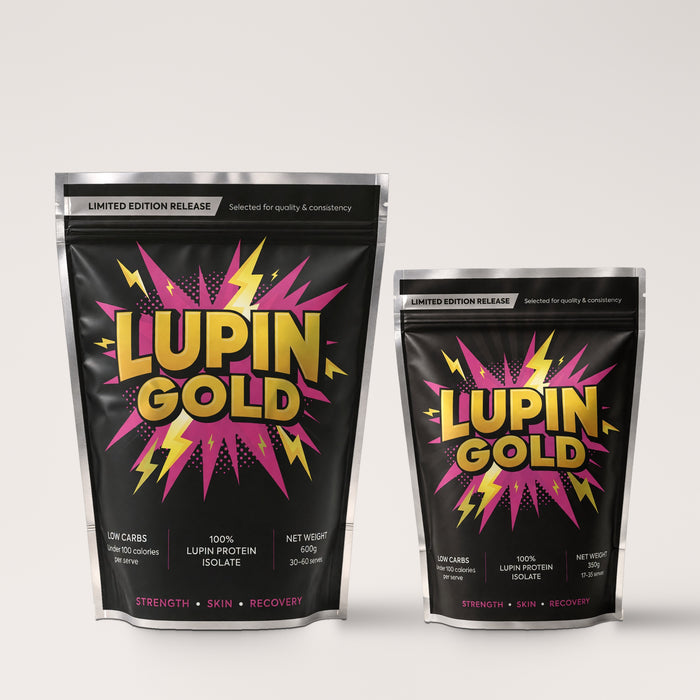
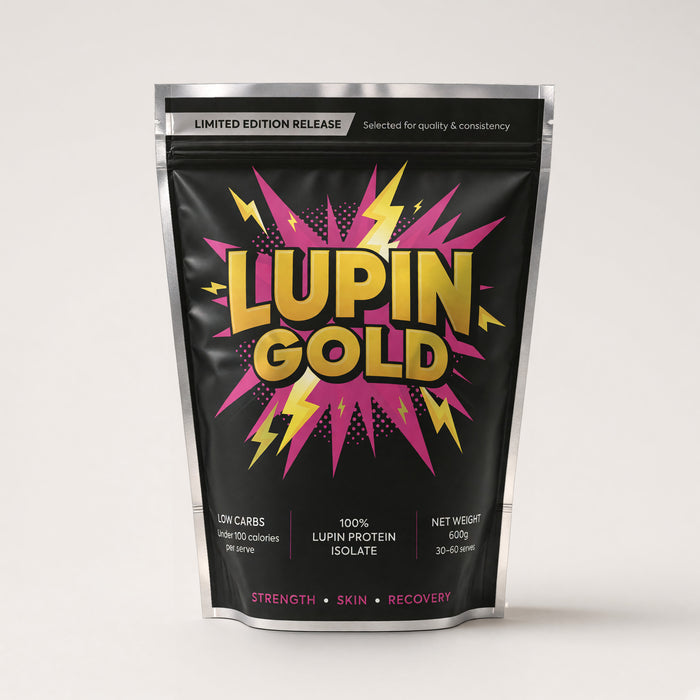
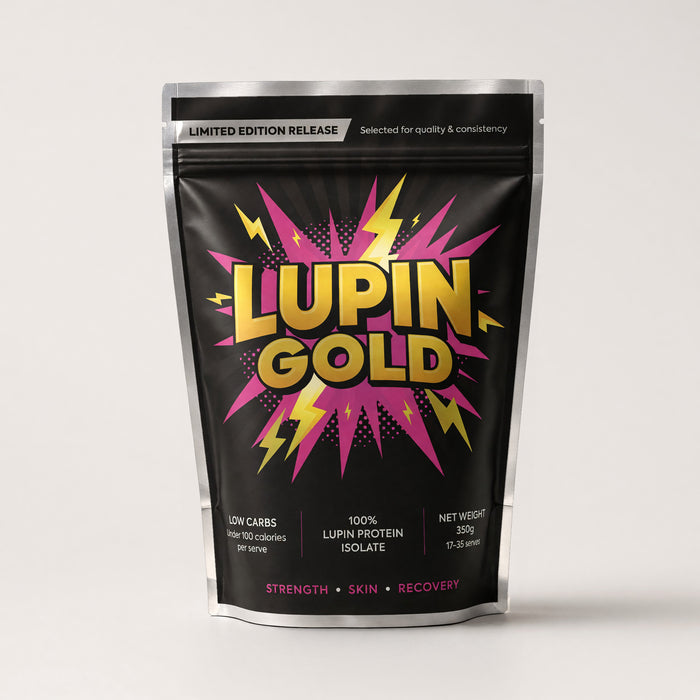
Lupin Gold is lupin protein isolate. One ingredient, nothing added.
It sits close to 90% protein per 100g, with a PDCAAS of 0.96. That score counts digestibility, which matters more when absorption efficiency is a consideration.
It contains a complete amino acid profile, including leucine, which plays a role in muscle protein synthesis. It's dairy-free, free from stevia, gums and artificial sweeteners, and completely unflavoured. For people with digestive sensitivity, that removes a lot of the variables that make flavoured or additive-heavy powders problematic.
Because it's unflavoured, it works in oats, yoghurt, soups, smoothies and baking without altering the taste of the meal. For people who want to increase their protein through food rather than dedicated shake routines, that flexibility is the point.
- Around 90% protein per 100g
- PDCAAS of 0.96
- Complete amino acid profile including leucine
- No dairy, no stevia, no gums, no artificial sweeteners
- Completely unflavoured, works in real food not just shakes
- Made from European-grown lupins, refined in Germany and packed in WA
Lupin is a declared allergen in Australia. People with legume allergies, particularly peanut or soy allergies, may have a higher risk of reacting to lupin. Check with your healthcare professional before using if you have any known legume sensitivity.
Single ingredient, nothing added. Shop plant-based protein powder
Frequently asked questions
Do protein needs increase after 50?
Yes, for most people. The standard recommendation of 0.8g per kg of body weight per day was designed for younger sedentary adults. Current evidence suggests that adults over 50, particularly those who are moderately active, may benefit from around 1.2 to 1.6g per kg per day. Anabolic resistance, the reduced sensitivity of older muscle to protein signalling, is one reason why the requirement goes up rather than down as we age.
What is sarcopenia and can protein help?
Sarcopenia is the gradual loss of muscle mass and strength that occurs with ageing. It typically begins in your 30s and tends to accelerate after 60. Adequate protein intake is commonly associated with supporting muscle maintenance and is often recommended as part of managing the rate of age-related muscle loss, alongside resistance exercise. Protein doesn't prevent or reverse sarcopenia, but it plays a role in maintaining muscle tissue over time.
What is the best protein powder for women over 50 in Australia?
The most relevant criteria for this age group are digestibility, amino acid completeness (particularly leucine content), and absence of gut irritants like dairy, gums, and artificial sweeteners. A high digestibility score means more of the protein you consume is actually absorbed. An unflavoured option is generally more practical because it works across meals, not just shakes. Lupin protein isolate scores well on all of these criteria: around 90% protein, a PDCAAS of 0.96, a complete amino acid profile, and no additives.
Is plant protein as effective as whey for older adults?
It depends on the source and the quality. Whey has historically been the benchmark because of its high leucine content and digestibility. However, high-quality plant proteins with a complete amino acid profile and a high digestibility score can be effective for older adults, particularly when intake targets are met across the day. Digestibility matters more here than it does for younger adults, which is why the PDCAAS score of a plant protein is worth checking rather than just looking at protein percentage on the label.
How do I add more protein to my diet after 50 without eating more?
The most practical approach is to increase the protein density of meals you're already eating rather than adding extra meals or larger portions. Adding a scoop of unflavoured protein powder to oats, yoghurt, a smoothie or a soup adds around 27g of protein without meaningfully changing the volume or character of the meal. Beyond powder, swapping lower-protein ingredients for higher-protein ones (Greek yoghurt instead of regular yoghurt, eggs instead of toast at breakfast) shifts the nutritional profile without increasing how much you need to eat.
Is lupin protein easy to digest for older adults?
Lupin Gold's lupin protein isolate has a PDCAAS of 0.96. It's dairy-free, free from gums and artificial sweeteners, and contains no additives that commonly contribute to digestive discomfort. That said, lupin is a declared allergen in Australia. People with legume allergies, particularly peanut or soy allergies, should check with a healthcare professional before using it.
The short version: After 50, protein needs increase and quality matters more. Aim for around 1.2 to 1.6g per kg of body weight per day, spread across meals, from sources that are complete, digestible, and easy on the gut. Food first, always. A clean protein powder fills the gaps.
Related reading: the importance of protein in your diet - protein for men - protein powder for women
This article is for general information only and reflects our own research and understanding at the time of writing. We are not scientists, and information may evolve. It is not individual medical advice. Please speak with your healthcare professional for personalised guidance.