
There is no single best protein powder in Australia, because the right tub depends on what you will do with it, what you can and cannot eat, and how much protein you actually need. This guide is the checklist we would use to compare any tub, plus a few named examples with their label numbers.
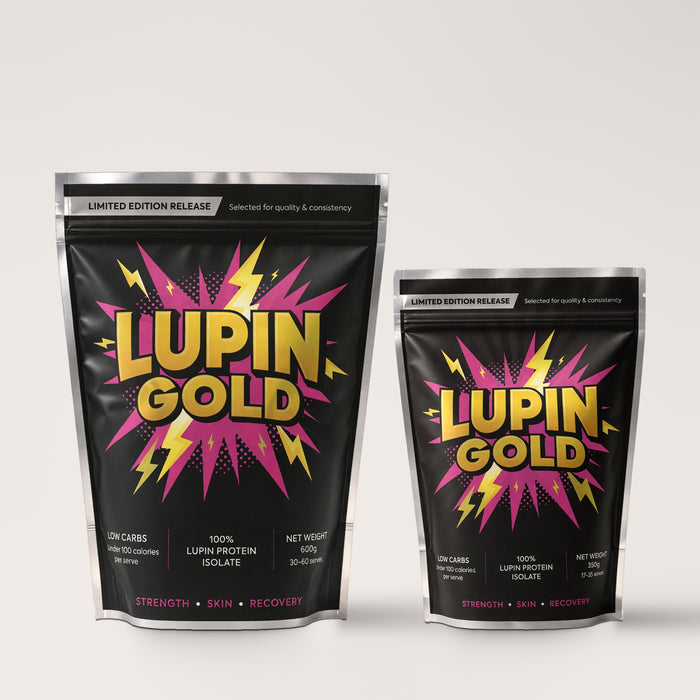
Quick answer: Compare protein per 100 g first, then the ingredient list, then the protein source and allergens, then cost per serve. For a dairy protein, an unflavoured whey isolate such as Bulk Nutrients WPI Raw lists 87.9 g protein per 100 g. For a flavoured plant shake, a pea isolate such as Nuzest Clean Lean Protein lists 20 g per 25 g serve. For a single-ingredient plant protein you can cook with, Lupin Gold lupin protein isolate lists 18 g per 20 g scoop. We make Lupin Gold, so weigh our entry with that in mind.
How do you choose the best protein powder in Australia?
Work through five questions in order. Most people stop at the first one, and the protein number alone tells you very little about which tub suits you.
- How much protein per 100 g? Serve sizes vary between brands, so per 100 g is the only fair comparison.
- What is on the ingredient list? Sweeteners, gums, flavours and fillers are there for taste and texture, not protein.
- Which protein source? Whey and casein are dairy. Pea, soy, rice and lupin are plant proteins.
- Any allergens? Milk, soy and lupin are all declared allergens in Australia.
- How will you use it? A shake with water and a scoop stirred into oats or soup suit different powders.
Examples by type, from each brand's own label
These are examples, not a ranking. The figures for other brands come from each brand's own product page, checked on 27/10/2026, and every one is linked in the sources at the end. Formulations change, so check the current label before you buy.
| Type | Example | Protein (label) | Ingredients (label) | Allergen |
|---|---|---|---|---|
| Unflavoured whey isolate | Bulk Nutrients Whey Protein Isolate, Raw | 26.4 g per 30 g serve (87.9 g per 100 g) | Whey protein isolate with sunflower lecithin. The brand says Raw has no flavours or sweeteners | Milk |
| Flavoured pea isolate | Nuzest Clean Lean Protein, Smooth Vanilla | 20 g per 25 g serve | Pea protein isolate, natural vanilla flavour, natural sweetener (thaumatin) | Pea is not a declared allergen in Australia |
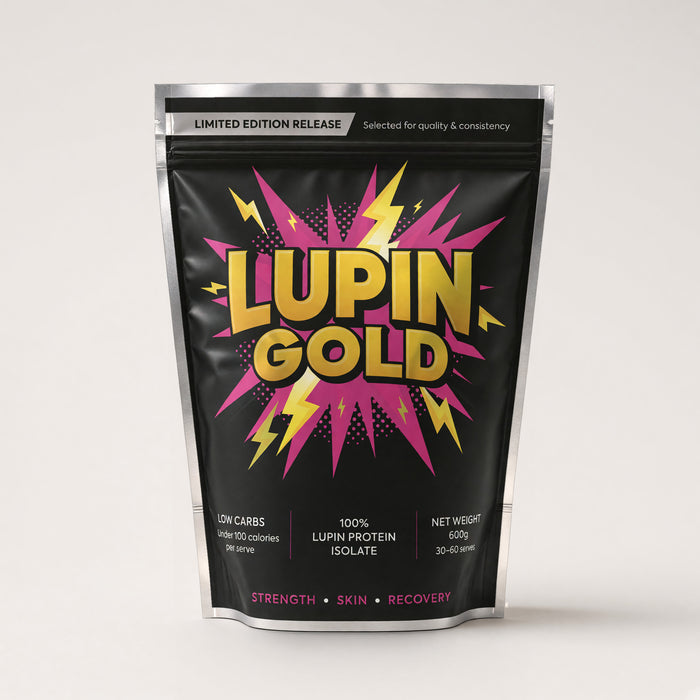
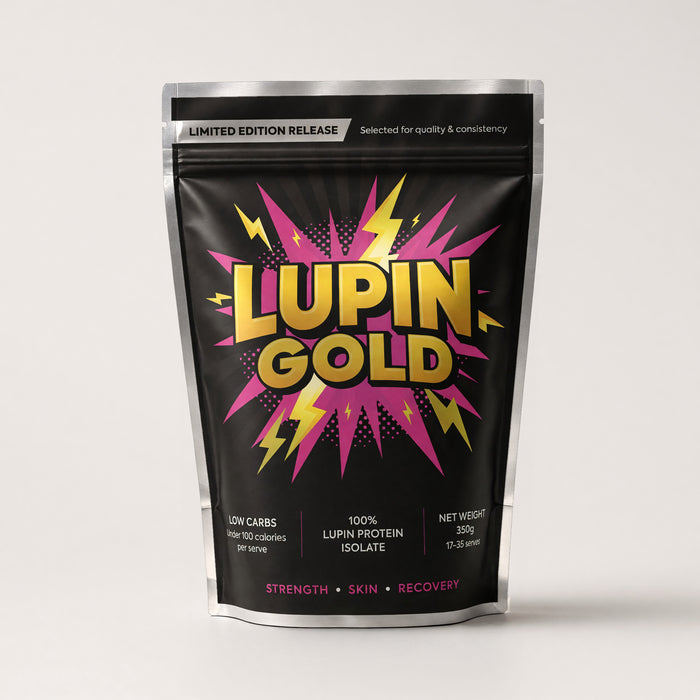
| Single-ingredient plant isolate | Lupin Gold Lupin Protein Isolate | 18 g per 20 g scoop (90 g per 100 g) | Lupin protein isolate. Nothing else | Lupin |
Each of these does a different job. The whey isolate packs the most protein into a scoop and suits people who eat dairy. The pea isolate is flavoured and sweetened, so it is made to be shaken with water or milk. The lupin isolate is unflavoured with nothing added, so it suits cooking, baking and smoothies more than a plain shake.
Why protein per 100 g matters more than per serve
One brand's serve is 20 g, another's is 30 g, so "per serve" mostly tells you how big the scoop is. Per 100 g tells you how much of the tub is protein. In the table above, the whey isolate and the lupin isolate both sit close to 90 g per 100 g. That is typical of an isolate, which has had most of the fat and carbohydrate removed. Concentrates usually sit lower. If you want the full difference, read protein isolate vs concentrate.
What to look for on the ingredient list
Ingredients are listed by weight, so the protein source should come first. After that, most of what you see is there for taste or texture:
- Sweeteners such as sucralose, stevia, thaumatin or monk fruit. Fine for many people, but some find them hard on digestion, and they make a powder less useful in savoury food.
- Gums and thickeners such as xanthan gum or guar gum, which change the texture of a shake.
- Emulsifiers such as sunflower or soy lecithin, which help a powder mix into water.
- Added extras such as enzymes, probiotics, greens or creatine. Useful if you want them, but they are not protein.
A short list is not automatically better, but it is easier to work out what you are reacting to if something does not agree with you.
Whey or plant protein?
Whey
- A complete dairy protein with a PDCAAS of 1.0
- High in leucine, mixes easily, widely available
- Not suitable if you avoid dairy or are vegan
Plant
- Pea, soy, rice and lupin are the common sources
- Quality varies by source: pea protein concentrate has a published PDCAAS of 0.89, lupin protein isolate 0.96
- Suits vegan and dairy-free diets
For most people, hitting your daily protein total matters more than which source it comes from. More on that trade-off in our plant protein vs whey guide, and for plant-only options, the best vegan protein powders in Australia.
Allergens to check
Australian labels must declare the main allergens, including milk, soy and lupin. Whey and casein contain milk. Lupin is a legume, and people with a peanut or other legume allergy should check our allergen information page and get medical advice before trying it. If you have a known allergy, read the "Contains" statement on every tub, every time.
How much protein do you need?
It depends on your body weight, age and how active you are, and many people get enough from food alone. A powder earns its place when food does not get you to your target. Our protein calculator gives you a daily number to work from.
Where Lupin Gold fits, and where it does not
Lupin Gold is a single-ingredient protein powder: lupin protein isolate, from European-grown lupins, refined in Germany and packed in WA. The nutrition panel lists 18 g of protein per 20 g scoop and a PDCAAS of 0.96, and it contains all nine essential amino acids.
- Good fit: you want plant protein with no sweeteners, gums or flavours, or you want to add protein to smoothies, oats, yoghurt, baking or savoury food.
- Not a good fit: you have a lupin, peanut or legume allergy, or you want a sweet, flavoured shake with water. A flavoured powder will suit that better.
FAQs
What is the best protein powder in Australia?
There is no single best one. The best protein powder for you is the one that fits your diet and how you use it: compare protein per 100 g, the ingredient list, the protein source, allergens and cost per serve. A whey isolate suits people who eat dairy and want the most protein per scoop, a flavoured plant blend suits shakes, and an unflavoured single-ingredient isolate suits cooking.
Is whey or plant protein better?
Whey is a complete protein with a PDCAAS of 1.0 and is easy to find. Plant proteins vary: lupin protein isolate has a PDCAAS of 0.96 and pea protein concentrate 0.89. If you eat dairy, whey is a solid choice. If you are vegan or avoid dairy, a plant protein does the job, and your daily total matters more than the source.
How do I compare protein powders?
Use protein per 100 g, not per serve, because scoop sizes differ. Then read the ingredient list for sweeteners, gums and fillers, check the allergen statement, and work out the cost per serve from the price and the number of serves in the tub.
Is unflavoured protein powder worth it?
If you mostly cook with protein, or you want to avoid sweeteners, yes. An unflavoured powder goes into sweet and savoury food without changing the taste much. If you mainly drink a shake with water, a flavoured powder is usually nicer to drink.
Is Lupin Gold the best protein powder?
We would not claim that, and it is not the right pick for everyone. It is a good fit if you want a single-ingredient plant protein for smoothies, oats and cooking. It is not suitable if you have a lupin, peanut or legume allergy, and it is not made to taste like a flavoured shake.
Sources
- Bulk Nutrients. Whey Protein Isolate, Raw (Unflavoured) nutrition information and ingredients
- Nuzest. Clean Lean Protein, Smooth Vanilla nutrition information and ingredients
- Rutherfurd SM, Fanning AC, Miller BJ, Moughan PJ (2015). Journal of Nutrition 145(2):372 to 379. doi:10.3945/jn.114.195438 (pea protein concentrate PDCAAS 0.89)
- Food Standards Australia New Zealand. Food allergies and allergen labelling
- Lupin Gold figures: the nutrition panel on our 600 g product page.
Sources checked 27/10/2026.
Disclaimer: This article is for general information only and reflects our own research and understanding at the time of writing. We are not scientists or medical professionals, and information may evolve. It is not individual medical advice. If you have a food allergy or a medical condition, please speak with your doctor or dietitian.