
Plant protein vs whey is usually argued as if one of them has to lose. It doesn't. Which one suits you depends on whether you eat dairy, how you use a protein powder and what you need to avoid. Here is what actually differs, including where whey wins.
Quick answer: Whey is a complete, fast-digesting dairy protein with more leucine per gram, so if you tolerate dairy and want a powder for a shaker, it is hard to beat. Plant-based protein is the one to choose if you avoid dairy, eat vegan or want something to cook with. Plant proteins vary a lot by source, so compare the label rather than the category.
Plant protein vs whey at a glance
| What to compare | Whey protein | Plant-based protein |
|---|---|---|
| Made from | Milk. Whey is the liquid left over from cheese making | Legumes, grains or seeds, such as pea, soy, rice, hemp or lupin |
| Amino acids | Complete, at 43% essential amino acids in the study below, against a plant average of 26% | Varies by source. Some are low in lysine or methionine, which is why blends are common |
| Leucine | Higher: 11.0% of protein | Lower on average (7.1% of protein), with a wide range between sources |
| Lactose | Present in concentrate, much less in isolate | None |
| Suits a vegan diet | No | Yes |
| Allergens to check | Milk | Depends on the source. Soy and lupin are declared allergens |
Amino acid and leucine figures: Gorissen et al. 2018, Amino Acids, an analysis of 35 commercially available protein powders. Figures vary by brand and batch, so check the label. Checked 13/10/2026.
Leucine, as a share of the protein
What whey protein is, and where it wins
Whey is a milk protein. It is complete, it digests quickly and it mixes easily into water or milk.
Its real advantage is amino acids. In the 2018 analysis above, whey had the highest essential amino acid content of the animal proteins tested, at 43% of protein, against an average of 26% for the plant proteins. Whey was 11.0% leucine. The plant proteins averaged 7.1% leucine and ranged from 5.1% for hemp to 13.5% for corn. Leucine is the amino acid most closely studied for muscle protein synthesis, so gram for gram whey is the benchmark.
The trade-off is that whey is dairy. Whey concentrate contains lactose and whey isolate contains much less, but both are milk protein. Lactose intolerance and milk allergy are different problems, which we cover in lactose free vs dairy free protein powder.
Essential amino acids, as a share of the protein
How much protein it takes to get 2.7 g of leucine
Whey and plant figures: Gorissen et al. 2018. Lupin Gold: calculated from our nutrition panel.
Where whey wins: more leucine and more essential amino acids per gram, fast digestion, and an easy mix in a shaker.
What plant-based protein is, and where it wins
Plant-based protein is a category, not one product. Pea, soy, rice, hemp and lupin powders come from different crops and have different amino acid profiles. The same study found large differences between plant sources, and that several were low in lysine or methionine on their own. That is why so many plant powders are blends.
So the fair comparison is this tub against that tub. Check protein per 100 g, the amino acid profile if the brand publishes one, and what else is on the ingredient list. If you want the sources side by side, we compare lupin, soy, pea and whey in a separate article.
What every plant protein has in common is what it leaves out. There is no lactose and no milk protein, because neither was ever in the plant.
Where plant protein wins: no dairy, no lactose, and it fits a vegan diet.

One ingredient, 18 g of protein per 20 g serve, no dairy. Shop plant-based protein powder
Plant-based protein vs whey: which should you choose?
- You tolerate dairy and want a post-training shaker: whey does that job well. A plant protein can deliver the same leucine, but usually from a larger serve
- Lactose bothers you: a whey isolate has far less lactose than a concentrate and may be enough. A plant protein removes the question, because it has none
- You have a cow's milk allergy: whey is milk protein, so it is out, including low-lactose and lactose-free versions. ASCIA states that lactose-free milk products are not suitable for people with cow's milk allergy. Take medical advice before choosing a powder
- You eat vegan: whey comes from milk, so plant protein is the only option of the two. Our guide to the best vegan protein powders in Australia covers how to compare them
- You want to cook and bake with it: a flavoured shake powder, whey or plant, is built for a shaker. An unflavoured powder is easier to use in oats, baking and savoury meals
- You have other food allergies: plant does not mean allergen free. Food Standards Australia New Zealand lists milk, soy and lupin among the allergens that must be declared on a label, so read the "Contains" statement on any powder, whey or plant

Where Lupin Gold fits
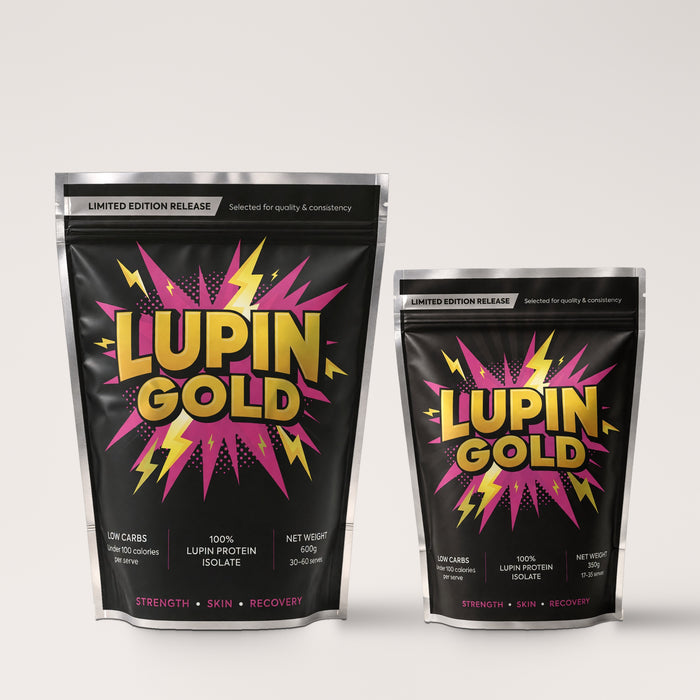
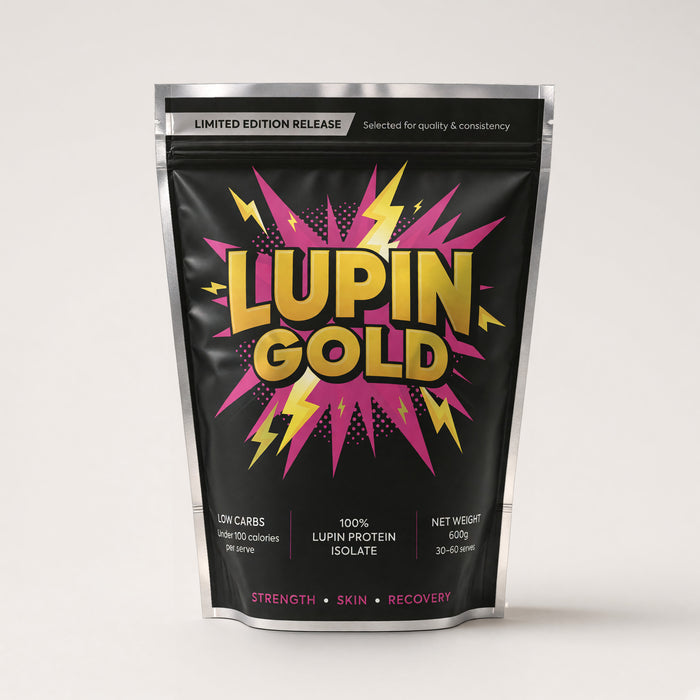
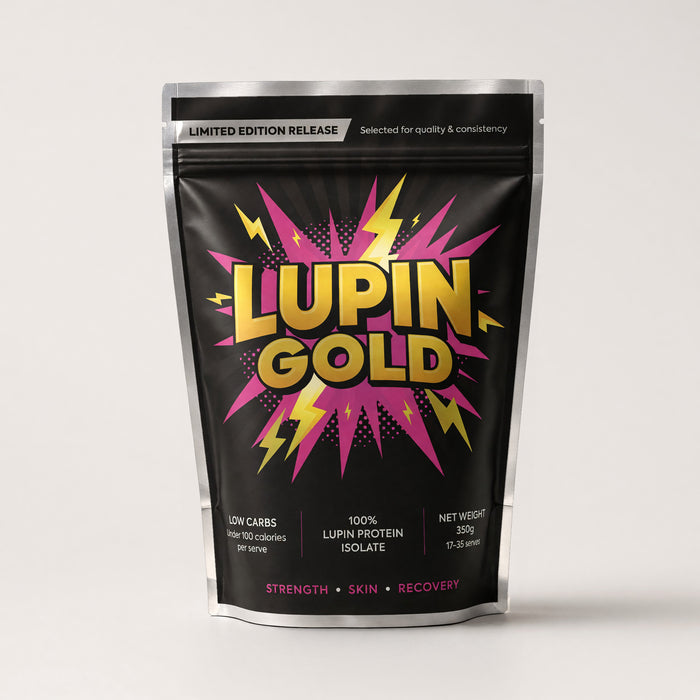
We make a plant protein, so read this part with that in mind. Lupin Gold is a single-ingredient lupin protein isolate, made from European-grown lupins, refined in Germany and packed in WA.
- 18 g of protein per 20 g serve (90 g per 100 g), and under 100 calories per serve
- All nine essential amino acids, including the BCAAs, with 1.372 g of leucine per 20 g serve
- A PDCAAS of 0.96
- One ingredient: no soy, dairy, stevia, gums or fillers. The rest of the powder is naturally occurring lupin oil (about 6%), prebiotic lupin fibre (about 3%) and natural lupin salts (about 1%)
- Dairy free, and the current batch tested with no detectable gluten (under 5 mg/kg)
Two honest limits. First, whey still has more leucine per gram than our isolate. Second, Lupin Gold is unflavoured and has no gums, so it is not made to be mixed straight into water or milk on its own. It is made to go into food: smoothies, oats, yoghurt, baking and savoury dishes.
Lupin is a legume and a declared allergen in Australia. If you have a peanut or legume allergy, read our Allergen Information page and seek medical advice before trying it.
FAQs
Is plant protein as good as whey?
It depends on the plant protein and what you want it for. Gram for gram, whey has more leucine and more essential amino acids than most plant proteins, so a plant protein often needs a larger serve or a blend to match it. If you avoid dairy, plant protein is the one you can use.
Do you need more plant protein than whey to get the same leucine?
Usually, yes. The 2018 analysis by Gorissen and colleagues calculated that 25 g of whey protein supplies 2.7 g of leucine, and that between 20 g and 54 g of plant protein is needed to match it, depending on the source.
Is whey protein dairy free or lactose free?
Whey is never dairy free, because it is made from milk. Whey isolate has much less lactose than concentrate, but it is still milk protein. Plant proteins contain no lactose and no milk protein.
Can you use plant protein and whey together?
Yes, if you tolerate dairy. The same study notes that blends of plant and animal proteins can give an amino acid profile close to animal protein alone. You could keep whey for the shaker and an unflavoured plant protein for cooking.
The short version: whey wins on leucine and on convenience in a shaker. Plant-based protein wins if you avoid dairy, eat vegan or want to cook with it. Our plant protein ships free in Australia on orders over $89 and comes with a 30-day money-back guarantee.
Related reading: soy-free protein powders - BCAA vs EAA - what's in lupin protein isolate
Sources
- Gorissen SHM, Crombag JJR, Senden JMG, et al. Protein content and amino acid composition of commercially available plant-based protein isolates. Amino Acids. 2018;50(12):1685-1695. doi.org/10.1007/s00726-018-2640-5
- Australasian Society of Clinical Immunology and Allergy (ASCIA). Cow's milk (dairy) allergy.
- Food Standards Australia New Zealand. Food allergies and allergen labelling.
- Lupin Gold figures: the nutrition and amino acid panel on our 600 g product page.
Sources checked 13/10/2026.
Disclaimer: This article is for general information only and reflects our own research and understanding at the time of writing. We are not scientists or medical professionals, and information may evolve. It is not individual medical advice. If you are managing a food allergy or persistent digestive symptoms, please speak with your doctor or an allergy specialist.