
The collagen vs protein powder question is the wrong framing. You don't have to choose between them. But understanding what each one actually does changes how you use both, and what you spend your money on first.
Collagen protein vs protein powder: the quick answer
Collagen protein is a real protein, so it counts toward your daily grams. It is just not a complete one: it has no tryptophan and is low in leucine. A complete protein powder gives you all nine essential amino acids in one scoop.

Is collagen protein powder the same as protein powder?
No. Both are protein, but collagen is a structural protein with an unusual amino acid profile. A complete protein powder covers every essential amino acid.
What amino acid is collagen missing?
Tryptophan, one of the nine essential amino acids.
Can collagen replace protein powder?
Not on its own. It adds to your protein total, but it cannot be your only protein source if you want the full essential amino acid profile.
Collagen protein vs plant protein?
Collagen is always animal-derived. A complete plant protein like lupin protein isolate is vegan and covers all nine essential amino acids.
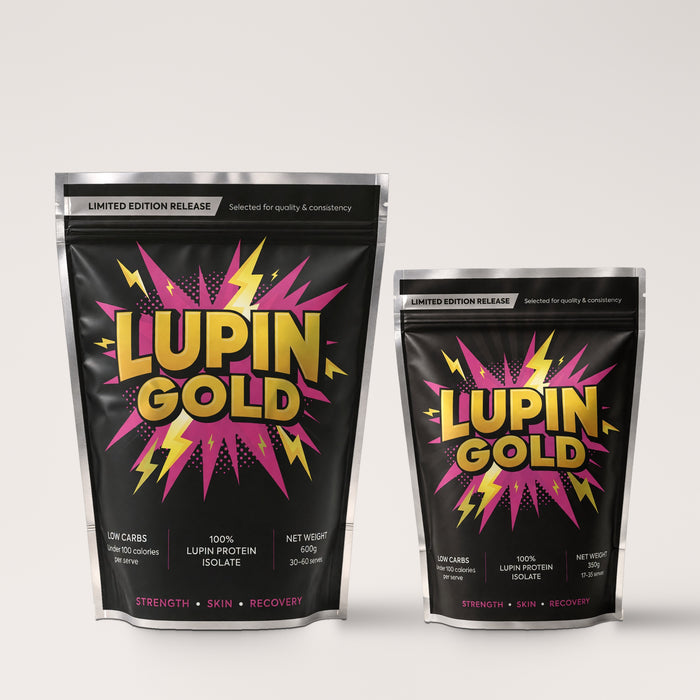
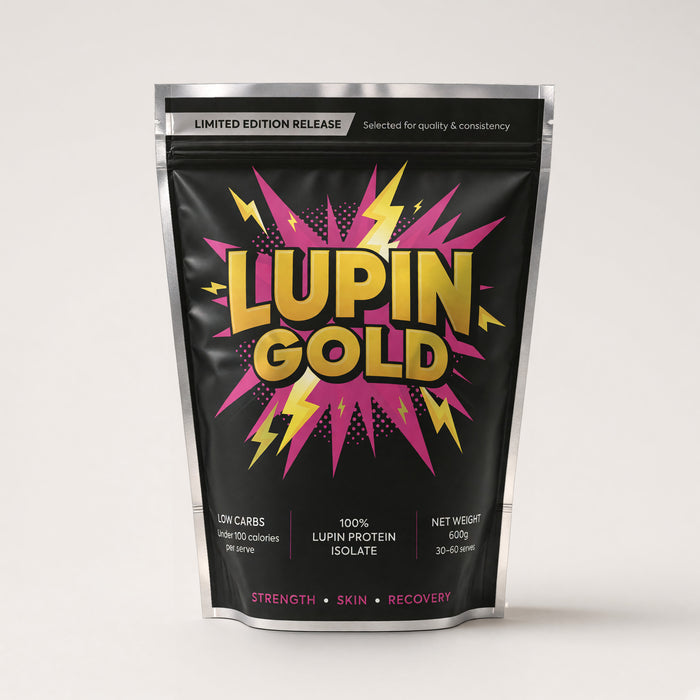
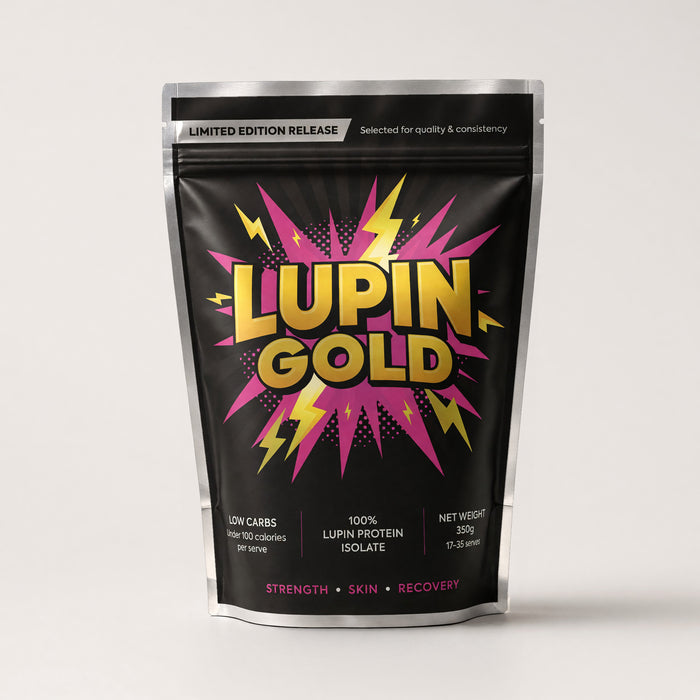
Want the complete option? Lupin Gold protein isolate is plant-based, unflavoured and has a PDCAAS of 0.96. For more on amino acids, read BCAA vs EAA.

What collagen protein actually is
Collagen peptides are hydrolysed collagen, most commonly sourced from bovine hides, fish scales, or chicken cartilage. The hydrolysis process breaks the collagen protein down into smaller fragments called peptides, which are more easily absorbed than intact collagen.
Collagen's amino acid profile is unusual. It's dominated by three amino acids: glycine, proline, and hydroxyproline. These make up around 50% of its total amino acid content and are central to the structure of connective tissue throughout the body. That concentration is what gives collagen its targeted structural role.
But collagen is not a complete protein. It contains 19 amino acids and is missing one of the nine essential amino acids entirely: tryptophan. It's also relatively low in the branched-chain amino acids, particularly leucine, that drive muscle protein synthesis. This isn't a flaw in the product. It's a structural fact about what collagen is and what it's designed to do.
Collagen is a structural protein that supports connective tissue. It is not a general-purpose protein source. That distinction changes everything about how you should use it.
What a complete protein does that collagen can't
A complete protein contains all nine essential amino acids: histidine, isoleucine, leucine, lysine, methionine, phenylalanine, threonine, tryptophan, and valine. Your body cannot produce these itself. They have to come from food or supplementation.
When you eat a complete protein, your body breaks it down into those amino acids and uses them across every system that requires protein: muscle repair and maintenance, immune function, hormone production, enzyme activity, and the ongoing maintenance of skin, hair, and connective tissue.
Collagen, missing tryptophan and low in BCAAs, cannot do this on its own. It can contribute to your daily protein gram count, but it cannot replace a complete protein source if whole-body protein synthesis is the goal. Research consistently shows collagen's PDCAAS score, the standard measure of protein quality, is effectively zero when assessed in isolation, precisely because of the missing tryptophan. This doesn't mean collagen is useless. It means PDCAAS is measuring the wrong thing. That score measures whole-body protein quality. Collagen's value is structural and targeted, not as a complete protein source.
That said: if the rest of your diet already supplies adequate tryptophan and a full essential amino acid profile, collagen as an addition to that foundation doesn't create a deficiency. The problem is using it as a foundation in the first place.
Where collagen genuinely earns its place
The research behind collagen for targeted structural support is real and worth taking seriously.
Two meta-analyses published in 2023 found that hydrolysed collagen supplementation was consistently associated with improved skin hydration and elasticity across the studies reviewed. A 2024 randomised controlled trial found improvements in skin collagen content, hydration, elasticity, and wrinkles following twelve weeks of daily hydrolysed collagen intake. The joint health evidence is more variable in study design but broadly positive, with a 2023 review in which all studies examined reported positive findings for joint function and comfort outcomes.
The mechanism most researchers point to is that hydrolysed collagen peptides, once absorbed, may stimulate the body's own collagen production in the skin and connective tissue, rather than being directly incorporated as collagen. The glycine and proline concentration matters here specifically because these are the amino acids most involved in collagen synthesis.
The honest framing: collagen has legitimate research behind it for skin and joint support specifically. The case for taking it is as a targeted addition to an already adequate protein intake, not as a protein foundation.
It's also worth noting: collagen is an animal product. It is not vegan and not vegetarian. Most collagen supplements are bovine or marine-derived.
What to use as your daily protein foundation
This is where the two supplements diverge completely. Your daily protein foundation needs to be a complete protein source: all nine essential amino acids, high digestibility, and enough per serve to make a meaningful contribution toward your daily target.
Lupin Gold is lupin protein isolate. One ingredient, nothing added. It contains a complete amino acid profile, including tryptophan, leucine, and all seven other essential amino acids. It also contains glycine and proline, the same amino acids concentrated in collagen and associated with structural protein production in the body.
It has a PDCAAS of 0.96, the standard protein quality score. It sits close to 90% protein per 100g, with around 90 to 100 calories per 30g serve. No stevia, no gums, no flavour systems. Completely unflavoured, which means it works in oats, yoghurt, soups, smoothies and baking without altering the meal.
- Complete amino acid profile including tryptophan and all nine EAAs
- Contains glycine and proline, amino acids involved in structural protein production
- Around 90% protein per 100g, PDCAAS of 0.96
- No dairy, no stevia, no gums, no fillers
- Plant-based and vegan
- Packed in WA, WA-owned

Where collagen gives you a concentrated hit of glycine and proline but leaves the rest of your amino acid needs unmet, lupin protein covers the full essential amino acid profile and includes those structural amino acids as part of a complete picture.
Lupin is a declared allergen in Australia. People with legume allergies, particularly peanut or soy allergies, may have a higher risk of reacting to lupin. Check with your healthcare professional before using if you have any known legume sensitivity.
Complete amino acid profile, one ingredient, nothing added. Shop plant-based protein powder
Can you take both?
Yes, and for some people this is the most practical approach.
If skin and joint support is a priority alongside your daily protein goals, using a complete protein as your foundation and adding collagen as a targeted supplement gives you both. The complete protein covers whole-body protein synthesis. The collagen provides the concentrated glycine and proline hit that the skin and joint research points to.
In practice, this is simpler than it sounds. A scoop of lupin protein in your morning oats covers the protein foundation. Collagen stirred into your coffee covers the targeted structural support. Two different jobs, two different tools, no conflict between them.
The only reason to prioritise is budget. If you can only invest in one supplement, a complete protein source does more across your overall nutritional needs. Collagen as a standalone, without an adequate complete protein foundation, addresses a specific concern while leaving the broader protein requirement unmet.
A simple decision framework
If you can only choose one: choose a complete protein. It covers whole-body protein needs, muscle maintenance, and contains the amino acids involved in structural protein production including glycine and proline.
If you already have your protein needs covered: adding collagen on top is a reasonable targeted investment for skin and joint support, with a reasonable evidence base behind it.
If you are vegan or vegetarian: collagen is animal-derived and not an option. A complete plant protein like lupin protein isolate, rather than collagen protein, covers the full amino acid profile including the structural amino acids commonly associated with collagen production support.
Frequently asked questions
Is collagen a complete protein, and what amino acid is it missing?
No. Collagen contains 19 amino acids but is missing tryptophan, one of the nine essential amino acids required for a protein to be classified as complete. It's also relatively low in branched-chain amino acids including leucine. This means collagen cannot support whole-body protein synthesis on its own the way a complete protein can. It has a different, more targeted role: providing concentrated glycine and proline for connective tissue support.
Should I take collagen or protein powder?
For most people, a complete protein powder is the more useful starting point because it covers your full essential amino acid needs, supports muscle maintenance, and includes the structural amino acids (glycine, proline) that collagen is valued for, as part of a complete profile. Collagen makes sense as an addition once your daily protein foundation is in place, particularly if skin or joint support is a specific goal. If budget is a factor, complete protein first.
Can I use lupin protein instead of collagen for skin and hair?
Lupin protein contains a complete amino acid profile including glycine, proline, lysine, and cysteine, amino acids that are commonly associated with structural protein production in the body. It cannot replicate the specific glycine and proline concentration found in collagen peptides, and the research on collagen is specifically on hydrolysed collagen peptides rather than general protein intake. What lupin protein does provide is the full essential amino acid foundation that skin, hair, and connective tissue maintenance requires alongside any other dietary inputs.
Is collagen powder vegan?
No. Commercially available collagen supplements are derived from animal sources: most commonly bovine (cattle) hides, marine (fish) scales and skin, or chicken cartilage. There is no plant-derived collagen supplement available. Some products marketed as "vegan collagen boosters" contain nutrients that are commonly associated with the body's own collagen production (vitamin C, amino acids), but these are not collagen. If you are vegan, a complete plant protein like lupin protein isolate covers your amino acid needs including the structural amino acids.
Can I take protein powder and collagen at the same time?
Yes. They serve different purposes and don't interfere with each other. A complete protein powder covers your whole-body protein needs and daily amino acid requirements. Collagen supplements provide a targeted concentrated dose of glycine and proline for structural tissue support. Taking both is the approach that covers the most ground: foundation protein from a complete source, targeted structural support from collagen. There's no interaction to be concerned about.
The short version: Collagen is not a complete protein and can't replace one. It has a legitimate evidence base for targeted skin and joint support, but only as an addition to an adequate complete protein foundation, not instead of one. If you can only choose one, choose a complete protein. If you have both covered, collagen on top makes sense.
Related reading: protein for skin and hair - what's in lupin protein isolate - protein powder for women
This article is for general information only and reflects our own research and understanding at the time of writing. We are not scientists, and information may evolve. It is not individual medical advice. Please speak with your healthcare professional for personalised guidance.