
Lupini beans and chickpeas are both legumes that end up in salads, dips and snack bowls, so it is fair to ask how they compare. Here are the numbers per 100 g, the protein in a normal serve, and where to buy each in Australia.
Quick answer: Cooked, lupini beans have about 15.6 g of protein per 100 g against 8.9 g for chickpeas (USDA, both boiled), so about 75% more. Chickpeas have more fibre once cooked (7.6 g against 2.8 g). Chickpeas are on every Australian supermarket shelf, canned and dried. Lupini are not at Coles or Woolworths; you buy them jarred at Mediterranean and Middle Eastern delis, or dried online.
Quick navigation
Dried, per 100 g
This is the dry seed, before soaking or cooking, from the Australian Food Composition Database (AFCD).
| Per 100 g, dried (AFCD) | Lupin, whole | Chickpea |
|---|---|---|
| Energy | 1,182 kJ | 1,373 kJ |
| Protein | 28.6 g | 19.7 g |
| Fat, total | 6.5 g | 5.5 g |
| Carbohydrate | 7.4 g | 38.5 g |
| Dietary fibre | 41.5 g | 20.8 g |
| Sodium | 50 mg | 11 mg |
Source: Australian Food Composition Database, Release 3 (Food Standards Australia New Zealand), food keys F005250 (lupin, whole, uncooked) and F002881 (chickpea, dried). Dehulled lupin splits (F005249), the kernel without the hull, read 37.5 g of protein, 10 g of carbohydrate and 27.8 g of fibre per 100 g. Carbohydrate is available carbohydrate, which leaves out fibre. The large jarred lupini are usually white lupin (Lupinus albus) and are sold already prepared, so treat the dried lupin figures as a guide.
Dry, lupin has more protein and much less starch than chickpeas: 7.4 g of carbohydrate per 100 g for whole lupin against 38.5 g for dried chickpeas.
Want the wider list? See how both rank against other high protein beans and legumes.
Cooked, per 100 g
This is the column that matches what you eat. The AFCD has no entry for cooked or jarred lupini, so cooked lupini come from the USDA's FoodData Central, with USDA chickpeas next to them so the two are compared like for like.
| Per 100 g, boiled (USDA) | Lupini | Chickpeas |
|---|---|---|
| Energy | 497 kJ | 686 kJ |
| Protein | 15.6 g | 8.9 g |
| Fat, total | 2.9 g | 2.6 g |
| Dietary fibre | 2.8 g | 7.6 g |
| Sodium | 4 mg | 7 mg |
The AFCD's own chickpea figures, for comparison:
| Chickpeas per 100 g (AFCD) | Boiled, drained | Canned, drained |
|---|---|---|
| Energy | 499 kJ | 474 kJ |
| Protein | 7.2 g | 6.3 g |
| Fat, total | 2 g | 2.1 g |
| Dietary fibre | 7.6 g | 5.7 g |
| Sodium | 4 mg | 250 mg |
Sources: USDA FoodData Central 172424 (lupins, mature seeds, boiled, without salt) and 173757 (chickpeas, mature seeds, boiled, without salt); AFCD F002882 (chickpea, dried, boiled, drained) and F002880 (chickpea, canned, drained). Jarred lupini in brine carry added salt that the boiled entries leave out, so check the panel on the jar.
Same database, same cooking: lupini have about 75% more protein than chickpeas and about a third of the fibre. Cooking adds a lot of water to both, which is why every figure drops from the dried table.
Protein per Serve
The Australian Dietary Guidelines count one cup (150 g) of cooked or canned legumes as a serve. Here is the protein in that, worked from the figures above, with our isolate for comparison.
| Protein in one serve | Amount | Protein |
|---|---|---|
| Lupini, boiled (USDA) | 1 cup, 150 g | about 23 g |
| Chickpeas, boiled (USDA) | 1 cup, 150 g | about 13 g |
| Chickpeas, boiled (AFCD) | 1 cup, 150 g | about 11 g |
| Chickpeas, canned, drained (AFCD) | 1 cup, 150 g | about 9.5 g |
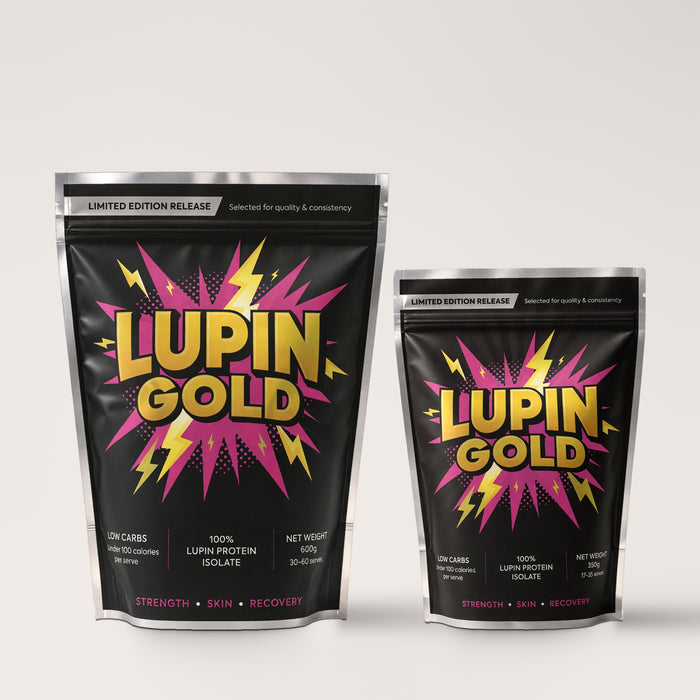
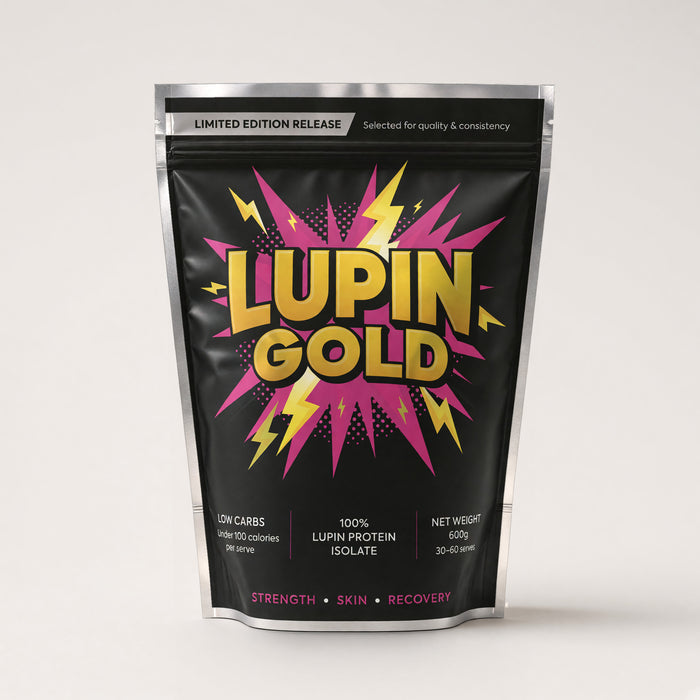
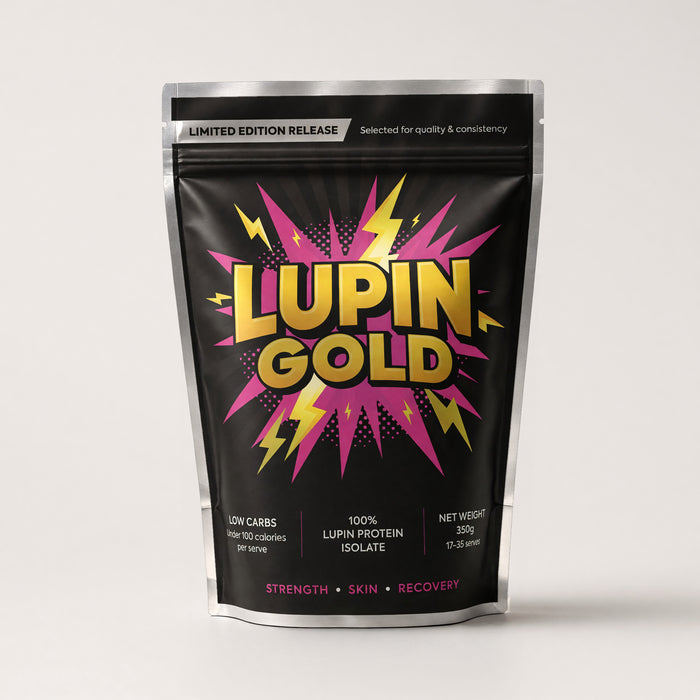
| Lupin Gold protein isolate | 30 g | 27 g |
Our isolate figure is from the nutrition panel on our 600 g lupin protein isolate. It is a different food: the protein separated out of lupin and dried, with almost none of the fibre. It is unflavoured and goes into smoothies, oats, yoghurt and baking.
Where to Buy Each in Australia
- Chickpeas: canned and dried, in every major supermarket. Chickpea flour (besan) is easy to find too.
- Lupini beans: not at Coles or Woolworths (we checked both on 26/10/2026). Look for jarred lupini at Italian, Portuguese and Greek delis (ask for lupini, or tremoços at Portuguese grocers) and at Lebanese and Middle Eastern grocers (termos or turmus). Dried lupini are sold by online bulk food stores.
Our lupini beans guide has the full where-to-buy list and what to ask for.
Preparing Each
Dried chickpeas need an overnight soak and a boil. Dried bitter lupini are another job: they need days of soaking and water changes to remove their bitter alkaloids, and they are unsafe to eat raw. Jarred lupini have already been done, so you rinse off the brine and eat them. The lupini guide covers the method step by step.
In the kitchen, lupini are firmer and waxier than chickpeas, with a tough skin most people pop the bean out of. They go into salads in place of chickpeas, or get eaten cold from the jar like olives.
Allergen note: lupin is a declared allergen in Australia and must be labelled on packaged food. People with a peanut or other legume allergy should review the allergen information page before trying lupini or lupin protein.
Want the lupin protein without the jar? See our lupin protein powder, or our high protein snacks made with it.
FAQs
Do lupini beans have more protein than chickpeas?
Yes. Boiled, lupini have about 15.6 g of protein per 100 g against 8.9 g for chickpeas (USDA FoodData Central). Dried, the AFCD has whole lupin at 28.6 g against 19.7 g for dried chickpeas.
Which has more fibre, lupini or chickpeas?
Cooked, chickpeas: 7.6 g per 100 g against 2.8 g for boiled lupini (USDA). Dried, lupin is higher, at 41.5 g per 100 g for whole lupin in the AFCD against 20.8 g for dried chickpeas.
Can I use lupini beans instead of chickpeas?
In salads and snack bowls, yes: they are eaten whole in the same way. They are firmer, with a tough skin, so for a smooth dip the skins need to come off first.
Does Coles or Woolworths sell lupini beans?
Neither did when we checked on 26/10/2026. Both sell chickpeas. For lupini, try a Mediterranean or Middle Eastern deli, or an online bulk food store for dried beans.
How much protein is in a cup of lupini beans?
About 23 g in a cup (150 g) of boiled lupini, from the USDA figure of 15.6 g per 100 g. Jarred brands vary, so check the panel on the jar.
Disclaimer: This article is for general information only. Figures come from the AFCD, USDA FoodData Central and our nutrition panel and are approximate. It is not individual medical or dietary advice.