
Lupin is a legume, and if you have seen it on a food label or a bag of flour and wondered what it actually is, this is the short version: what the plant is, the forms you can buy it in, what each one contains, and which foods it turns up in. (This is the food, not the Netflix show.)
Quick answer: Lupin is a legume related to peanuts, soybeans, chickpeas and lentils. You'll find it as whole beans (lupini), flakes, flour and protein isolate, and as an ingredient in foods like bread, pasta and protein bars. In Australia it's a declared allergen, so it has to be named on the label.
Quick navigation
What are lupins?
Lupins are flowering plants in the genus Lupinus, and the name comes from the Latin lupinus. The seed is the part people eat. You'll also see it spelled lupine, the American spelling, and sold as lupini, the name for the bean.
Lupin is a legume rather than a cereal, though it's farmed like a grain crop, so it gets called a grain legume. Several species are grown for food:
| Species | Common name | Food use |
|---|---|---|
| Lupinus angustifolius | Australian sweet lupin, narrow-leafed lupin | Protein isolate, flour, food ingredients |
| Lupinus albus | White lupin | Snack foods, pasta, some protein products |
| Lupinus mutabilis | Andean lupin, tarwi | Traditional food |
Australia is the world's largest producer of sweet lupin, mainly from Western Australia, and until recently almost all of that grain went to animal feed, according to a May 2015 report on Australian sweet lupin published by FSANZ.
The forms lupin comes in
The same seed reads very differently depending on how far it has been processed. Whole, splits and flakes are from the Australian Food Composition Database, Release 3 (Food Standards Australia New Zealand): food keys F005250, F005249 and F005248, all uncooked. Our isolate is from the panel on our 600 g pack.
| Per 100 g | Whole | Splits | Flakes | Our isolate |
|---|---|---|---|---|
| Protein | 28.6 g | 37.5 g | 36.9 g | 90 g |
| Fat | 6.5 g | 7.9 g | 7.7 g | 6.7 g |
| Carbohydrate | 7.4 g | 10 g | 10 g | <0.1 g |
| Fibre | 41.5 g | 27.8 g | 27 g | <0.5 g* |
| Energy | 1,182 kJ | 1,320 kJ | 1,295 kJ | 1,744 kJ |
*Fibre was not specifically tested; we estimate it at about 3%, so read the fibre figure as a floor.
Taking off the hull is what moves whole lupin to splits and flakes: less fibre, more protein per 100 g. An isolate goes further and separates the protein out, which is why it reads 90 g per 100 g with almost no carbohydrate. It also has far less of the fibre, so it isn't a stand-in for the whole bean.
| In a 30 g serve | Protein | Carbohydrate |
|---|---|---|
| Lupin, whole | 8.6 g | 2.2 g |
| Lupin, splits | 11.2 g | 3 g |
| Lupin, flakes | 11.1 g | 3 g |
| Lupin Gold isolate | 27 g | <0.1 g |
- Whole beans (lupini): usually jarred in brine. The AFCD has no cooked or jarred entry, so go by the panel on the jar. Our lupini beans guide covers where to buy them.
- Flakes and splits: the dehulled kernel, cut or flattened.
- Flour: ground lupin, used in baking. The AFCD has no entry for lupin flour itself. See our lupin flour guide and lupin flour vs almond flour.
- Protein isolate: the protein separated out and dried. See what's in lupin protein isolate.
Comparing it with other legumes? Our high protein beans list ranks them from the same database.
What foods contain lupin?
Lupin is used as a high-protein, gluten-free ingredient in food manufacturing. It can appear in:
- Bakery: breads, pastries, cakes, biscuits, pizza bases, high-protein or gluten-free mixes
- Pasta and plant-based products: some pastas, meat alternatives, veggie burgers, protein bars
- Protein formats: lupin flour, lupin protein isolates, functional food blends
This is a guide to where it turns up, not a complete list, and recipes change. If you're avoiding lupin, the label is what counts.
Lupin on a label
In Australia and New Zealand, lupin is a priority allergen that must be declared on food labels under FSANZ, so look for Contains: Lupin. If you have a known peanut, soy or other legume allergy, speak to your GP or allergist before trying lupin. More on our allergen information page.
Where Lupin Gold fits
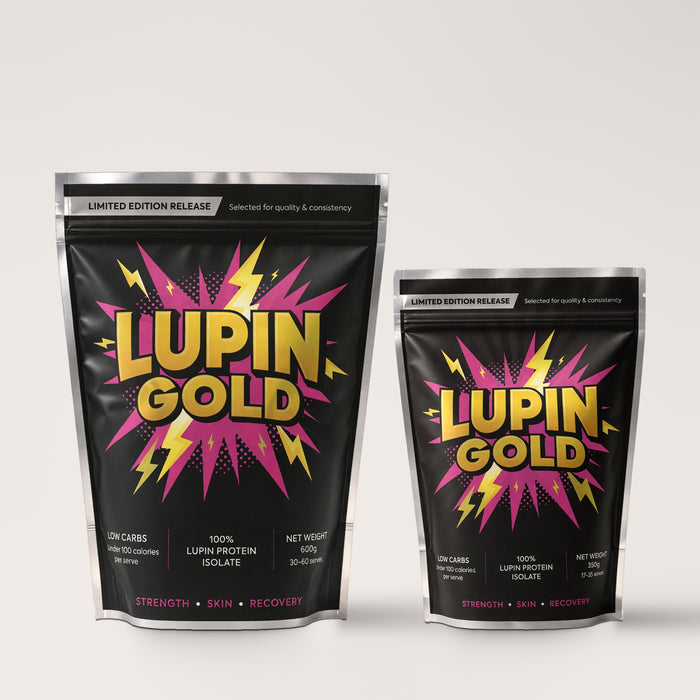
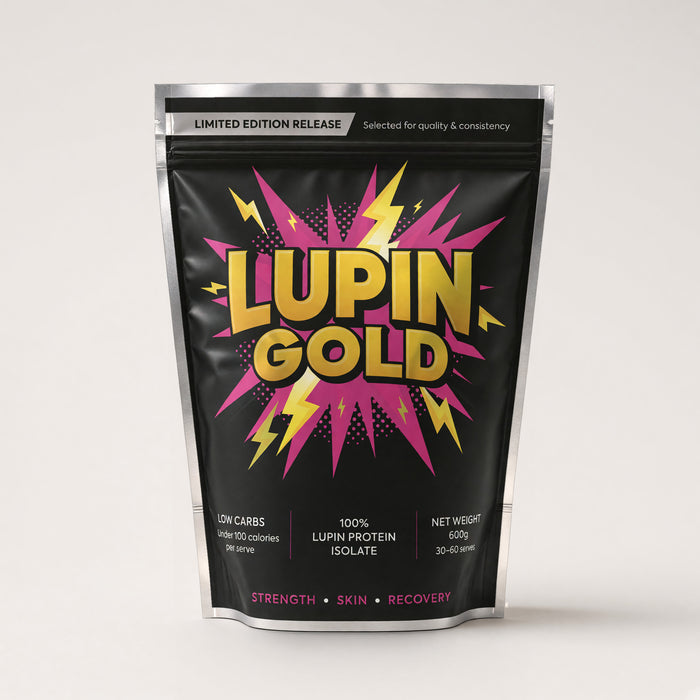
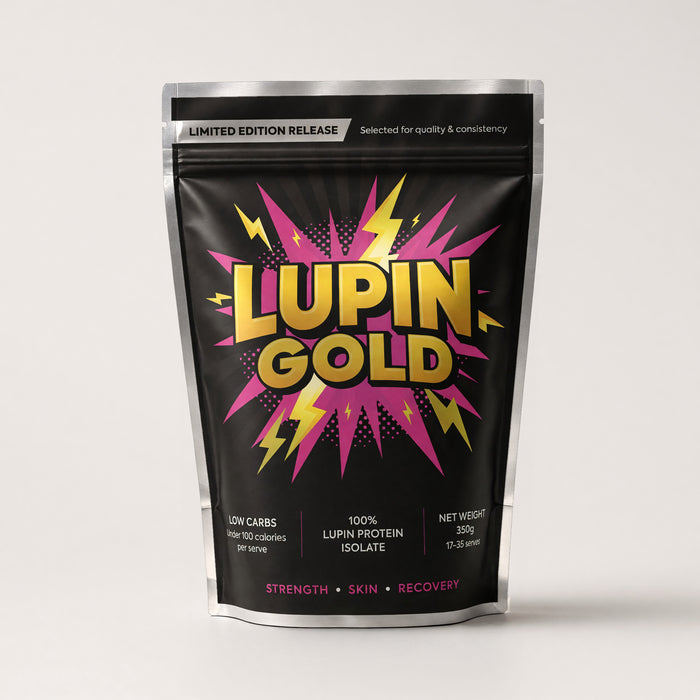
We make a single-ingredient lupin protein isolate, so we have a stake in this one. It's about 90% protein and unflavoured, with no dairy, soy, stevia, gums or fillers, and has a PDCAAS of 0.96. It's made from European-grown lupins, refined in Germany and packed in WA. It goes into food rather than being mixed into water on its own. More detail: our amino acid profile.

Want to try it first? The 350g pack is $39.95.
What we make with it


FAQs
What is lupin?
A legume, in the same family as peanuts, soybeans, chickpeas and lentils. People eat the seed: as whole beans (lupini), or processed into flakes, flour and protein isolate.
What are lupins used for?
As food, they turn up in bread, pastries, pasta, meat alternatives, protein bars and protein powders. Most of the Australian crop has historically gone to animal feed, according to a 2015 report on sweet lupin published by FSANZ. Lupins are also grown as garden flowers, which this guide doesn't cover.
Is lupin a grain?
No, it's a legume, though it's grown and handled like a grain crop, which is why you'll see it called a grain legume. As a legume it contains no gluten by nature, as long as it hasn't been processed alongside wheat.
What foods contain lupin?
It can appear in breads, pastries, cakes, biscuits, pizza bases, high-protein or gluten-free mixes, some pastas, meat alternatives, veggie burgers and protein bars. That list isn't complete, so go by the label: in Australia lupin must be declared on it.
Is lupin the same as lupini?
Lupini is the name for the bean, usually sold jarred in brine at Mediterranean delis. Lupin is the plant and the wider ingredient. Lupine is the American spelling of the same word.
Is lupin an allergen?
Yes. In Australia and New Zealand, lupin is a priority allergen that must be declared on food labels. If you have a known peanut, soy or other legume allergy, speak to your GP or allergist before trying lupin. Our allergen page has the detail.
Disclaimer: This article is for general information only. Figures come from the AFCD and our nutrition panel and are approximate. It is not individual medical or dietary advice.