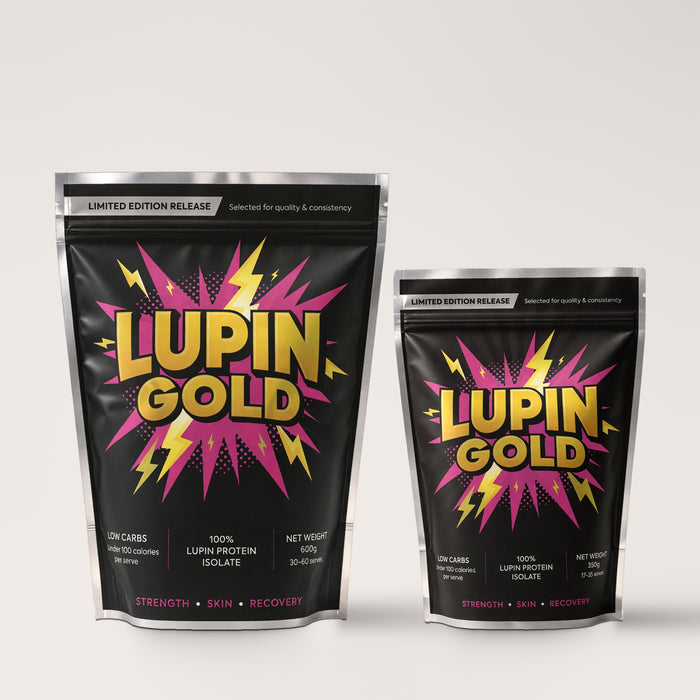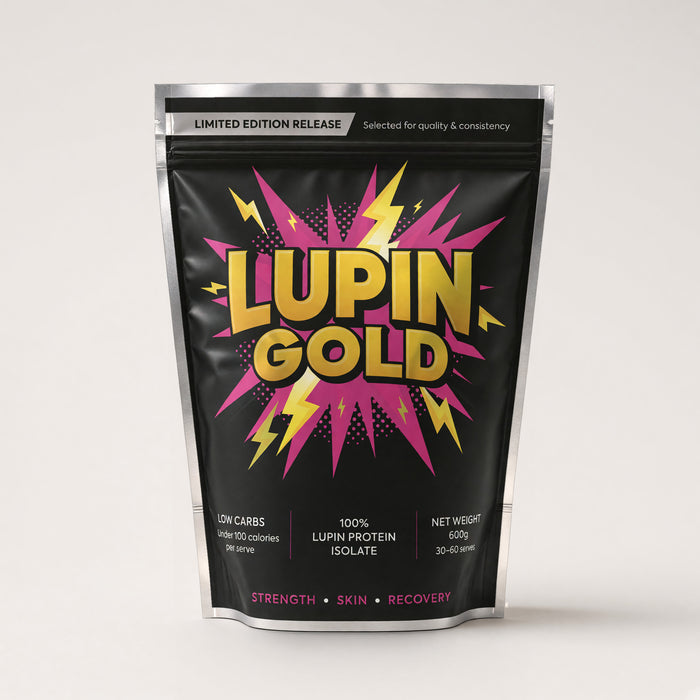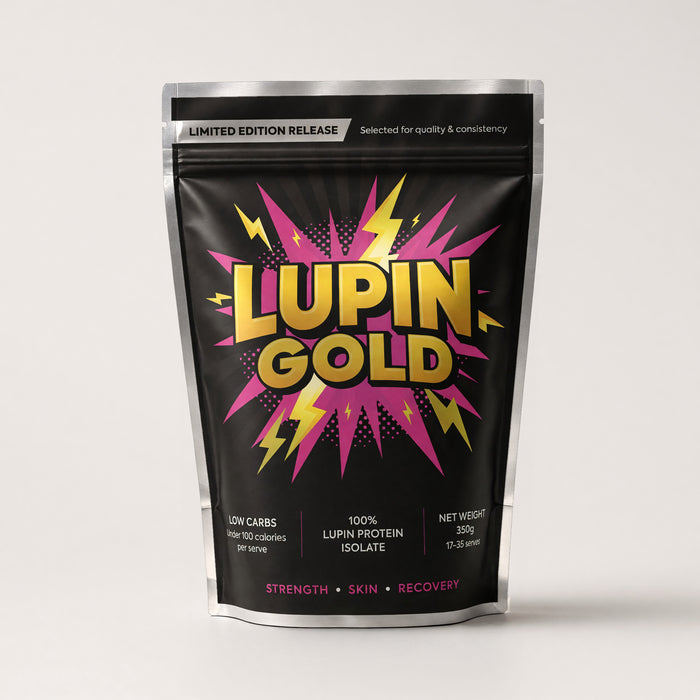

The best unflavoured protein powder for cooking and baking has one ingredient, no sweetener, no flavours and no gums, and you swap it in for about 20 to 30% of the flour by weight rather than replacing the flour outright. Lupin Gold is built that way: a single ingredient, lupin protein isolate at about 90% protein, made from European-grown lupins, refined in Germany and packed in WA, and our own bread, bagel and pizza recipes all use it.
This guide covers what to look for on the label, what heat does to protein powder, how much to swap into flour, which bakes it suits and how to use it in savoury food. If you just want the powder, it sits in our unflavoured protein powder range.
What makes an unflavoured protein powder good for cooking?
Read the ingredient list before anything else. Most protein powders are made to be shaken with water or milk, so they carry sweeteners, flavours and thickeners that are fine in a shake and a problem in a loaf of bread or a pot of soup.
- No sweetener at all. Plenty of "unflavoured" powders still contain stevia, sucralose or monk fruit. In a savoury dish you will taste it, and in baking it adds sweetness the recipe did not ask for.
- No added flavour. "Natural flavour" is still a flavour. Vanilla or cocoa does not belong in a pizza base.
- No gums or thickeners. These are added to make a shake feel thicker. In a sauce or dough they change the texture in ways that are hard to predict.
- As few ingredients as possible. One is ideal. Nothing to taste and nothing to react with the rest of the dish.
- A fine powder. It should blend into flour and liquid without grit.
A powder that passes all five behaves like a pantry ingredient rather than a supplement. That is the test that matters for cooking, more than the brand or the protein source.
Does protein powder survive being heated?
Yes. Heat changes the shape of protein, which is called denaturing, but the protein and its amino acids are still there afterwards. It is the same thing that happens when you cook an egg: the egg turns solid, and it is still a source of protein.
What heat does change is texture. Protein absorbs liquid and firms up as it cooks, so a dough with protein powder through it feels a little tighter, and a sauce thickens slightly. Neither is a problem once you know to expect it. Add a splash more liquid to doughs and batters, and add powder to sauces gradually.
So the question with cooking is not whether the protein survives. It is whether the finished food still tastes and feels right, and that comes down to the label checks above and how much you use.
How much protein powder can you swap into flour?
Start by replacing about 20 to 30% of the flour by weight. That lifts the protein noticeably. If you want a gentler first bake, start lower: some of the recipes on our site use less.
Here is what the recipes on our site use:
- Sourdough: 405 g of bread flour and 45 g of Lupin Gold, so the lupin is 10% of the flour.
- Bagels: 450 g of bread flour and 50 g of Lupin Gold, again 10%. The recipe states that this swap boosts protein by 65%.
- Pizza dough: 2 tablespoons (about 15 g) of Lupin Gold stirred through 300 g of plain flour, a lighter touch of around 5%.
Once you know how your recipe responds, you can go higher. Do it in steps, and add liquid as you go, because protein powder absorbs more of it than flour does.
Why not swap all of the flour?
Protein powder is not flour. Wheat flour contains gluten, the protein network that traps gas and gives bread its rise and chew, and lupin contains none. Replace too much flour and there is nothing left to build the structure, so the bake turns out dense and dry.
The fix is to treat protein powder as an addition to the flour, not a replacement for it. Keep most of the flour, and let the powder carry the extra protein.
Which bakes hold up best with protein powder?
Robust bakes with a firm or chewy crumb take protein powder most easily. Light, airy bakes that rely on gluten or whipped eggs for lift are the hardest.
Holds up well
Bread, bagels, pizza dough, flatbreads, pancakes, muffins, cookies, slices, brownies and protein balls. A slightly firmer texture suits all of these.
Use a lighter hand
Sponges, chiffon cakes and pastry. These depend on gluten or air for their structure, so keep the swap small and test it before a special occasion.
No baking needed
Oats, overnight oats, yoghurt bowls and smoothies. The powder simply stirs or blends through, with no structure to worry about.
Pancakes are a good first test because they are quick and forgiving. Our protein pancakes combine oat bran, cottage cheese, egg whites and 1 tablespoon of Lupin Gold, and the recipe lands 40 g of protein per serve.
Can you use unflavoured protein powder in savoury cooking?
Yes, and this is where an unflavoured powder earns its place. A vanilla or chocolate powder cannot go into a soup or a pizza base. One with no sweetener and no flavour can, and it adds protein to the meal you were already making without changing how it tastes.
- Soups and sauces. Whisk a spoonful into a little cold liquid first, then stir it through. It thickens slightly, so add it gradually.
- Crumbs and coatings. Mix it through breadcrumbs, or use it in place of some of the flour when coating schnitzels, patties or fish.
- Patties and fritters. A spoonful in veggie patties, rissoles or zucchini fritters helps bind the mix as well as adding protein.
- Savoury pancakes and flatbreads. Replace part of the flour in the batter, the same way you would in sweet baking.
The one thing to avoid is stirring dry powder straight into hot liquid. It clumps. Mixing it into something cold first gives a smooth result every time.
Three recipes that show the swap working
These recipes on our site each use Lupin Gold in a normal method rather than a special protein one.
High protein sourdough
A naturally fermented loaf with 10% of the wheat flour replaced by Lupin Gold, keeping a soft, classic crumb.
Lupin protein pizza dough
Two bases from one batch, with Lupin Gold worked through the flour. The lupin makes the dough a little firmer, so the recipe suggests a splash more warm water if it feels tight.
High protein bagels
Eight bagels of 100 g each, boiled and baked the classic way, at around 11.6 g of protein per 100 g bagel.
Why Lupin Gold suits cooking and baking
Lupin Gold was made for food rather than for shaking with water. It has no emulsifiers or gums, so it is not designed to be mixed into water or milk on its own. It goes into smoothies, oats, yoghurt, baking and savoury dishes instead.
Each 20 g serve has 18 g of protein. The rest of the powder is what comes with the lupin seed: about 6% naturally occurring lupin oil, about 3% prebiotic lupin fibre and about 1% natural lupin salts. Nothing is added, and it has a digestibility score (PDCAAS) of 0.96.
It is made from European-grown lupins, refined in Germany and packed in WA. You can buy it as the Lupin Plant Protein Isolate 600g, or see the full unflavoured protein powder collection for the other sizes and bundles.
Lupin is a legume and a declared allergen in Australia, and some people with a peanut allergy also react to lupin. Please check our allergen information before cooking with it, especially if you are feeding guests.
Quick answers
What is the best unflavoured protein powder for baking?
Look for one ingredient, no sweetener, no added flavour and no gums, in a fine powder. That kind of powder disappears into bread, pancakes and muffins without adding sweetness or changing the texture. Lupin Gold is a single-ingredient lupin protein isolate at about 90% protein with no sweeteners, stevia or gums.
Can you bake with protein powder?
Yes. Replace about 20 to 30% of the flour by weight with an unflavoured, unsweetened protein powder and add a little extra liquid. Protein powder has no gluten, so it cannot replace all of the flour. Bread, bagels, pizza dough, pancakes, muffins and cookies handle the swap well; sponges and pastry are harder.
Does heat destroy protein powder?
No. Heat denatures protein, which means it changes shape, the same way an egg sets when cooked. The protein and amino acids are still there after cooking. What changes is texture: protein absorbs liquid and firms up, so doughs feel slightly tighter and sauces thicken a little.
How much protein powder do I add to bread?
Start with about 20 to 30% of the flour weight. Lupin Gold's sourdough recipe uses 45 g of Lupin Gold with 405 g of bread flour, and the bagel recipe uses 50 g with 450 g of bread flour. Add a splash more water if the dough feels tight, then increase gradually once you know how your recipe behaves.
Can unflavoured protein powder go in savoury food?
Yes, as long as it has no sweetener or flavour. Whisk it into a little cold liquid before adding it to soups and sauces, mix it into crumb coatings, or add a spoonful to patties and fritters. It adds protein without changing how the dish tastes, and it can help bind patties together.