
Which vegan protein powder has the most protein per serve?
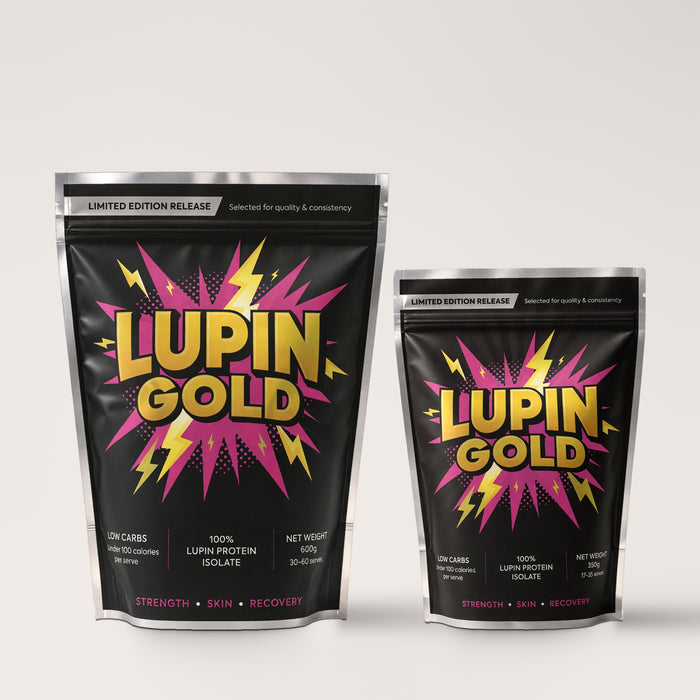
The powder with the most protein per serve is often just the one with the biggest scoop, so the fair comparison is protein per 100g, read straight off the nutrition panel. A single-ingredient isolate such as Lupin Gold sits at about 90% protein, which is 18g of protein in each 20g serve.
This guide shows how to compare any two plant protein powders on the same footing, using only what is printed on the pack. It works for pea, rice, soy, hemp, lupin and blends. If you just want to browse, our plant-based protein powder range lists the full panel for each product.
Why is protein per serve a misleading number?
Protein per serve depends on how big the serve is, and every brand picks its own scoop size. A 40g scoop of a weaker powder can show more protein per serve than a 20g scoop of a stronger one, even though you are paying for twice the powder.
Some panels also show a serve "prepared with milk". That figure includes the protein in the milk, not just the powder. It is a fair serving suggestion, but it is not a measure of the powder itself.
So treat the per serve column as a guide to how much you would use, not as a ranking.
How do you compare protein powders fairly?
Australian nutrition information panels show figures per serve and per 100g. The per 100g column is the one that lets you line two products up side by side, because the amount is fixed.
- Find the per 100g column. Read the protein figure there, not the one in the per serve column.
- Turn it into a percentage. 75g of protein per 100g means the powder is 75% protein. The rest is carbohydrate, fat, fibre, flavour, sweetener, moisture and minerals.
- Check the serve size. If one brand uses 20g and another uses 40g, compare them at the same weight before you decide.
- Read the ingredient list. The first ingredient is the largest by weight. A long list usually means the protein is sharing the scoop with other things.
- Work out serves per pack at your own scoop. Divide the pack weight by the amount you actually use, then compare cost per serve, not cost per tub.
Five minutes with two labels and a calculator will tell you more than any front-of-pack claim.
What is the difference between a protein isolate and a concentrate?
Both start from the same plant. A concentrate keeps more of the original starch, fibre and fat, so a smaller share of each scoop is protein. An isolate goes through more refining to separate the protein out, so more of each scoop is protein.
That is why the word "isolate" on a label usually points to a higher protein per 100g, but it is not a guarantee. Some blends mix an isolate with a concentrate, or add other ingredients after the fact. The panel is still the only number that counts.
Lupin Gold is a lupin protein isolate. We go through what is left in it after refining in what is in lupin protein isolate.
Which serve size tricks should you look out for?
None of these are against the rules. They just make per serve figures harder to compare.
- Big scoops. A large serve lifts the per serve protein figure without changing the powder.
- Milk in the serve. "Prepared with milk" figures add the milk's protein to the powder's.
- Fillers and flavour systems. Cocoa, sweeteners, gums, thickeners and added fibre all take up room in the scoop, which lowers protein per 100g.
- Added single amino acids. If the ingredient list names individual amino acids alongside the protein, ask why they are there and what the panel would read without them.
- Serves per pack at the brand's scoop. "60 serves" at a small scoop and "30 serves" at a large one can be the same amount of protein.
Does protein quality matter as well as quantity?
Yes. Two powders with the same grams of protein can differ in how complete the amino acid profile is. Plant sources vary here, which is why pea and rice are often blended, as each is lower in an amino acid the other supplies.
One way protein quality is scored is the PDCAAS (protein digestibility corrected amino acid score), which runs up to 1.0. If a brand publishes a quality score, check which scale it uses. PDCAAS and DIAAS are different methods, so a number on one cannot be compared with a number on the other.
Lupin Gold has a PDCAAS, or digestibility score, of 0.96, with all nine essential amino acids including the branched-chain amino acids. Our lupin vs soy vs pea vs whey post sets out the amino acid figures side by side.
How much protein is in Lupin Gold per serve?
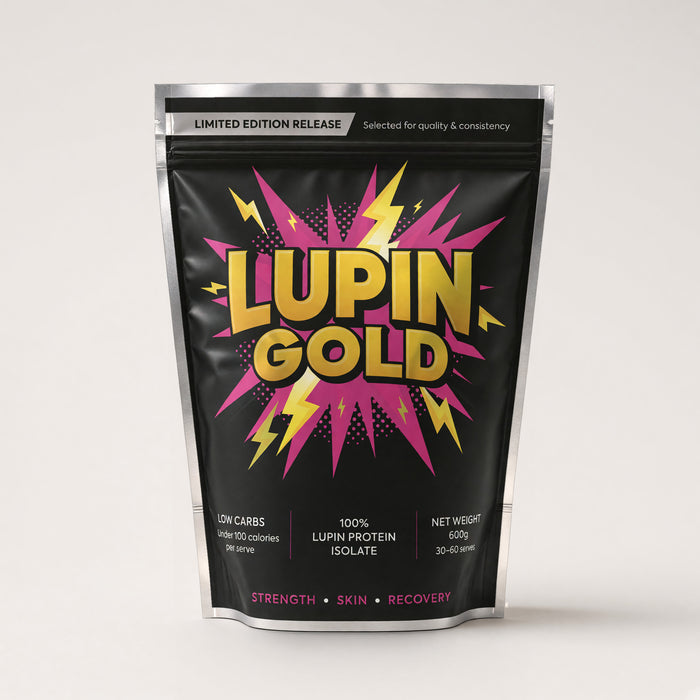
Each 20g serve has 18g of protein and 348.8 kJ, which is under 100 calories. That is 90g of protein per 100g. A serve also carries 1.37g of leucine.
Most people use 20 to 30g at a time. At 30g you get about 27g of protein, because the percentage stays the same however much you scoop. The 600g pack holds 30 serves at 20g.
The rest of the powder is about 6% naturally occurring lupin oil, about 3% prebiotic lupin fibre and about 1% natural lupin salts. There is no soy, no dairy, no stevia, no gums and no fillers, so nothing else is sharing the scoop. It is made from European-grown lupins, refined in Germany and packed in WA.
Because there are no gums or emulsifiers, it is not built to be shaken with water. It goes into smoothies, oats, yoghurt, baking and savoury dishes. You can see the full panel on the Lupin Plant Protein Isolate 600g page.
Does a higher protein percentage always mean a better powder?
Not on its own. The right powder is the one that gives you the protein you want at a scoop size you will actually use, in a form that suits how you eat.
A flavoured shake powder will usually read lower per 100g than an unflavoured isolate, because flavour and sweetener take up space. That is a trade some people are happy to make. The point of comparing per 100g is to know what you are trading, not to rule anything out.
Taste, texture, how it mixes, allergens and price per serve all count too. If you avoid soy, dairy or sweeteners, the ingredient list matters as much as the protein figure.
Lupin is a declared allergen in Australia. If you have a legume allergy, please read our allergen information page and check with your doctor before use.
If you want a single-ingredient option with the panel printed in full, browse the vegan and plant-based protein powder collection.
Quick answers
Is protein per serve or per 100g better for comparing protein powders?
Per 100g is better for comparing. Protein per serve changes with the scoop size each brand chooses, so a bigger scoop looks like more protein. The per 100g figure on the nutrition panel is fixed, so it shows what share of the powder is actually protein. Use per serve only to plan how much you will eat.
Do protein isolates have more protein than concentrates?
Usually, yes. An isolate is refined further than a concentrate to separate the protein from the plant's starch, fibre and fat, so more of each scoop is protein. It is not a guarantee, because some products blend isolates with concentrates or add other ingredients. Check protein per 100g on the nutrition panel to be sure.
How much protein is in a serve of Lupin Gold?
Lupin Gold has 18g of protein in each 20g serve, which is 90g of protein per 100g, and 348.8 kJ per serve. Most people use 20 to 30g at a time, and a 30g serve gives about 27g of protein. It is a single-ingredient sweet lupin protein isolate with no soy, dairy, stevia or gums.
Can you compare PDCAAS and DIAAS scores between protein powders?
No. PDCAAS and DIAAS are two different methods of scoring protein quality, so a figure on one scale cannot be compared with a figure on the other. If you are comparing powders on protein quality, make sure every product's score uses the same method. Lupin Gold's published score is a PDCAAS of 0.96.
Why does my protein powder show more protein when made with milk?
A "prepared with milk" serve adds the protein in the milk to the protein in the powder. It is a serving suggestion, not a measure of the powder itself. To compare two powders fairly, use the per 100g column for the dry powder on each nutrition panel and ignore the prepared figure.