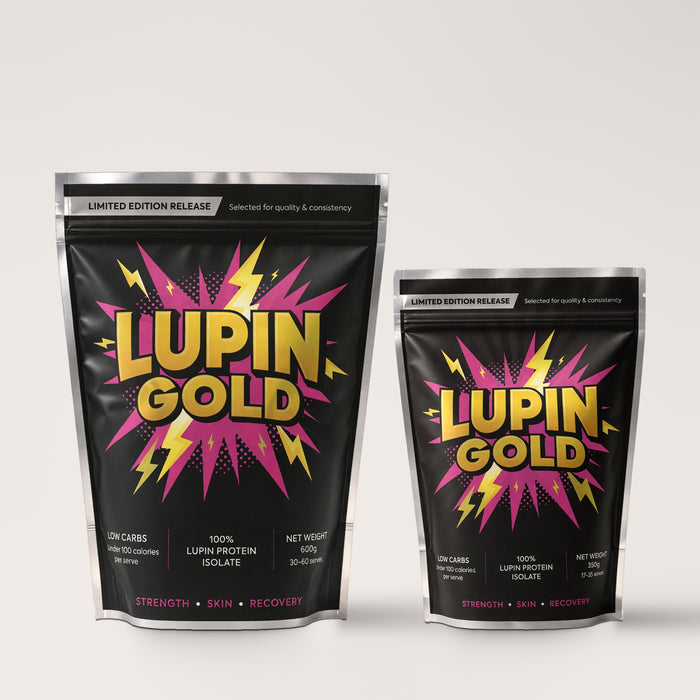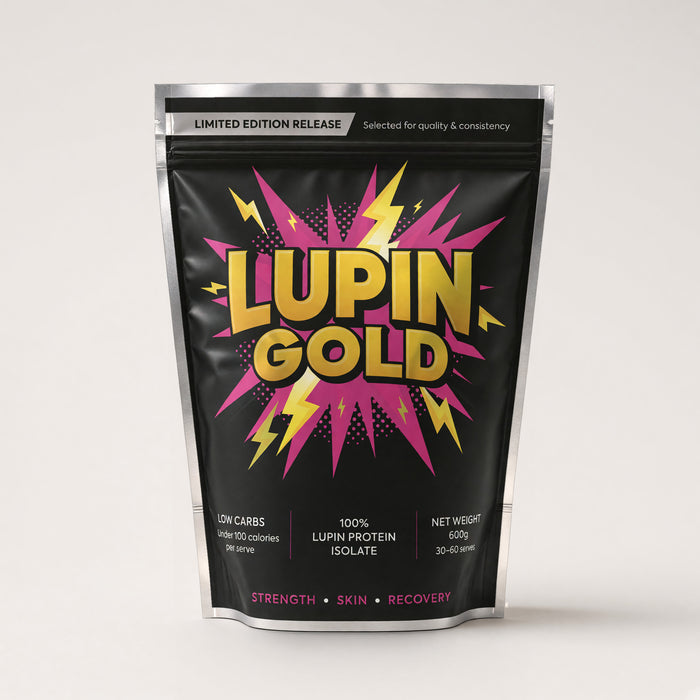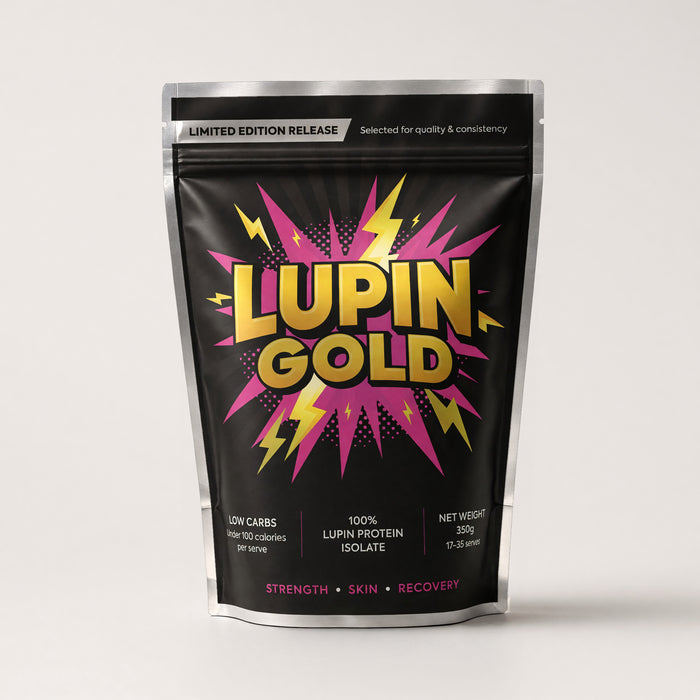

A vegan protein powder without stevia has no stevia, stevia leaf extract, steviol glycosides, rebaudioside (Reb A or Reb M) or sweetener number 960 anywhere in its ingredient list, and the surest way to get one is to choose an unflavoured powder whose ingredient list is a single plant protein. Lupin Gold's unflavoured protein powder is one example: one ingredient, lupin protein isolate at about 90% protein, with no sweeteners, no stevia, no added flavours and no gums.
Stevia is easy to miss because it goes by several names, and the front of the pack rarely mentions it. This guide covers where to look on an Australian label, every name stevia appears under, the other sweeteners worth knowing, and what a powder with nothing added actually tastes like.
Why is stevia in so many vegan protein powders?
Plant protein on its own tastes plain, and a powder designed to be shaken with water needs sweetness and flavour to be drinkable. Sugar would add kilojoules, so most brands use a high intensity sweetener instead. A tiny amount of stevia, sucralose or monk fruit sweetens a whole serve.
Some people like the result. Others notice a sweet or slightly bitter note that lingers after the drink is gone, which is the usual source of the aftertaste people complain about with protein powder. If that is you, reading the label is the only reliable fix.
Where do you find stevia on an Australian label?
Ignore the front of the pack and go straight to the ingredient list. These five checks take about thirty seconds.
- Read the full ingredient list. Ingredients are listed in descending order by weight, so sweeteners usually sit near the end. Because so little is needed, they are easy to skim past.
- Look for the word "sweetener". Australian labels name a food additive by its class, then its specific name or code number in brackets, for example "sweetener (960)" or "sweetener (steviol glycosides)".
- Treat "naturally sweetened" as a flag. It tells you a sweetener is in there, usually stevia or monk fruit. It does not mean unsweetened.
- Count the ingredients. A long list usually means the powder is built as a flavoured shake. One or two ingredients leave nowhere for a sweetener to hide.
- Check flavoured and unflavoured versions separately. A brand's chocolate or vanilla powder and its plain one can have very different lists, so read the one you are actually buying.
What names does stevia go by?
Stevia comes from the leaf of the Stevia rebaudiana plant. The sweet compounds in the leaf are called steviol glycosides, and the most common ones are rebaudioside A and rebaudioside M. Any of these on a label means the powder contains stevia:
- Stevia, or stevia leaf extract
- Steviol glycosides
- Rebaudioside A or rebaudioside M (often shortened to Reb A or Reb M)
- Sweetener (960), and on some newer labels 960 followed by a letter
Stevia is often blended with erythritol to round out the taste, so if you see one, look for the other.
Which other sweeteners should you look for?
If you are avoiding stevia for taste reasons, the sweeteners below give a similar sweet result even though they are not stevia. They are worth knowing so a stevia-free label does not catch you out.
- Sucralose (955). A common artificial sweetener in flavoured powders.
- Acesulfame potassium (950). Often listed as acesulfame K and paired with sucralose.
- Aspartame (951). Less common in powders, but still used.
- Monk fruit. Also labelled luo han guo extract. Often sold as the natural alternative to stevia.
- Sugar alcohols. Erythritol (968), xylitol (967) and sorbitol (420).
None of this means these ingredients are a problem. It simply tells you whether the powder is sweetened, which is the question you are asking.
Does unflavoured always mean unsweetened?
Usually, but the word on the front is not a substitute for the ingredient list. A powder described as "natural", "lightly flavoured" or "original" can still carry a sweetener, and some blends add one to soften the taste of the protein. If the list shows only protein, you have your answer.
Lupin Gold contains no added flavours or flavour systems of any kind, so it is genuinely flavourless rather than lightly flavoured or "natural" flavoured. It is completely unsweetened, with no stevia or artificial sweeteners.
What else should a vegan check on the same label?
While you are reading the ingredient list, three more checks are worth the extra few seconds.
The protein source
Vegan protein powders are made from plants such as pea, rice, soy, hemp, faba bean or lupin. Whey, casein, milk solids, egg white and collagen all come from animals, so any of those means the powder is not vegan.
Gums and thickeners
Xanthan gum (415) and guar gum (412) are added so a shake feels thicker in the mouth. They are a sign the powder is built to be drunk with water. They are not a sign of a problem, just of a different job.
Allergens
Check the allergen statement as well as the list. Soy is a common plant protein, and lupin is a legume and a declared allergen in Australia.
How do you compare protein once the sweetener is gone?
Use the per 100g column of the nutrition panel. Serve sizes differ from brand to brand, so the per serve figure can make two powders look further apart than they are. The per 100g figure tells you how much of the powder is actually protein.
For Lupin Gold, each 20g serve has 18g of protein, which is 90g of protein per 100g. An isolate like this sits at the high end because most of the starch and fibre has been removed during refining. A powder with a sweetener, flavour and gums added has less room left for protein.
What does a protein powder with nothing added taste like?
Neutral. With no sweetener and no flavour, it takes on the taste of whatever you put it in. That makes it a different product from a dessert style shake, and it is worth knowing before you buy.
Lupin Gold is not made to be mixed straight into water or milk on its own. It is made for food:
- Smoothies, blended with fruit, milk or yoghurt
- Overnight oats and breakfast bowls
- Baking, swapped in for some of the flour in pancakes, muffins, bagels or bread
- Soups, sauces, pasta and pizza dough
The savoury side is where an unflavoured powder earns its place, because a vanilla or chocolate powder does not belong in a soup. Our guide to savoury protein powder covers how to cook with it. If you want a sweet smoothie, sweeten it yourself with banana, dates or maple syrup, so you choose how sweet it is.
What is in Lupin Gold?
One ingredient: lupin protein isolate, made from sweet lupins. The powder is about 90% protein, about 6% naturally occurring lupin oil, about 3% prebiotic lupin fibre and about 1% natural lupin salts. Nothing is added: no sweeteners, no stevia, no added flavours, no gums and no fillers.
It has a digestibility score (PDCAAS) of 0.96. It is made from European-grown lupins, refined in Germany and packed in WA. The 600g Lupin Plant Protein Isolate is the everyday size, and the full unflavoured range includes the 350g and bundles.
Lupin is a legume and a declared allergen. If you have a peanut or legume allergy, please read our Allergen Information page and seek medical advice before use.
Quick answers
What is a good vegan protein powder without stevia?
Look for an unflavoured plant protein powder with a single ingredient and no sweetener on the label. Lupin Gold is one option: one ingredient, lupin protein isolate at about 90% protein, with no stevia, no sweeteners, no added flavours and no gums. It is made for smoothies, oats, baking and savoury cooking rather than shaking with water.
How do I know if a protein powder contains stevia?
Read the ingredient list, not the front of the pack. Stevia appears as stevia, stevia leaf extract, steviol glycosides, rebaudioside A or M (Reb A, Reb M) or sweetener (960). Australian labels show additives by class and then name or number, so search the list for the word "sweetener" and check what follows it.
Is monk fruit the same as stevia?
No. Monk fruit, also labelled luo han guo extract, comes from a different plant, so a powder sweetened with monk fruit can be called stevia-free. It is still a sweetener, though. If you want a powder with no sweetness at all, look for an ingredient list with no sweetener of any kind, including monk fruit and sugar alcohols.
Does unflavoured protein powder have sweetener in it?
Most unflavoured powders are unsweetened, but the label is the only way to be sure, because a powder sold as natural or lightly flavoured can still contain stevia or monk fruit. Check the ingredient list for the word sweetener. A single ingredient list, such as Lupin Gold's lupin protein isolate, leaves no room for one.