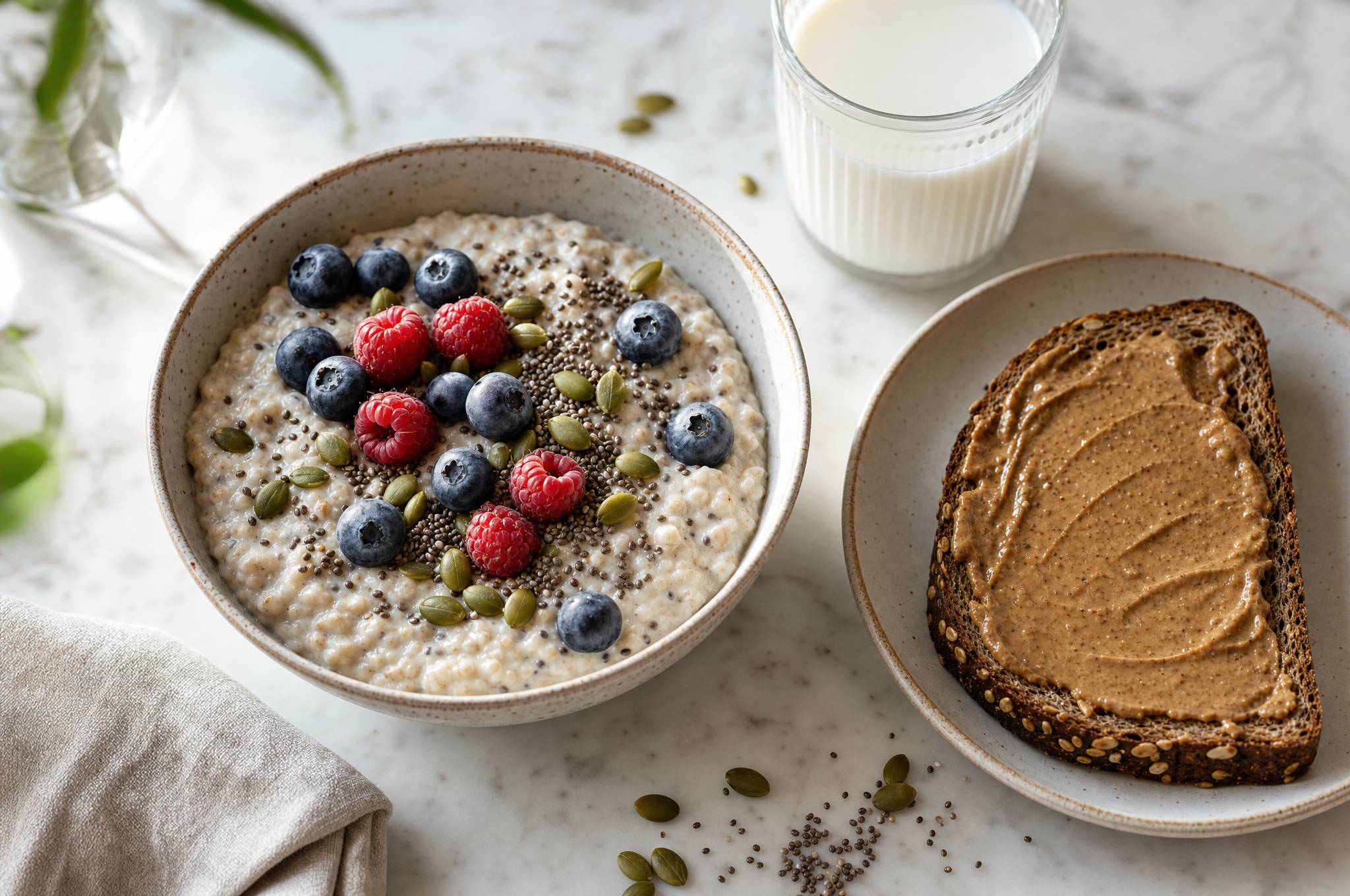

Protein itself rarely causes bloating. What surrounds it usually does: lactose, added gums and thickeners, and the sweeteners used to make a mediocre formula palatable. If a powder is making you uncomfortable, the ingredient list is the first place to look, not the protein number on the front of the tub.
The short answer, and why it is usually not the protein
Protein powder is commonly associated with bloating, but the protein molecule is rarely the cause. Most discomfort traces back to what has been added: lactose in dairy-based powders, gums and thickeners used for texture, sugar alcohols and high-dose sweeteners, or a large dose taken too quickly. A shorter ingredient list gives you fewer variables to test.
There is a useful distinction here. There is the protein, and there is the formulation it arrives in. Almost every powder on an Australian shelf is a formulation: a protein source, plus ingredients whose job is texture, sweetness, shelf stability and mouthfeel. Those secondary ingredients are where most digestive complaints originate.
The usual response is to abandon protein powder entirely, or to decide plant protein does not agree with you. The more useful move is to work out which component is the problem, because it is often one ingredient rather than the whole category.
The five things in a protein powder commonly associated with bloating
- Lactose and dairy proteins. Whey concentrate retains a meaningful amount of lactose. Lactose malabsorption is common in adults, and undigested lactose reaching the large intestine is commonly associated with gas, distension and cramping. Whey isolate carries less, but blended products often use concentrate because it is cheaper.
- Gums and thickeners. Xanthan, guar, cellulose gum and acacia stop a powder separating and thicken the mouthfeel. They are soluble fibres by function, and soluble fibres are fermented in the large intestine. In sensitive people, that fermentation is commonly associated with gas and bloating.
- Sugar alcohols and high-dose sweeteners. Erythritol, xylitol, maltitol and sorbitol are poorly absorbed by design, which keeps their calorie count low, and that poor absorption is why they are commonly associated with digestive upset at higher doses. Stevia is not a sugar alcohol, but the total sweetener load in a heavily flavoured powder is often higher than people assume.
- Blend fillers and undisclosed proprietary blends. Multi-source plant blends combine pea, rice and hemp to hit an amino acid target. Legitimate, but it means five or six variables per serve. Where a label lists a proprietary blend without individual quantities, you cannot tell how much of anything you are taking.
- Simply too much protein in one serve, too fast. A 40g or 50g scoop taken quickly on an empty stomach is a large single load, and the volume alone is commonly associated with a fullness and distension that gets read as bloating. This one is free to test: halve the serve and see what happens.
Single ingredient, no gums, no sweeteners. Plant Protein Isolate collection

Why plant proteins get blamed more than they deserve
Plant protein has a reputation for being harder on the stomach than whey. Some of that is earned, and some is a formulation problem blamed on the source ingredient.
People often ask whether pea protein can cause bloating. Pea protein isolate is generally well tolerated, but rarely sold alone. It is usually blended with rice, then flavoured and thickened, which reintroduces every variable above, and it retains some fermentable oligosaccharide content depending on processing. So pea protein may contribute to bloating in some people, and most complaints about it are complaints about the product it arrives in.
Whether soy protein can cause bloating has a similar answer with one layer added. Soy protein isolate is heavily refined and much of the fermentable carbohydrate is removed in processing. But soy is a common allergen, and separately, a meaningful number of people have a non-allergic sensitivity to it. Where a reaction is happening, distinguish a true allergic response, which needs medical assessment, from general digestive discomfort.
The honest part is fibre load. Plant proteins do carry more fibre than whey, particularly concentrates and flours rather than isolates. Fibre is fermented by bacteria in the large intestine, and fermentation produces gas. That is normal digestive function, not a defect, but it is more noticeable if you introduced a large amount quickly or your usual diet is low in fibre. We have written separately on what your microbiome wants.
How to read a label if your stomach is the problem
People search for a clean protein powder without much agreement on what clean means. Used loosely it is a marketing word. Used precisely it is testable: a list where you can account for every line and say what it is doing there. Here is the method.
- Protein per 100g, not per serve. The density test. At 80% or above, most of the tub is protein. Considerably lower means a real share of every serve is carbohydrate, fat, gums or flavour system. Per-serve figures are easy to flatter by changing scoop size.
- Count the ingredients. Not because short is automatically better, but because short is diagnosable. With one ingredient you have one variable. With eleven, there is no practical way to find out which line disagreed with you.
- Ask whether the fibre is native or added. A powder listing inulin, chicory root, acacia or a named gum has had fibre added. One where the fibre is a residual part of the source seed is a different proposition. Neither is wrong, but added fibre is dosed for texture, not for your tolerance.
- Work out what the sweeteners are doing. If a powder needs a substantial sweetener load to be drinkable, that says something about the base ingredient, and it adds a poorly absorbed or fermentable compound to every serve. An unflavoured powder carries none of that.
- Check whether digestibility is published at all. Most brands do not publish one. A PDCAAS or DIAAS figure tells you how much of the protein is actually available to your body. Its presence signals the manufacturer has tested what they are selling.
Applied this way, the cleanest plant based protein powder is not the one with the best packaging. It is the one where you can read the whole list out loud and know what each item is for.
A short ingredient list is not a virtue in itself. It is simply easier to troubleshoot when something disagrees with you.
Where lupin protein isolate sits
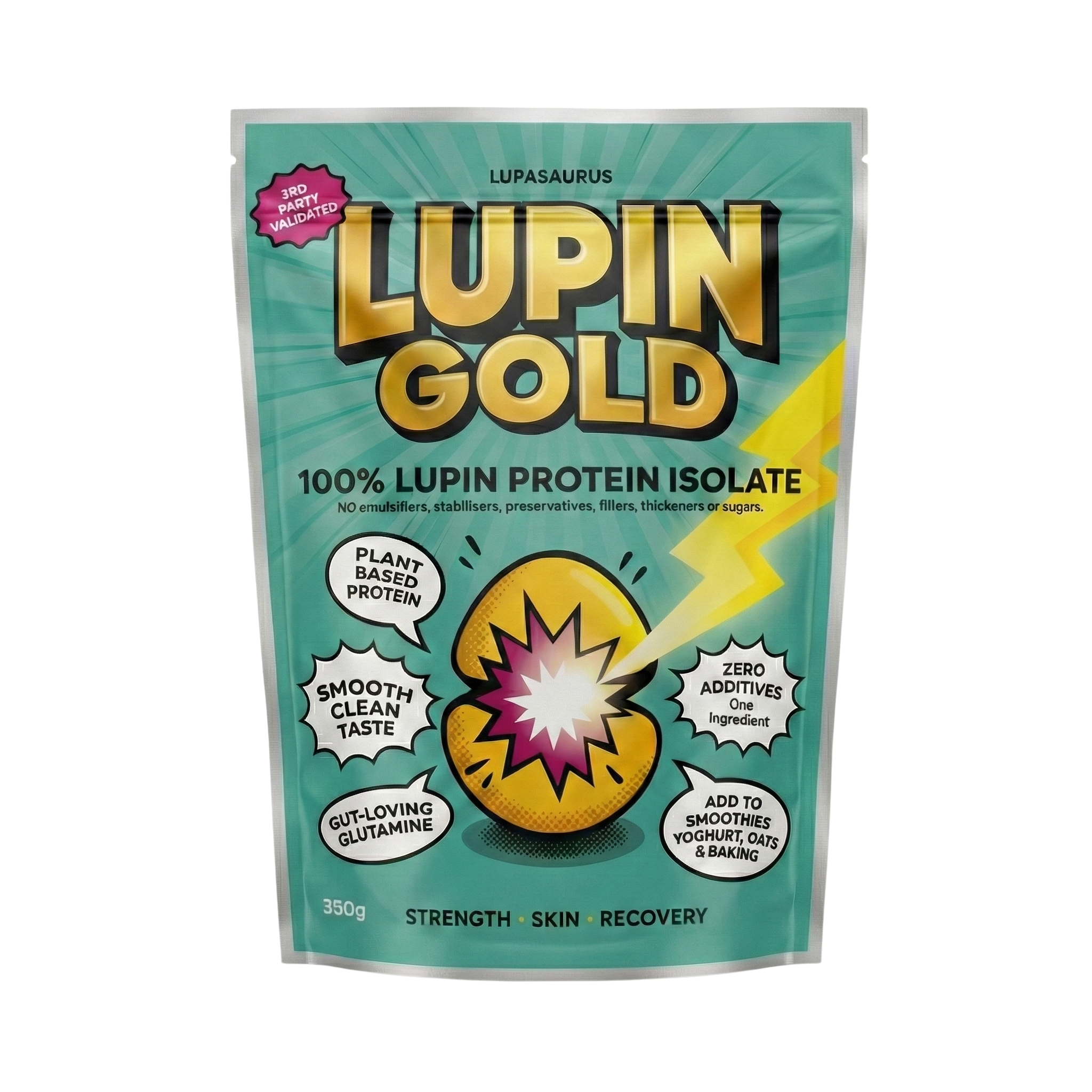
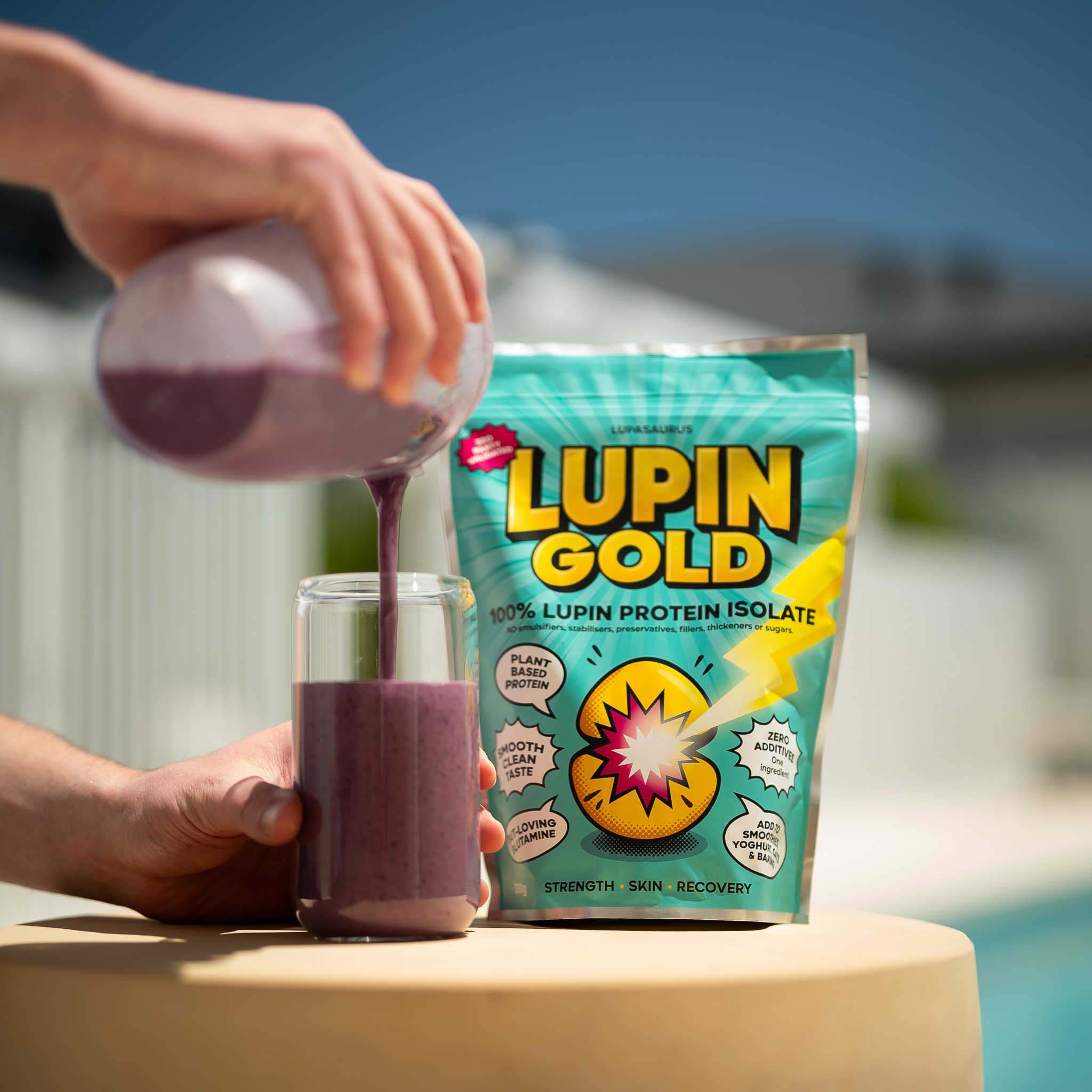
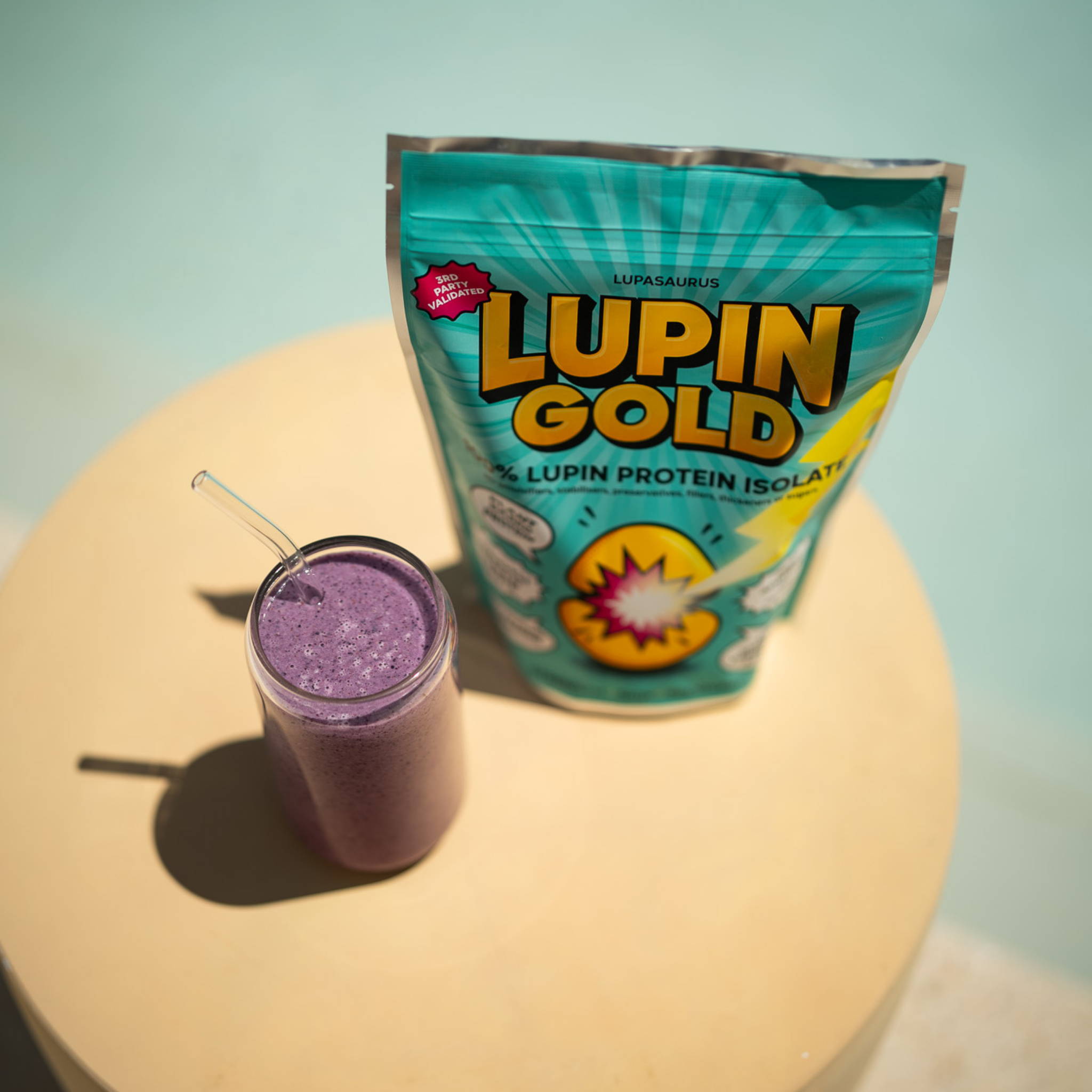
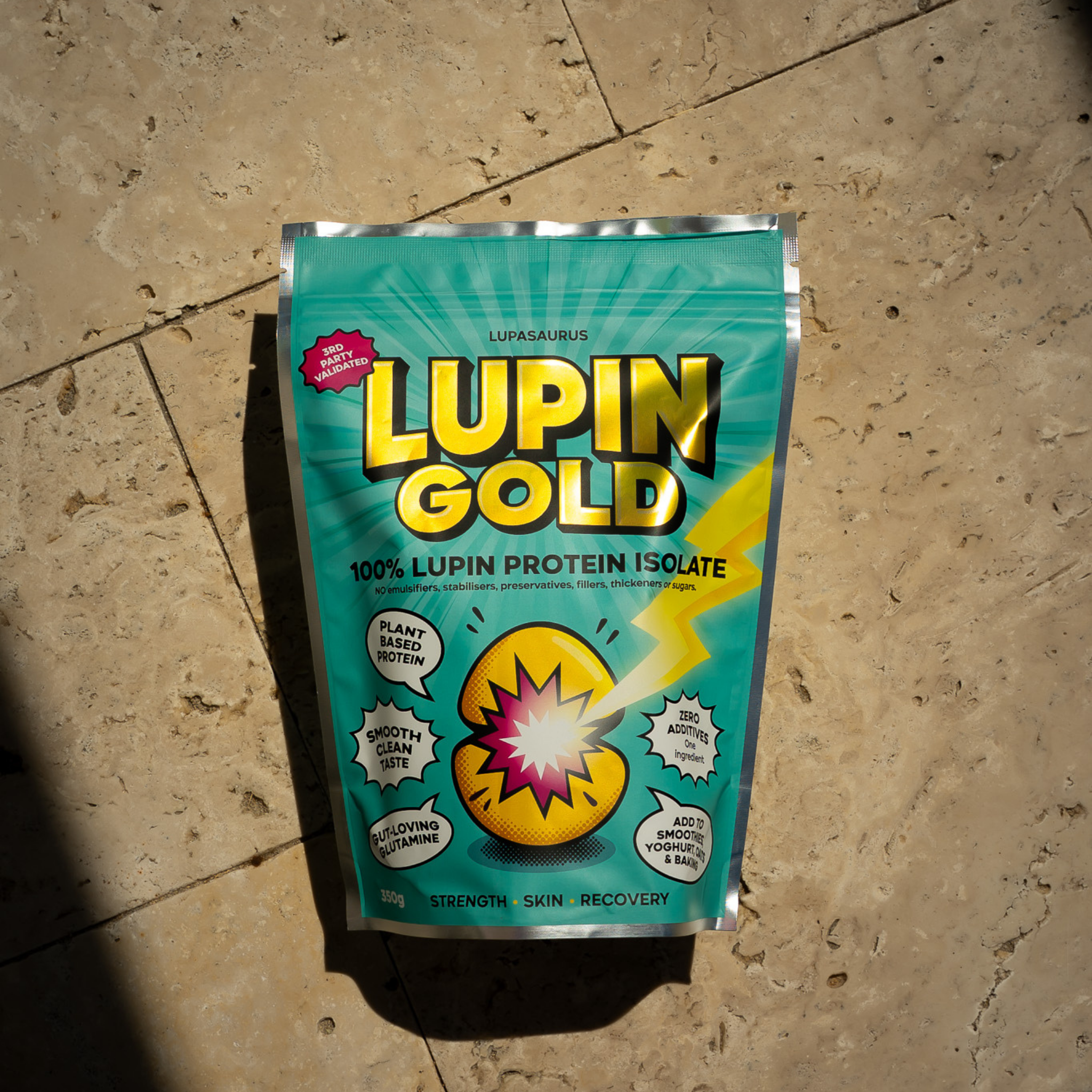
Lupin Gold is lupin protein isolate. One ingredient, nothing added.
- Around 90g protein per 100g, around 27g per 30g serve
- Digestibility around 0.96, one of the highest of any plant protein
- Around 90 to 100 calories per 30g serve
- Single ingredient: no gums, no dairy, no stevia, no artificial sweeteners, no fillers, and a fully vegan protein powder
The relevant point, if your current powder is uncomfortable, is structural rather than promotional. Most products answer the bloating objection by adding something: digestive enzymes, a prebiotic blend, a gentler gum. Lupin Gold answers it by not having those ingredients at all. That is not a claim about outcomes. It is a statement about how many variables are in the tub.
Now the part that is easy to leave out and should not be. Lupin protein isolate contains around 3g per 100g of naturally occurring galacto-oligosaccharide fibre, or GOS. It is native to the seed, not added, and it is fermented by bacteria in the large intestine. That fermentation is commonly associated with feeding beneficial gut bacteria. It also produces gas. If you are sensitive to fermentable fibres you may notice more wind at first, so start at a half serve for the first week.
The same applies to sodium. Lupin protein isolate contains around 1,000mg per 100g, which is around 300mg in a 30g serve. It is naturally occurring rather than added salt, and it is a characteristic of the category. Unremarkable for most people, worth counting if you monitor sodium for medical reasons. Full breakdown, including how that sits against daily intake, in our guide to what is in lupin protein isolate.
Lupin is a declared allergen in Australia. People with legume allergies, particularly peanut or soy allergies, may have a higher risk of reacting to lupin. Check with your healthcare professional before using if you have any known legume sensitivity.

What to do if you are already bloated on your current powder
Before you throw the tub out, run a short process. Most people change three things at once, feel no better, and learn nothing.
- Halve the serve for a week. Dose is the cheapest variable to test and it accounts for a surprising number of cases on its own. If a half serve is comfortable and a full serve is not, you have your answer without changing products.
- Change the liquid. If you mix with dairy milk, try water for a week. People frequently blame the powder for what the milk is doing. Test plant milks separately, since many contain gums of their own.
- Move it away from other high-fibre meals. A shake alongside high-fibre cereal or a legume-heavy lunch stacks fermentable load into one window. Shifting the timing changes the picture for some people.
- Reintroduce one variable at a time. Serve size, then liquid, then timing, one per week. Changing two at once means you learn nothing from either.
- Give any new powder a fortnight. Introducing fibre of any kind commonly produces a short adjustment period. Judging a product after two days is judging the adjustment, not the product.
If discomfort is severe, persistent, or comes with symptoms beyond bloating, this is not a label-reading problem. Speak with your GP or an accredited practising dietitian.
Frequently asked questions
Can protein powder cause bloating?
Protein powder is commonly associated with bloating, though the protein itself is rarely the cause. Lactose in dairy-based powders, added gums and thickeners, sugar alcohols and high-dose sweeteners, and large serve sizes taken quickly are the usual contributors. A powder with a short ingredient list gives you fewer variables to test when something disagrees with you.
Which protein powder is least likely to cause bloating?
There is no single answer, but the criteria are consistent. Look for a short ingredient list, no lactose, no added gums or thickeners, no sugar alcohols, and a published digestibility score. Unflavoured options remove the sweetener and flavour system entirely. Fewer ingredients means fewer things that can disagree with you and a much easier product to troubleshoot.
Does pea protein cause bloating?
Pea protein isolate is generally well tolerated on its own. Most complaints about pea protein relate to the products it appears in, which are typically blends containing gums, sweeteners and multiple protein sources. Pea protein does retain some fermentable oligosaccharide content depending on processing, so it may contribute to gas in people who are sensitive to fermentable fibres.
Does soy protein cause bloating?
Soy protein isolate is heavily refined and most fermentable carbohydrate is removed during processing, so it is often better tolerated than whole soy foods. However, soy is a common allergen and a number of people have a non-allergic sensitivity to it. If you react to soy protein, it is worth distinguishing a genuine allergic response, which needs medical assessment, from general digestive discomfort.
Is whey or plant protein worse for bloating?
Neither category is inherently worse. Whey concentrate carries lactose, which is a common trigger, while whey isolate carries much less. Plant proteins generally carry more fibre, which is fermented in the large intestine and may produce gas. In both cases the formulation matters more than the category: gums, sweeteners and serve size are usually the deciding factors.
How long should bloating last after starting a new protein powder?
Introducing any new fibre source commonly produces a short adjustment period, so give a new powder around a fortnight at a consistent serve before judging it. Starting at a half serve for the first week makes that adjustment easier. If discomfort is severe, persistent beyond a few weeks, or accompanied by other symptoms, speak with your healthcare professional.
Is lupin protein safe if I have a legume, peanut or soy allergy?
Lupin is a declared allergen in Australia. People with legume allergies, particularly peanut or soy allergies, may have a higher risk of reacting to lupin. Check with your healthcare professional before using if you have any known legume sensitivity. You can read more on our lupin allergen information page.
The short version: Bloating from protein powder usually comes from what has been added, not from the protein. Lactose, gums, sugar alcohols and oversized serves are the common contributors. Read the label by protein density and ingredient count, halve your serve before you change products, and give anything new a fortnight. A single-ingredient powder is not a promise about your gut. It is simply the easiest product to troubleshoot.
Related reading: what your microbiome wants - what is in lupin protein isolate - vegan protein powder - protein without the aftertaste
This article is for general information only and reflects our own research and understanding at the time of writing. We are not scientists, and information may evolve. It is not individual medical advice. Please speak with your healthcare professional for personalised guidance.