
Protein has had a decade in the spotlight. Fibre is having its moment now, and the gap is real: Australian adults are told to aim for 25g a day (women) and 30g a day (men), and on average we manage 21.1g and 24.8g. Breakfast is the easiest meal to fix. Here are six that carry both.
A note up front, because it matters: protein powder is not a fibre source. Lupin protein isolate is roughly 3% naturally occurring prebiotic fibre, so a serve contributes well under a gram. The fibre in every breakfast below comes from the food around it. The powder is there for the protein.
Quick navigation
How Much Fibre You Actually Need
The NHMRC sets an Adequate Intake for dietary fibre of 25g a day for adult women and 30g a day for adult men. Separately it sets a Suggested Dietary Target, the intake associated with reduced chronic disease risk, which is higher again at 28g for women and 38g for men.
The most recent national survey data puts actual intake at about 21.1g for women and 24.8g for men. So most Australian adults are short by roughly 4g to 6g a day against the baseline, and considerably further short of the target.
Why Breakfast Is the Easiest Meal to Fix
Breakfast is repetitive, which is usually a criticism but here it is the advantage. Most people eat a version of the same two or three breakfasts all week. Fix the template once and it compounds every day without any further thinking.
It is also the meal where the high-fibre ingredients are already normal. Oats, chia, wholegrain bread, berries and legumes are unremarkable at breakfast in a way they are not at dinner. You are not adding a health project, you are adjusting proportions.
The catch is that a high-fibre breakfast is often a low-protein one. Porridge, toast and fruit are fibre-rich and protein-poor, which is why people are hungry by ten. Adding a neutral, unflavoured protein solves that without changing what the meal tastes like.
Six High-Protein, High-Fibre Breakfasts
Figures below are approximate and based on typical ingredient values. Exact numbers vary with brand, batch and how heavily you fill a tablespoon.
1. Berry and chia overnight oats
40g rolled oats, 1 tbsp chia, 60g raspberries, milk of choice, 15g unflavoured lupin protein stirred through the night before.
~13g fibre · ~22g protein
2. Apple and cinnamon bircher
40g oats soaked overnight, one grated apple, 2 tbsp LSA, cinnamon, 15g lupin protein. Sweet enough without adding sugar.
~11g fibre · ~23g protein
3. Savoury oats with egg and spinach
40g oats cooked in stock, a handful of spinach, one poached egg on top, 15g unflavoured lupin protein stirred in off the heat.
~6g fibre · ~26g protein
4. Avocado toast with a protein side
Two slices of wholegrain or seeded bread, half an avocado, chilli and lemon, plus a small shake made with 15g lupin protein.
~10g fibre · ~22g protein
5. Green breakfast smoothie
Banana, large handful of spinach, 1 tbsp chia, 20g oats, milk of choice, 15g lupin protein. The one to make when you are running late.
~11g fibre · ~19g protein
6. High-fibre protein pancakes
Wholemeal flour, one egg, 1 tsp psyllium husk, milk, 15g lupin protein. Top with berries rather than syrup and the fibre climbs again.
~9g fibre · ~24g protein
Most of these land between a third and half of the daily fibre baseline while carrying around 20g of protein, and that is the combination that actually holds you to lunch. The savoury oats are the outlier on fibre, so pair them with a piece of fruit if breakfast is where you do most of your fibre work.
How to Build Your Own
The pattern behind all six is the same, and once you see it you stop needing recipes:
- Start with a wholegrain base - oats, wholemeal flour or seeded bread. This is usually 4g to 5g of fibre before you have added anything.
- Add a seed - chia, LSA, psyllium or linseed. One tablespoon is often another 4g to 5g of fibre and it is the single highest-leverage addition.
- Add fruit or vegetables with the skin on - berries and grated apple are the strongest performers, and spinach disappears into a smoothie entirely.
- Then add the protein - because the first three steps are all fibre and carbohydrate. This is the step people skip, and it is why a high-fibre breakfast often fails on satiety.
Go gradually
If your current intake is around 20g a day, do not jump straight to 35g. A sudden increase in fibre commonly causes bloating and wind while your gut adjusts. Add one component at a time over a couple of weeks, and increase water alongside it.
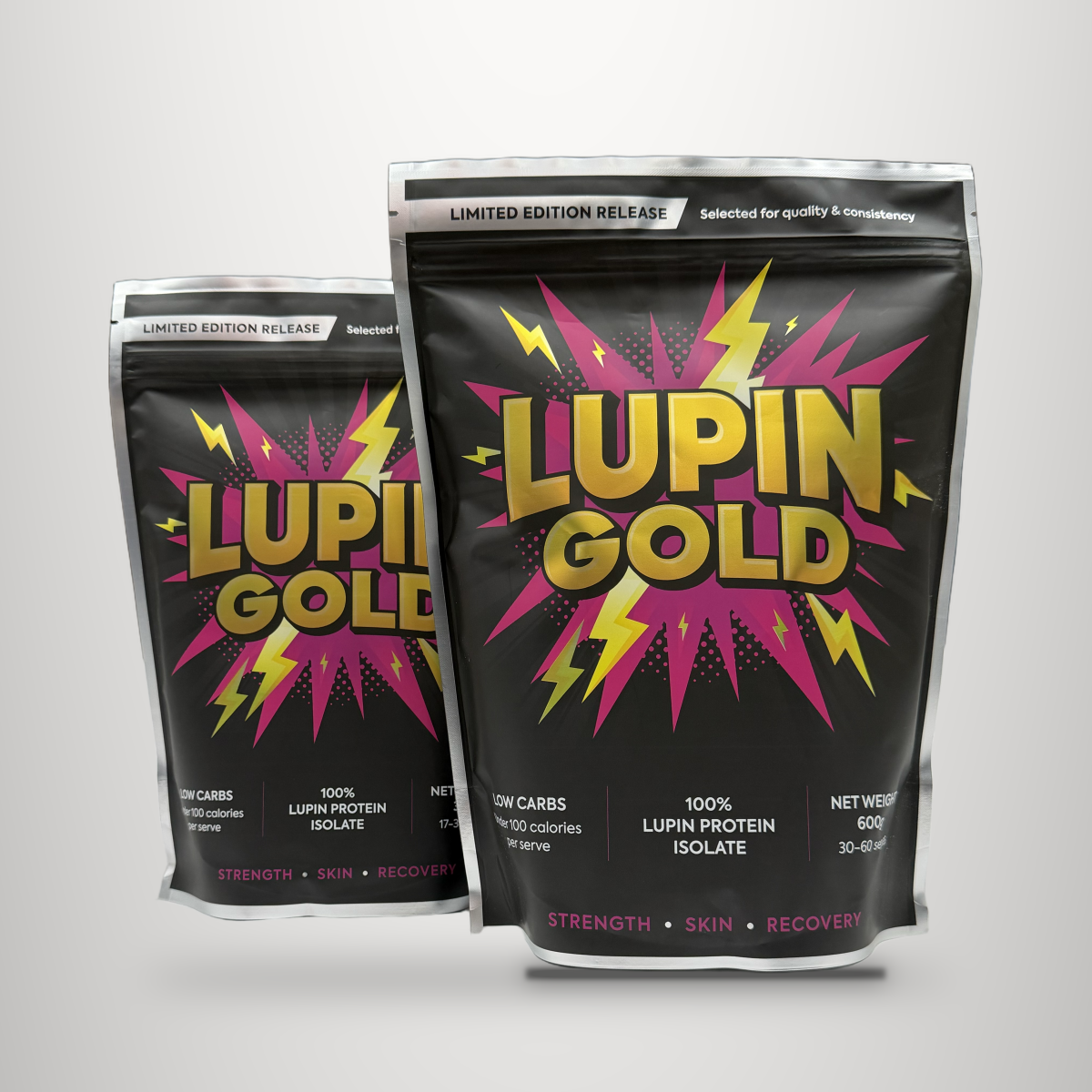
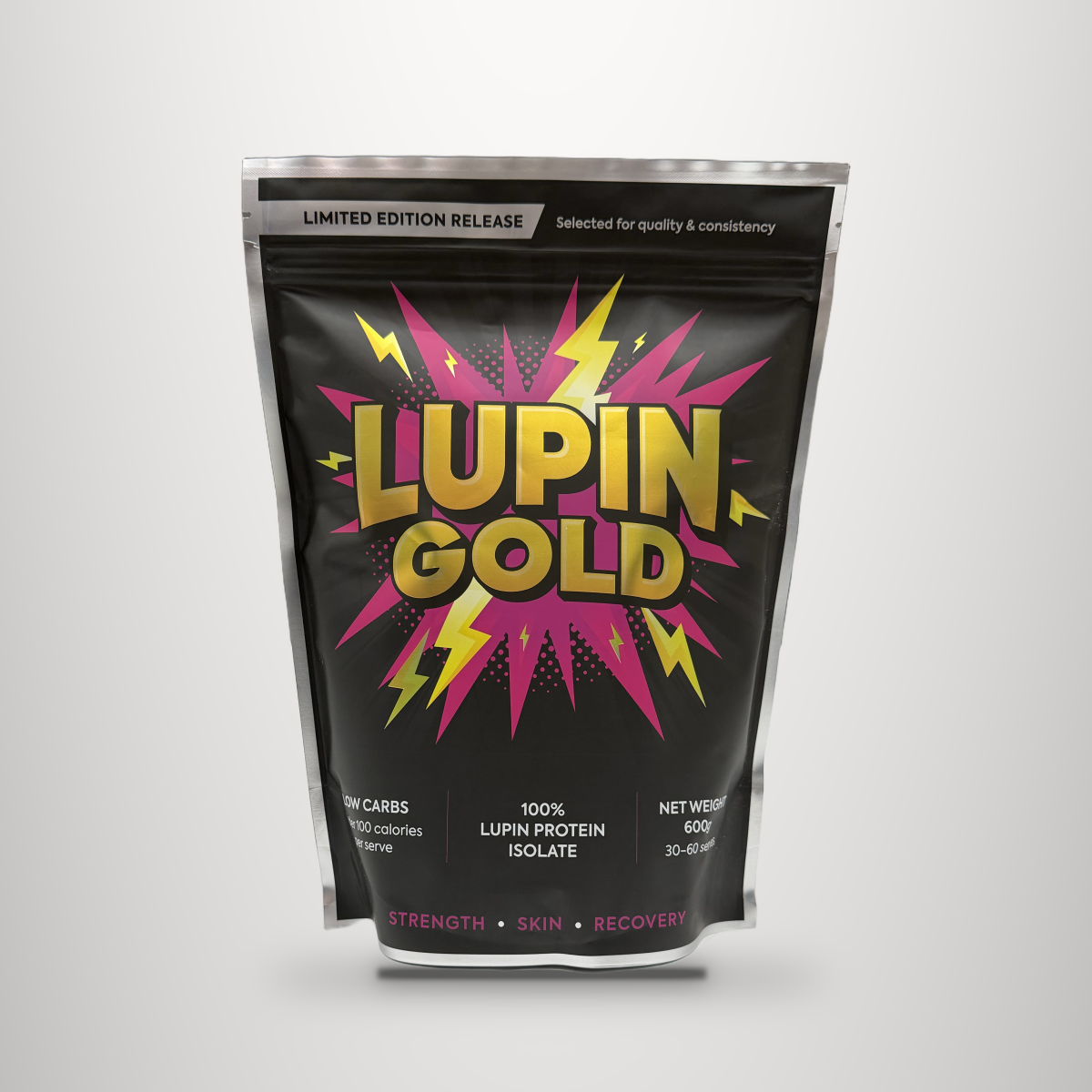
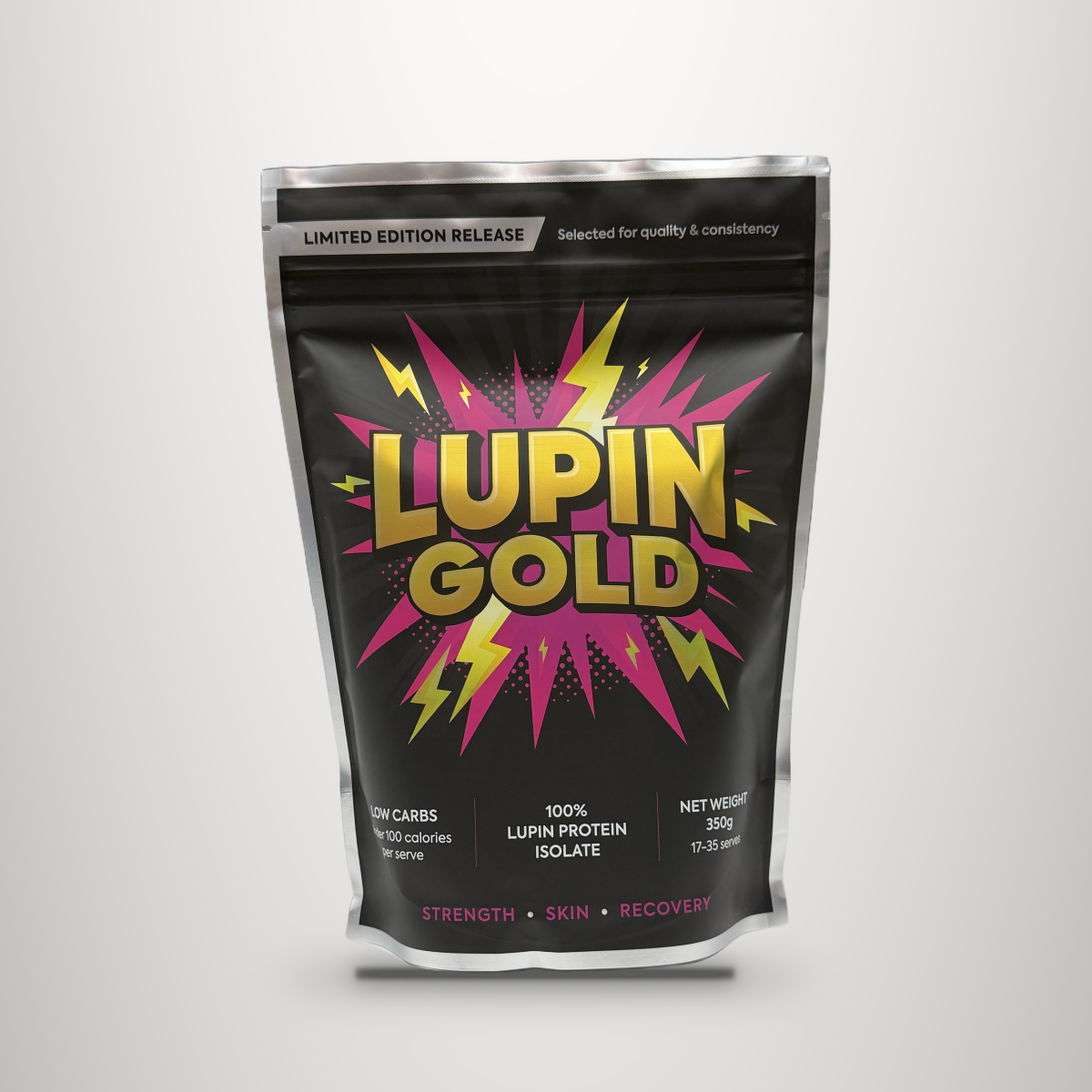
Lupin Gold is a single-ingredient lupin protein isolate. It is unflavoured, so it works stirred through oats, bircher and savoury porridge without turning the meal into a dessert, and there is no sweetener or gum in it to upset a gut you are already asking to handle more fibre. See the unflavoured range.
Allergen note: lupin is a declared allergen in Australia. People with peanut or other legume allergies should review the allergen information page before use.
FAQs
How much fibre should I eat per day in Australia?
The NHMRC Adequate Intake is 25g a day for adult women and 30g a day for adult men. There is also a higher Suggested Dietary Target associated with reduced chronic disease risk, at 28g for women and 38g for men. National survey data suggests most Australian adults fall short of even the lower figure.
Does protein powder contain fibre?
Most protein powders contain very little. Whey contains essentially none. Lupin protein isolate contains roughly 3% naturally occurring prebiotic fibre, which is more than most isolates but still well under a gram per serve. No protein powder should be treated as a fibre source. Use whole foods for fibre and the powder for protein.
What is the highest fibre breakfast ingredient?
Per spoonful, seeds win. Chia and psyllium husk both deliver roughly 4g to 5g of fibre in a single tablespoon, which is more than most people get from a whole bowl of cereal. Legumes, wholegrains, berries and vegetables eaten with the skin on are the other reliable sources.
Can I get too much fibre?
It is possible, and the more common problem is increasing intake too quickly rather than the total being too high. Bloating, wind and discomfort usually mean you have added too much too fast rather than that fibre does not suit you. Increase gradually over a few weeks and drink more water as you go.
Why am I hungry after a high-fibre breakfast?
Usually because it is low in protein. Porridge, toast and fruit are fibre-rich but protein-poor, and protein is the larger driver of satiety. Adding 15g to 20g of protein to an existing high-fibre breakfast is normally enough to change how long it holds you.
Related reading: foods high in protein and fibre - gut-friendly protein powder and what your microbiome wants - how much protein you need per day
Disclaimer: This article is for general information only and reflects our own research and understanding at the time of writing. We are not dietitians, and information may evolve. It is not individual medical or dietary advice - please speak with your healthcare professional for personalised guidance.