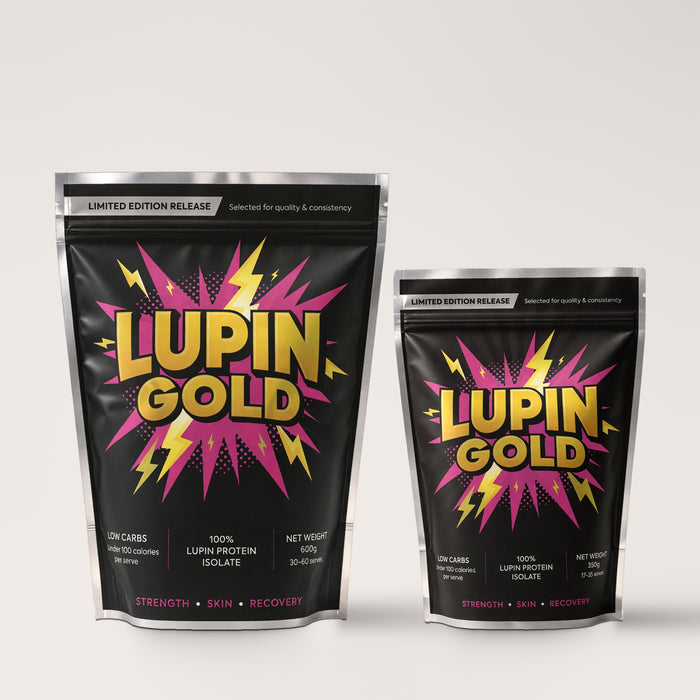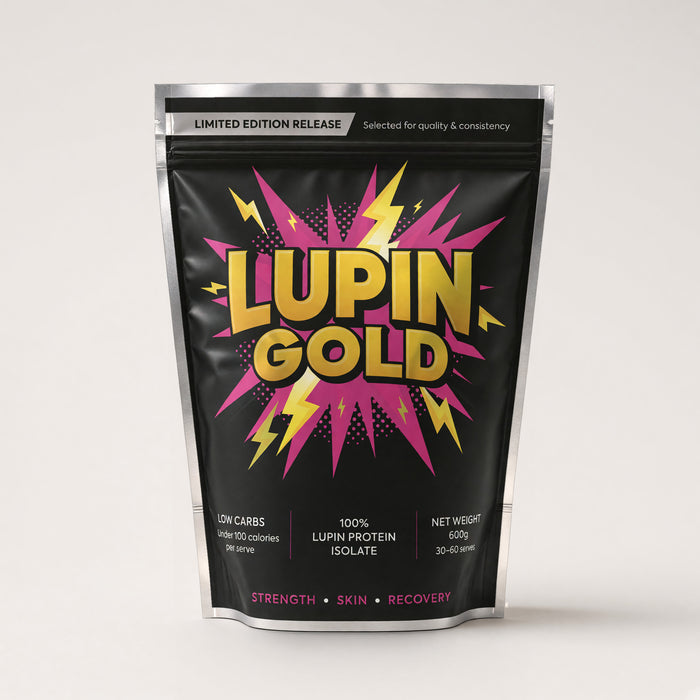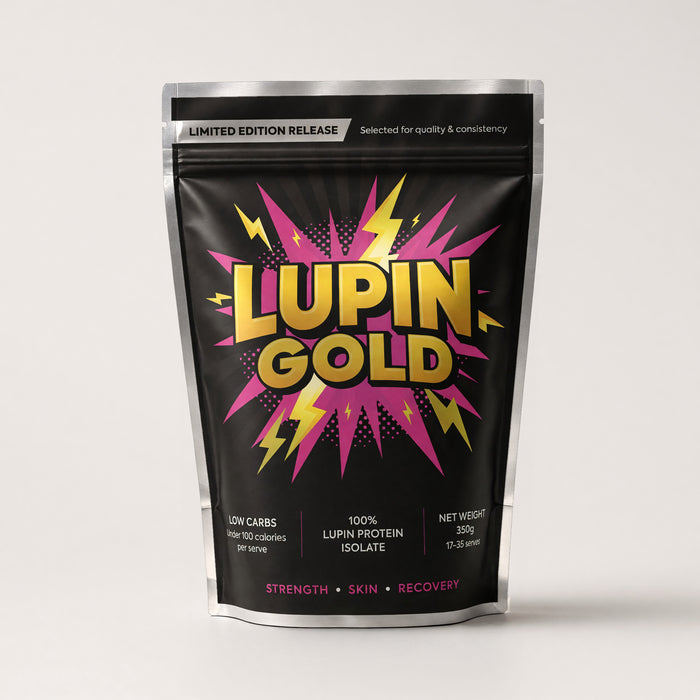

Lupin comes up a lot in keto and low carb baking, so here are the numbers rather than a label: our isolate's nutrition panel, the Australian Food Composition Database (AFCD) figures for lupin next to common flours, and the carbs in five of our recipes.
Quick answer: Lupin is a legume with very little starch. The AFCD lists dehulled lupin splits at 10 g of carbohydrate and 27.8 g of fibre per 100 g, against 73.2 g of carbohydrate in plain white wheat flour. Our lupin protein isolate tests at under 0.1 g of carbohydrate per 100 g, so a 30 g serve has under 0.03 g. Whether a recipe fits your daily carb target depends on everything else that goes into it.
Quick navigation
Carbs in Lupin Protein Isolate
These figures are from the nutrition panel on our 600 g lupin protein isolate. The label serve is 20 g; we usually suggest 30 g, so both are shown.
| Per | Carbohydrate | Sugars | Dietary fibre* | Protein |
|---|---|---|---|---|
| 20 g serve (label serve) | <0.02 g | <0.02 g | <0.1 g | 18 g |
| 30 g serve | <0.03 g | <0.03 g | <0.15 g | 27 g |
| 100 g | <0.1 g | <0.1 g | <0.5 g | 90 g |
*Fibre was not specifically tested; we estimate it at about 3%, so read the fibre figure as a floor.
Almost all of the isolate is protein. The isolate is refined to concentrate the protein, so it carries far less of the fibre and carbohydrate found in whole lupin. That is why the isolate and lupin flour read so differently.
Lupin vs Other Flours (per 100 g)
The AFCD has no entry for lupin flour itself. Its closest entries are dehulled lupin splits (the kernel with the hull taken off) and whole lupin. Here they are next to the flours people usually swap out.
| Per 100 g (AFCD) | Carbohydrate | Sugars | Fibre | Protein | Fat |
|---|---|---|---|---|---|
| Lupin, dehulled splits, uncooked | 10 g | 2.8 g | 27.8 g | 37.5 g | 7.9 g |
| Lupin, whole, uncooked | 7.4 g | 2.3 g | 41.5 g | 28.6 g | 6.5 g |
| Almond meal | 5.4 g | 5.2 g | 11 g | 19.7 g | 50.5 g |
| Chickpea flour (besan) | 38.5 g | 2.2 g | 20.8 g | 19.7 g | 5.5 g |
| Wheat flour, white, plain | 73.2 g | 1.9 g | 2.2 g | 10 g | 1.3 g |
| Gluten free plain flour | 80.5 g | 0.3 g | 1.7 g | 3.4 g | 1.1 g |
Source: Australian Food Composition Database, Release 3 (Food Standards Australia New Zealand), food keys F005249, F005250, F006077, F003986, F004007, F003990 and F003998 (rice flour). Carbohydrate here is available carbohydrate, which leaves out fibre.
A note on "net carbs": on Australian nutrition panels, carbohydrate already excludes dietary fibre, which gets its own line. The net carb sum you see on American labels (total carbs minus fibre) is already done for you here, so do not subtract the fibre a second time.
A May 2015 FSANZ report on Australian sweet lupin, with lab data from Grain Growers, is similar: split lupin came in at 7.2 g carbohydrate, 29.9 g fibre and 41.1 g protein per 100 g, describing lupin as "containing minimal starch". The lab, samples and method differ from the AFCD entry, which is why the numbers are close but not identical.
Looking at protein rather than carbs? Here are the highest protein beans and legumes from the same database.
What About Lupini Beans?
The AFCD does not list cooked or jarred lupini, and jarred beans vary with soaking and brine, so the panel on the jar is the number to go by. Our lupini beans guide covers where to buy them in Australia and how to prepare them, and lupini beans vs chickpeas puts the two side by side.
Carbs in Our Recipes
Here are five of our recipes from the lower end for carbs, each made with the isolate. Figures are copied from each recipe card and will move with the brands you use and how big you cut or roll them.


None of these was written as a keto recipe. The carbs come from the other ingredients (oats, banana, chocolate and the like), not from the protein powder, so that is where to look if you are cutting carbs further.
Which Lupin Product Is Which
Lupin flour is milled lupin, so it brings fibre as well as protein and handles like a flour in baking. Our isolate is the refined protein: about 90% protein, unflavoured, with nothing else in the ingredient list. It goes into smoothies, oats, yoghurt and baking. You can find it with our other gluten-free and dairy-free protein powders.
Allergen note: lupin is a declared allergen in Australia. People with peanut or other legume allergies should review the allergen information page before use.
FAQs
Is lupin flour keto?
It depends on your carb target. The AFCD's closest entry, dehulled lupin splits, has 10 g of carbohydrate per 100 g, compared with 73.2 g in plain white wheat flour and 5.4 g in almond meal. Check the panel on the brand you buy, as flours vary.
Is lupin flour low carb?
It has far less carbohydrate than wheat, rice or gluten free plain flour: 10 g of carbohydrate per 100 g for dehulled lupin against 71.6 g to 80.5 g for those flours in the AFCD. Almond meal is lower again on carbs but much higher in fat; see lupin flour vs almond flour for the full comparison.
Does lupin protein powder have carbs?
Ours tests at under 0.1 g of carbohydrate and under 0.1 g of sugars per 100 g, which is under 0.03 g in a 30 g serve. Other lupin powders may be blended or flavoured, so read their panel.
Are lupini beans keto?
The AFCD has no entry for cooked or jarred lupini, so use the panel on the jar. Uncooked whole lupin sits at 7.4 g of carbohydrate per 100 g in the AFCD, but soaking and brining change the figures per 100 g.
Which flour has the lowest carbs?
Of the flours in the AFCD table above, almond meal is lowest at 5.4 g of carbohydrate per 100 g. Lupin comes next: whole lupin 7.4 g and dehulled lupin splits 10 g (the AFCD has no lupin flour entry). Chickpea flour has 38.5 g, plain white wheat flour 73.2 g and gluten free plain flour 80.5 g. Our lupin protein isolate is under 0.1 g per 100 g, but it is a protein powder, not a flour, so use it alongside flour rather than in place of it.
Disclaimer: This article is for general information only. Figures come from our nutrition panel, the AFCD and each recipe card and are approximate. It is not individual medical or dietary advice. If you follow a ketogenic diet for a medical reason, please work it out with your GP or a dietitian.