
Protein water is exactly what it sounds like: water with protein added, sold as a ready-to-drink bottle or as a powder you shake up yourself. It is lighter than a milky protein shake and easier to drink cold. Here is what is usually in it, whether it is good for you, and how to make a high-protein drink at home.
Up front: Lupin Gold does not make a protein water. This is a general guide to the category, plus the drinks we make with our own unflavoured protein.
Quick navigation
What Is Protein Water?
Protein water is a clear or lightly cloudy drink, usually fruit flavoured, with protein dissolved into it. It comes in two forms:
- Ready to drink. A bottle from the fridge at the supermarket, petrol station or gym.
- Powder. Often sold as "clear protein" or "clear whey": a powder that mixes with water into something closer to a cordial or juice than a shake.
People drink it after training, as a light snack, or simply because a thick milky shake does not appeal, especially in summer.
What Protein Is in Protein Water?
Most protein water uses one of two proteins, and the difference matters:
- Whey protein isolate. A dairy protein, processed so it stays clear and thin in water. This is what most "clear whey" powders are.
- Collagen peptides. Dissolve easily, but collagen is an incomplete protein: it is missing an essential amino acid (tryptophan). We cover that in collagen vs protein powder.
Both are animal proteins, so most protein water is not vegan, and whey-based ones are not dairy free. If you avoid dairy, check whether the protein is whey before you buy.
Is Protein Water Good for You?
It can be a convenient way to add protein, with a few things worth knowing:
- It is a protein top-up, not a meal. Most protein water has little else in it: no fibre and very little fat or carbohydrate. That is the point of it, but it will not hold you like food does. For protein with fibre, see our list of high fibre and high protein foods.
- The protein type decides the quality. Whey is a complete protein. Collagen-only drinks are not, so the grams on the label do not count the same way.
- Sweeteners and acids. Clear drinks are usually sweetened and acidified to taste like a soft drink. If you are sensitive to sweeteners, read the ingredient list. We explain what to look for in does protein powder cause bloating.
- It is still a dairy product if it is whey. Whey isolate is low in lactose, but it is still a milk protein, so it is not dairy free; see lactose-free vs dairy-free protein.
Many people already get enough protein from food. If you are trying to hit a daily number, see how much protein you need per day first, then decide whether a drink is the easiest way to close the gap.
How to Read a Protein Water Label
- Protein per bottle or serve, and which protein it is (whey isolate, collagen or a blend).
- Sugar per serve, if it is not sweetener-only.
- Sweeteners named in the ingredients (sucralose, stevia, acesulfame K and so on).
- Allergens: milk for whey, plus anything else in the bold allergen statement.
- Price per gram of protein, not per bottle. Compare bottles with powders the same way.
How to Make a High-Protein Drink at Home
You do not need a bottle to get a high-protein drink. An easy route is a blended drink made with protein powder. If the drink is standing in for breakfast, see our protein-rich breakfast ideas too.
One honest note about our own powder: Lupin Gold is unflavoured and it is not made to be mixed straight into water or milk on its own. It works by taking on the flavour of whatever you put it in, so it is at its best blended into a drink with fruit, coffee or other ingredients that bring flavour. That means a smoothie rather than a clear water, but it also means you choose exactly what goes in: one ingredient of protein, and no sweetener unless you add it.
Drinks from our recipe blog, each with protein per serve:
- Protein coffee (iced mocha): about 43g
- Iced coffee peanut butter smoothie: about 71g
- Berry protein smoothie: 43g
- Mixed berry protein smoothie: about 28g
- Mango coconut protein smoothie: about 60g
- Tropical green protein smoothie: about 60g
- Berry yoghurt protein smoothie: about 69g
- Spiced banana matcha protein smoothie: about 30g
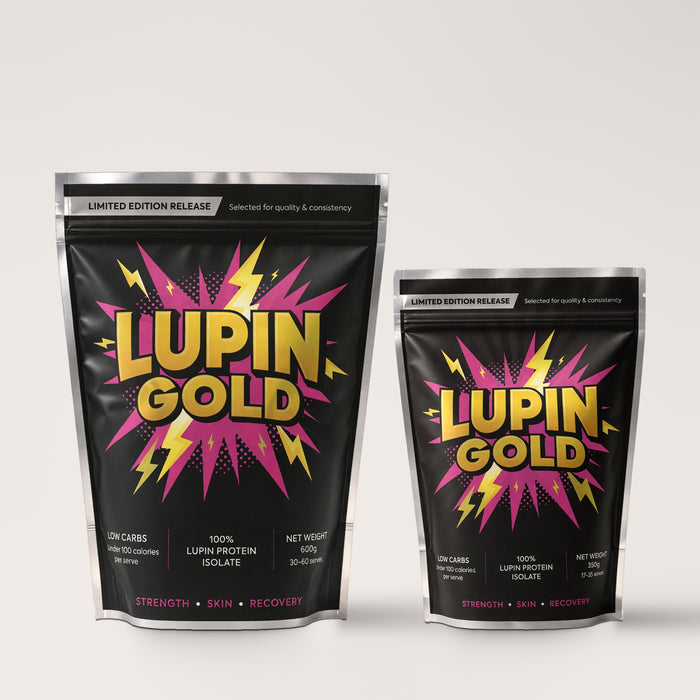
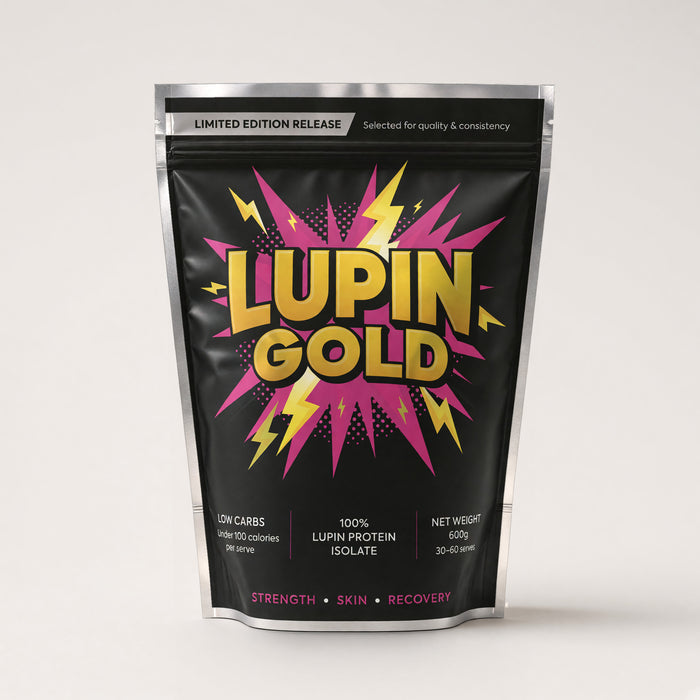
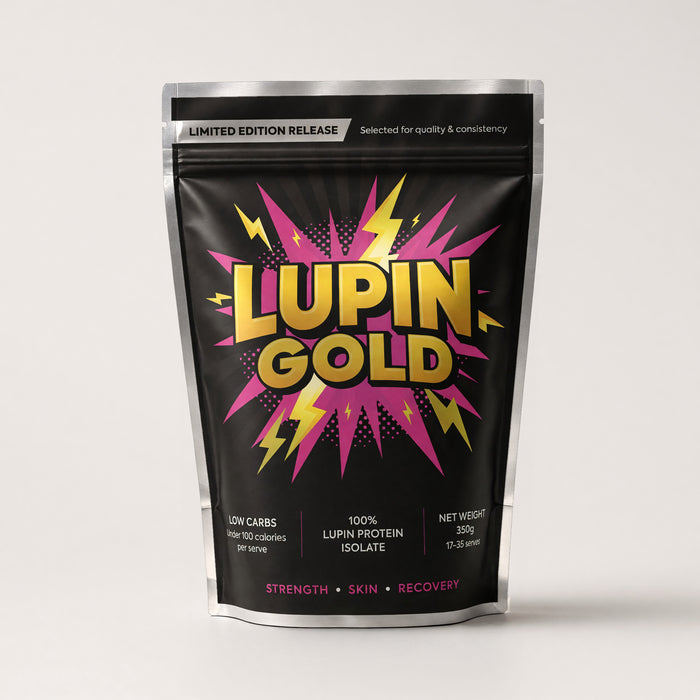
Lupin Gold is a single-ingredient lupin protein isolate: around 90% protein, dairy free, soy free and stevia free, made from European-grown lupins and packed in WA. See the unflavoured protein powder range or the 600g lupin protein isolate.
Allergen note: lupin is a declared allergen in Australia. People with peanut or other legume allergies should review the allergen information page before use.
FAQs
What is protein water made of?
Water, a protein (usually whey protein isolate or collagen peptides), flavouring, sweetener and an acid to keep it clear and fresh tasting. Check the ingredient list for which protein and which sweetener.
Is protein water better than a protein shake?
Neither is better in general. Protein water is lighter and easier to drink cold. A shake or smoothie can carry more protein and food alongside it (fruit, oats, milk), which makes it more filling. Pick the one you will actually drink.
Is protein water dairy free?
Often not. Most protein water is made with whey, a milk protein, so it is not dairy free. Collagen versions contain no milk protein but are animal derived, so they are not vegan. If you need dairy free, check the protein source and the allergen statement on the label.
Can I make protein water with Lupin Gold?
Lupin Gold is unflavoured and is not made to be mixed straight into water or milk on its own. Blend it into a drink instead, like our protein coffee or berry protein smoothie.
Related reading: plant protein vs whey · collagen vs protein powder
Disclaimer: This article is for general information only and reflects our own research and understanding at the time of writing. We are not dietitians, and information may evolve. It is not individual medical or dietary advice. Please speak with your healthcare professional for personalised guidance.